

make >
-
 EURODRIVE

Brest: Gateway to Wild, Beautiful Brittany
The Eurodrive guide
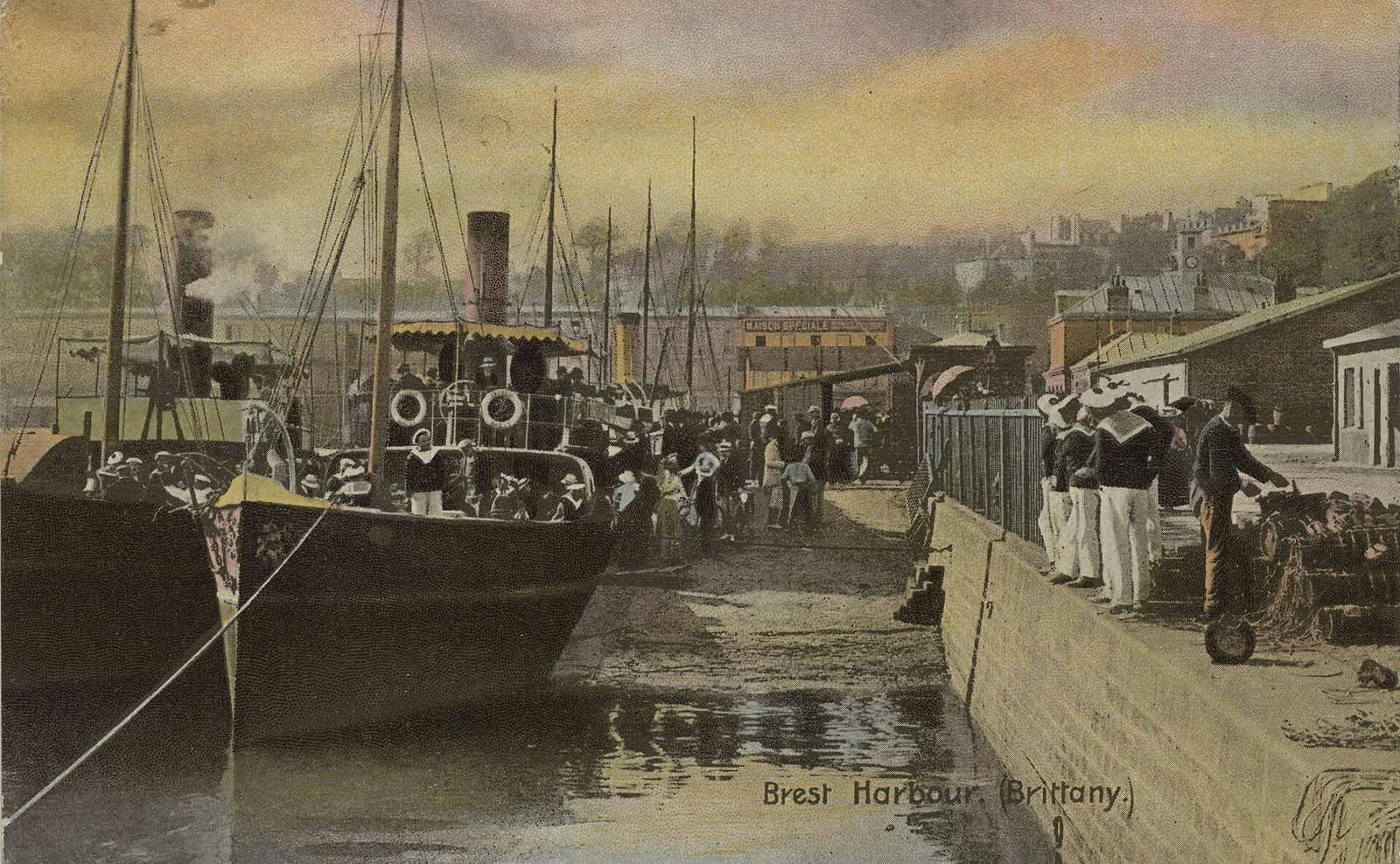
Brest harbour, where Brittany meets the sea.
At the far western tip of France, Brest is a hardy maritime city that opens onto some of Europe's most dramatic coastline. Land here and the rugged capes, lighthouses and emerald bays of Finistère — "the end of the world" — are all yours to explore. Here's how to set off.
⛽ Fuel up near the delivery center
First things first: the practical essentials
Refuelling near the airport. If you didn't take the optional full-tank service at pick-up, you can refuel near the airport — there's no obligation to return the car full. Several stations line Guipavas, including 24-hour pumps, and a Super U runs day and night at Kerichen, closer to the centre — handy whatever your flight time.
Getting into the city. A shuttle bus links Brest Bretagne airport to the city centre in around 25–30 minutes; by car it's a well-signed 15-minute run along the expressway from the airport exit.
Where to spend your first night. The streets around the château and the Recouvrance district, across the Penfeld river, are central, lively and a short walk from the harbour and the roadstead.
Your vehicle. Your brand-new Renault is waiting at the Brest Bretagne airport delivery centre under the short-term lease programme — keys in hand and ready for Brittany's wild west.
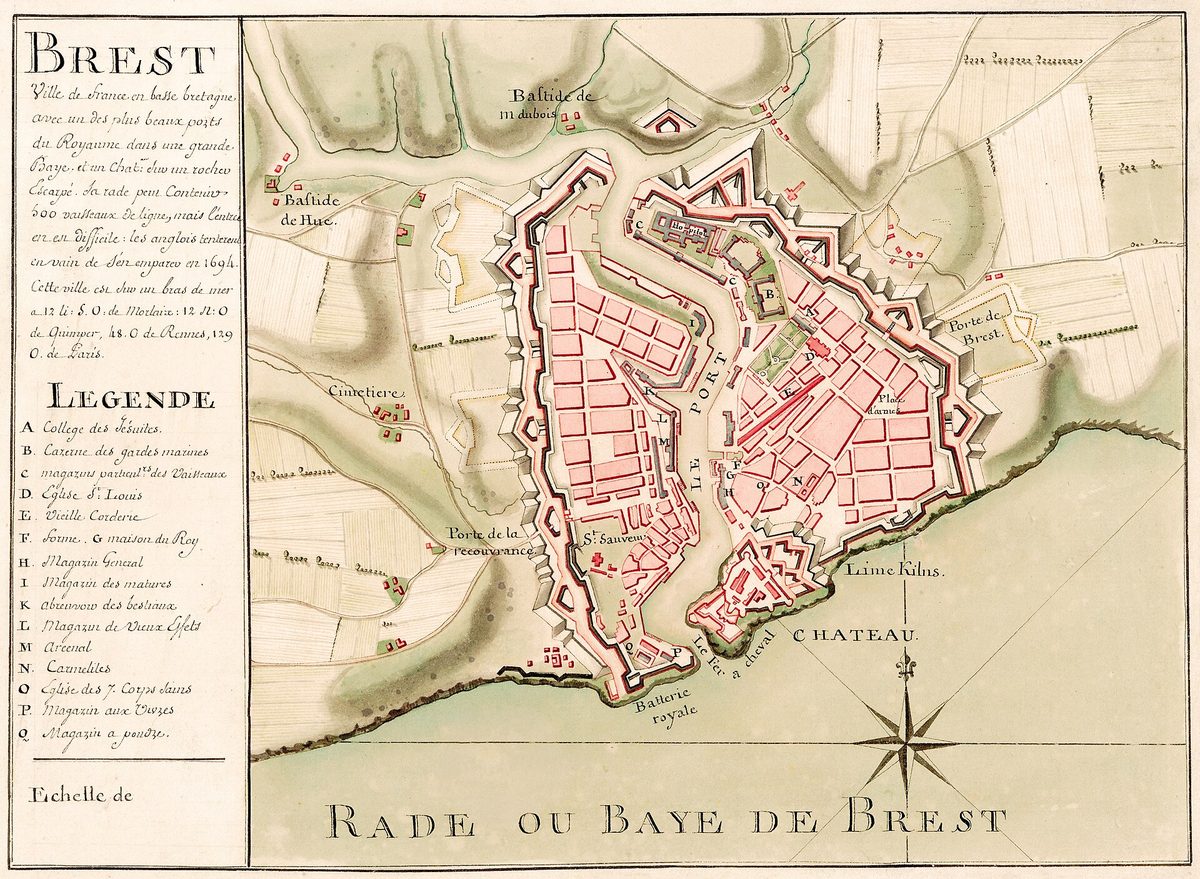
An old map of Brest and its great roadstead, around 1700.
Brest's essential sights
Océanopolis. Moored at the Moulin Blanc marina, this vast aquarium — one of Europe's largest — carries you from the poles to the tropics across three pavilions: penguins, sharks, jellyfish and sea otters all have their realm here. Set aside a good half-day, perfect for a rainy spell.
The château and the National Maritime Museum. The city's oldest monument, the fortress has guarded the mouth of the Penfeld for seventeen centuries. Today it houses a branch of the National Maritime Museum telling the story of the great naval port; across the water, the Tanguy Tower recalls the pre-war city.
The Ateliers des Capucins and the cable car. Former naval workshops reborn as a huge covered plaza — library, shops, cafés — the Capucins are reached by France's first urban cable car, which glides over the Penfeld in three minutes. A spectacular crossing, especially at sunset.
The roadstead and Rue Saint-Malo. One of the world's finest natural harbours opens at your feet: stroll the quays, then climb into Recouvrance to Rue Saint-Malo, the oldest street in Brest, a survivor of the wartime bombing.
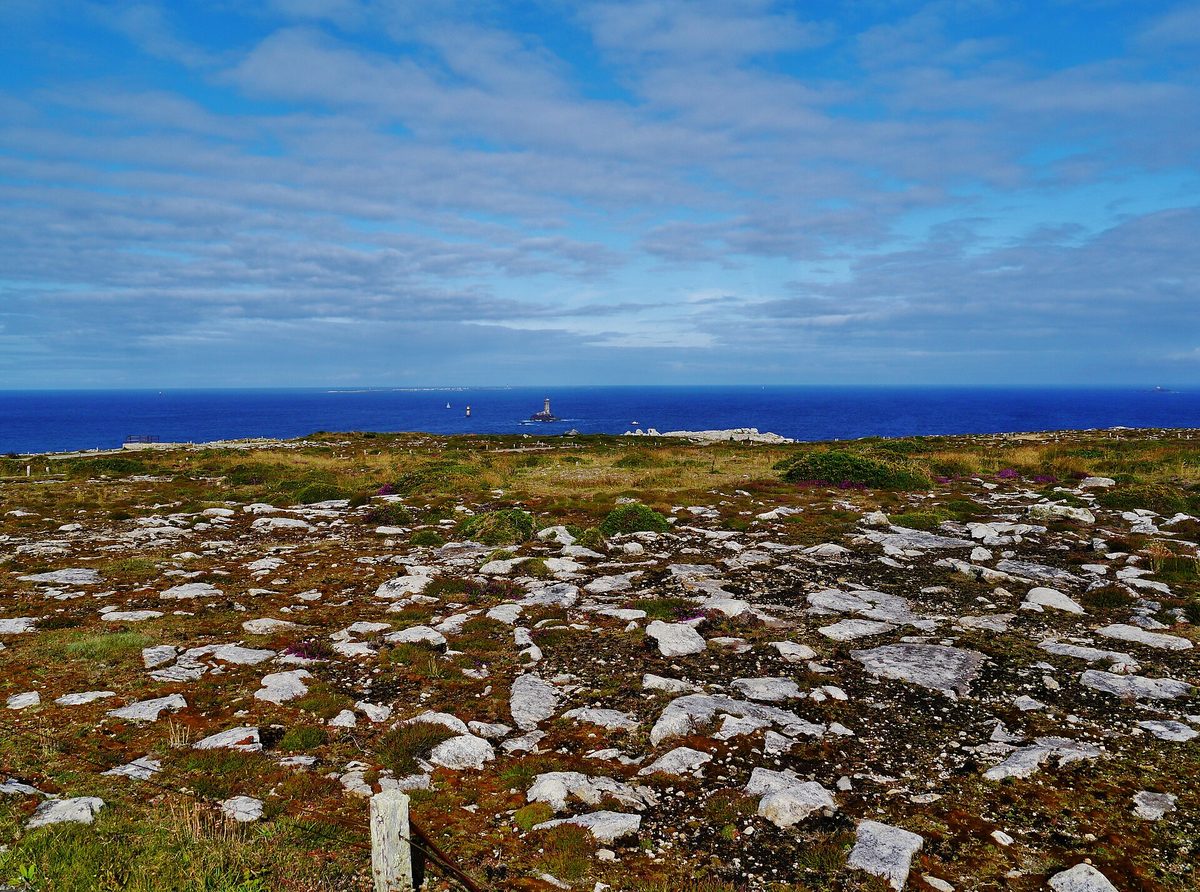
The wild Pointe du Raz, Brittany's western cape.
Foodie Brest: crêpes, markets and seafood
Les Halles Saint-Louis. In the heart of the rebuilt city, the covered Saint-Louis market brims with local produce: Breton butter, fish landed that morning, cheeses and charcuterie — a fine start for a picnic overlooking the roadstead.
Crêpes and galettes. The buckwheat galette filled with egg, ham or andouille sausage and washed down with a bowl of cider is the local institution; save room for a wheat-flour crêpe with salted-butter caramel.
The sea on your plate. The bay of Brest is famed for its scallops and oysters; add langoustines, abalone and spider crab landed at the neighbouring ports. For something heartier, try kig ha farz, the Léon country's beef stew served with a buckwheat pudding.
Breton treats. Melting kouign-amann, prune-studded far breton, salted-butter shortbread: enough to fill the glovebox before you hit the road.
Your first road trip out of Brest
The coast is the star, and it dazzles in every direction. West, Pointe Saint-Mathieu raises its lighthouse and abbey ruins above the Iroise Sea, while Le Conquet sends boats out to the islands of Ouessant and Molène. North, the land of the Abers unfurls its rias and lighthouses, including Île Vierge, the tallest stone lighthouse in Europe. South, the Crozon Peninsula lines up cliffs and secret coves, and further on the Pointe du Raz plunges into the Atlantic.
The perfect first-day loop. Leave Brest heading west to Le Conquet, a little fishing port; carry on to Pointe Saint-Mathieu and its lighthouse set among abbey ruins; then follow the Pays d'Iroise coast and its beaches before returning along the roadstead: about 90 km of salt air that sum up the Breton end of the world in a single day.
When to come: climate and seasons
Under an oceanic climate, Brest is a year-round destination, but the sky changes fast: a shower, a bright spell, a rainbow — sometimes within the hour — so keep a windproof jacket handy. From May to September the days are long and mild (20–22 °C), ideal for the coast and the islands; July and August draw the biggest crowds to the beaches and coast paths. Spring and autumn bring beautiful light and quieter ports; autumn also serves up its storms, spectacular from the headlands. Winter stays mild but windy and wet. No special equipment is needed: Brittany is low-lying and snow-free, and France's Mountain Law does not apply here. If your trip coincides with Brest's great maritime festival, book early — the city fills then with thousands of sailing ships.
Driving tips for France
Tolls: good news in Brittany — the expressways (N12, N165…) are free, and you'll only meet toll gates once you head into the rest of France. There, most accept contactless bank cards, so keep one within reach.
Speed limits: 130 km/h on motorways (110 in rain), 80 on main roads, 50 in towns.
Fuel: "essence" (SP95/SP98) for petrol engines, "gazole/diesel" for diesel.
City driving: several French cities have low-emission zones. Good news: your Eurodrive vehicle is exempt — no sticker is needed.
How far by car?
Approximate driving times from the delivery center.
📍 Your delivery center
Brest: Gateway to Wild, Beautiful Brittany
Book your vehiclePhotos : Auteur inconnu (CC BY-SA 4.0) · Bibliothèque nationale de France (Public domain) · Zairon (CC BY-SA 4.0) — Wikimedia Commons.