

make >
-
 EURODRIVE

Nice: The Jewel of the French Riviera
The Eurodrive guide
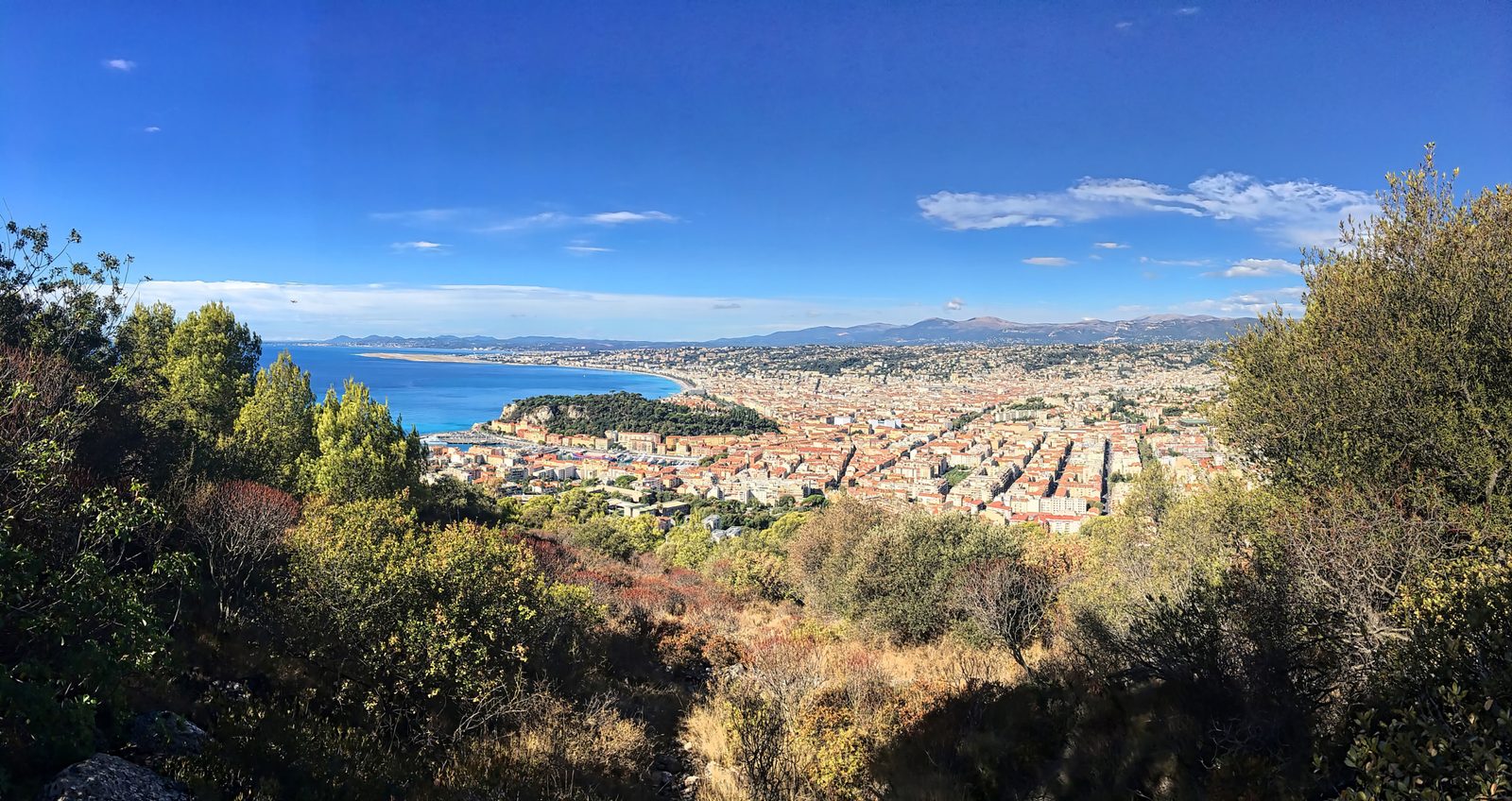
The Baie des Anges and Vieux Nice from Castle Hill.
Azure sea, palm-lined promenades and the glow of the Mediterranean sun: Nice is the heart of the Côte d'Azur, glamorous and yet wonderfully relaxed. Land here and the glittering Riviera, the perched villages of the hinterland and the nearby Italian border are all within reach. Here's how to begin your adventure.
⛽ Fuel up near the delivery center
First things first: the practical essentials
Refuelling near the airport. If you didn't take the optional full-tank service at pick-up, you can refuel near the airport — there's no obligation to return the car full. The closest stop is the Dyneff station right at Nice Côte d'Azur airport, open daily 6 a.m. to 10 p.m. — ideal for a final top-up. Several more stations line the route along the seafront and through the city.
Getting into the city. A tram line (T2) links the airport to central Nice in around 20 minutes; by car the Promenade des Anglais brings you along the sea into town.
Where to spend your first night. The atmospheric streets of Vieux Nice (the old town) and the area near the Promenade are central and full of life.
Your vehicle. Your brand-new Renault is waiting at the airport delivery center under the short-term lease programme.
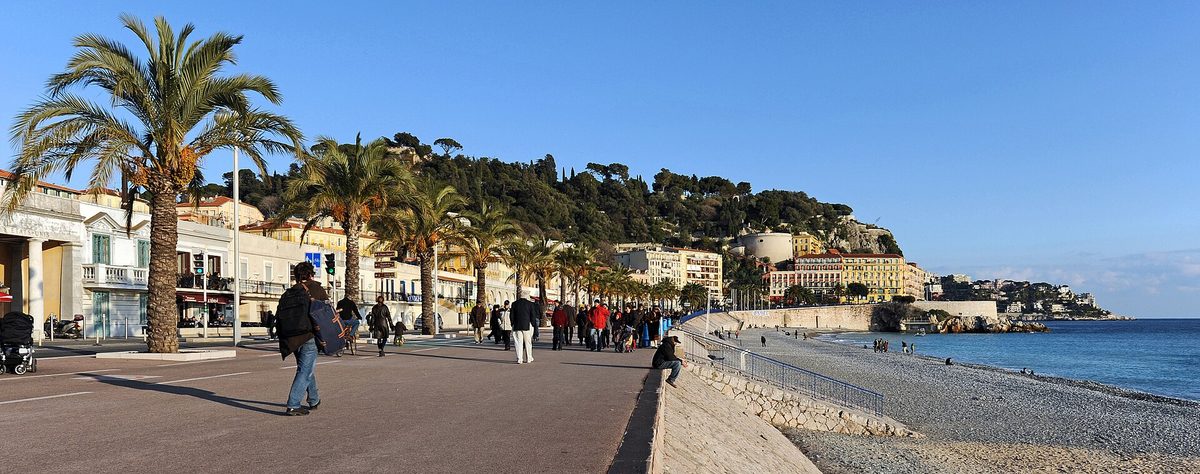
The Promenade des Anglais at the foot of Castle Hill.
Nice's essential sights
The Promenade des Anglais. Seven kilometres of seafront between the airport and Castle Hill: palm trees, the iconic blue chairs, the Belle Époque façade of the Negresco… This is the city's spine — walk it, cycle it, or cruise it with the windows down on your way in.
Vieux Nice. A labyrinth of ochre lanes and baroque squares: Sainte-Réparate cathedral, Place Rossetti and its ice-cream makers, stalls piled with olives and Provençal fabrics. Getting lost here is the whole point.
Castle Hill. Climb up on foot or take the free lift: the sweeping view over the Baie des Anges on one side and the Lympia port on the other is THE Nice postcard — the very photo that opens this page.
Cimiez and the museums. Up on the heights, the Matisse and Chagall museums make a perfect morning; downtown, the MAMAC (modern art) and Place Masséna with its Pompeian-red arcades and Fountain of the Sun.
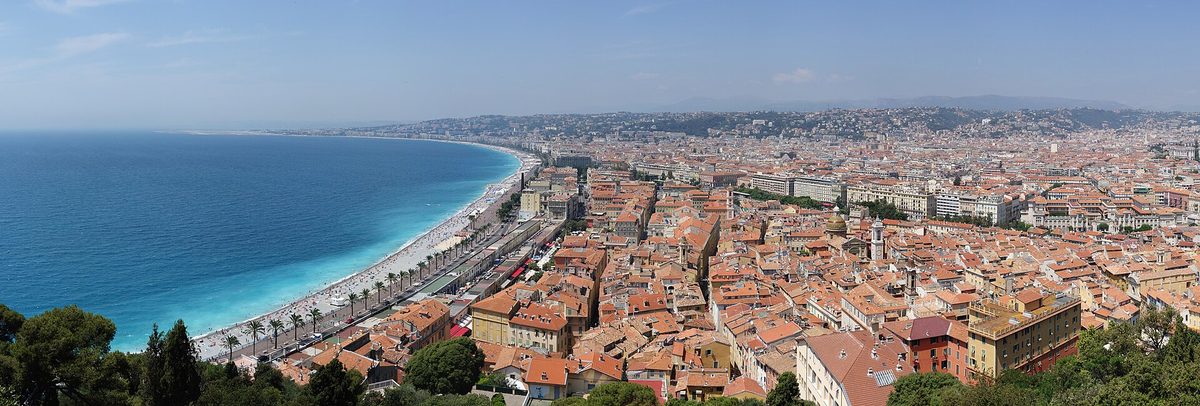
The ochre lanes of Vieux Nice.
Foodie Nice: socca, markets and cuisine nissarde
Cours Saleya. Tuesday to Sunday mornings, the flower and produce market unfurls its striped awnings between the façades of the old town — one of the most beautiful markets in France. On Mondays, antique dealers take over.
Socca. This wood-fired chickpea pancake, crispy and peppery, is the emblem of Niçois street food: try it at Chez Thérésa in the market or Chez Pipo near the port.
And beyond. Pan bagnat, pissaladière, petits farcis, salade niçoise (the real one — no potatoes!)… Cuisine nissarde is best enjoyed on a terrace on Place Rossetti or in the lanes of the old town.
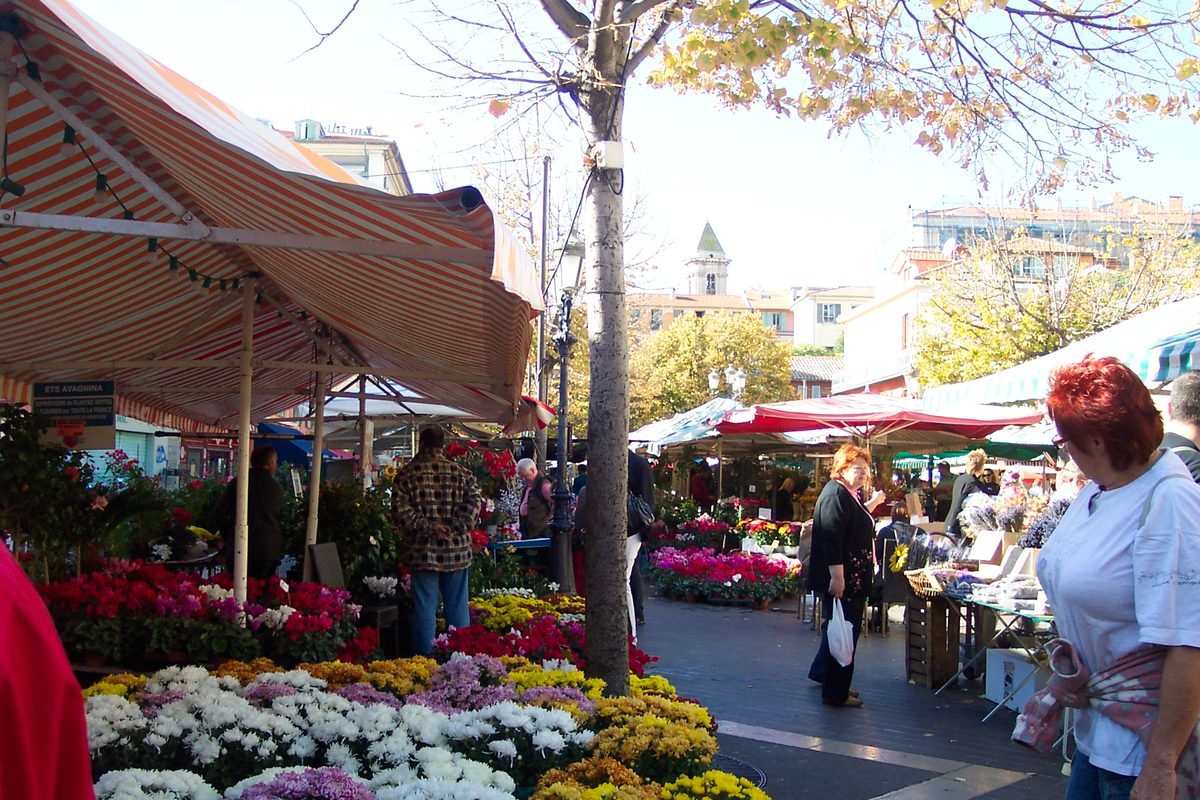
The flower market on Cours Saleya.
Your first road trip out of Nice
The Riviera dazzles in both directions. East along the coast lie Monaco and Menton, with the Italian border and the towns of Liguria beyond — under an hour away. West are Cannes, Antibes and Grasse, the perfume capital. Inland, the dramatic Gorges du Verdon and perched medieval villages like Èze and Saint-Paul-de-Vence.
The perfect first-day loop. Leave Nice on the Moyenne Corniche to the village of Èze, suspended above the sea; carry on to Monaco (the Rock, Monte-Carlo), push on to lemon-scented Menton, then come home along the Grande Corniche and its lookouts: about 70 km that distil the whole Riviera into a single day.
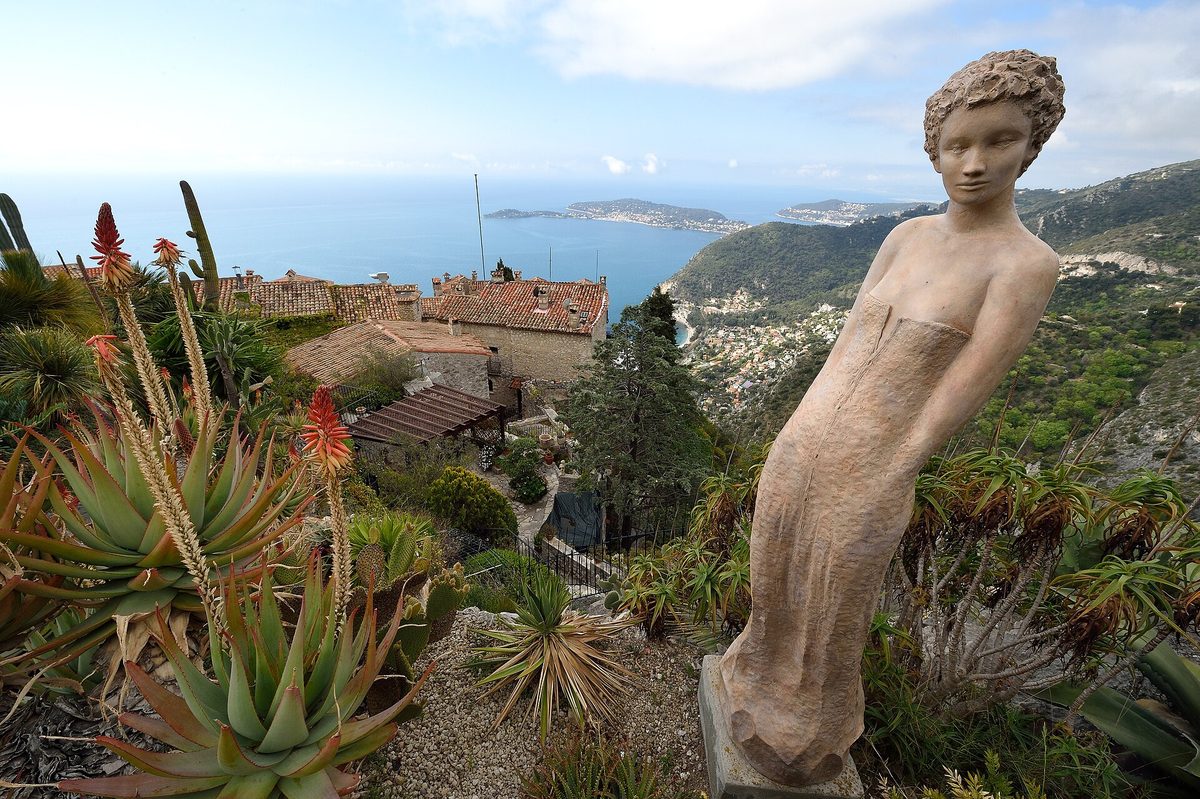
The perched village of Èze.
When to come: climate and seasons
With nearly 300 days of sunshine a year, Nice is a year-round destination. May–June and September–October are ideal: pleasant sea, superb light, easy traffic. Summer is glorious but busy — on the coast, set off early in the morning to enjoy the corniches before the traffic. Winter is mild (often 15 °C by day): the Nice Carnival in February, mimosa in bloom along the coast… If you head up towards the Mercantour, France's Mountain Law requires winter tyres or chains in Alpine communes from 1 November to 31 March — equip yourself accordingly.
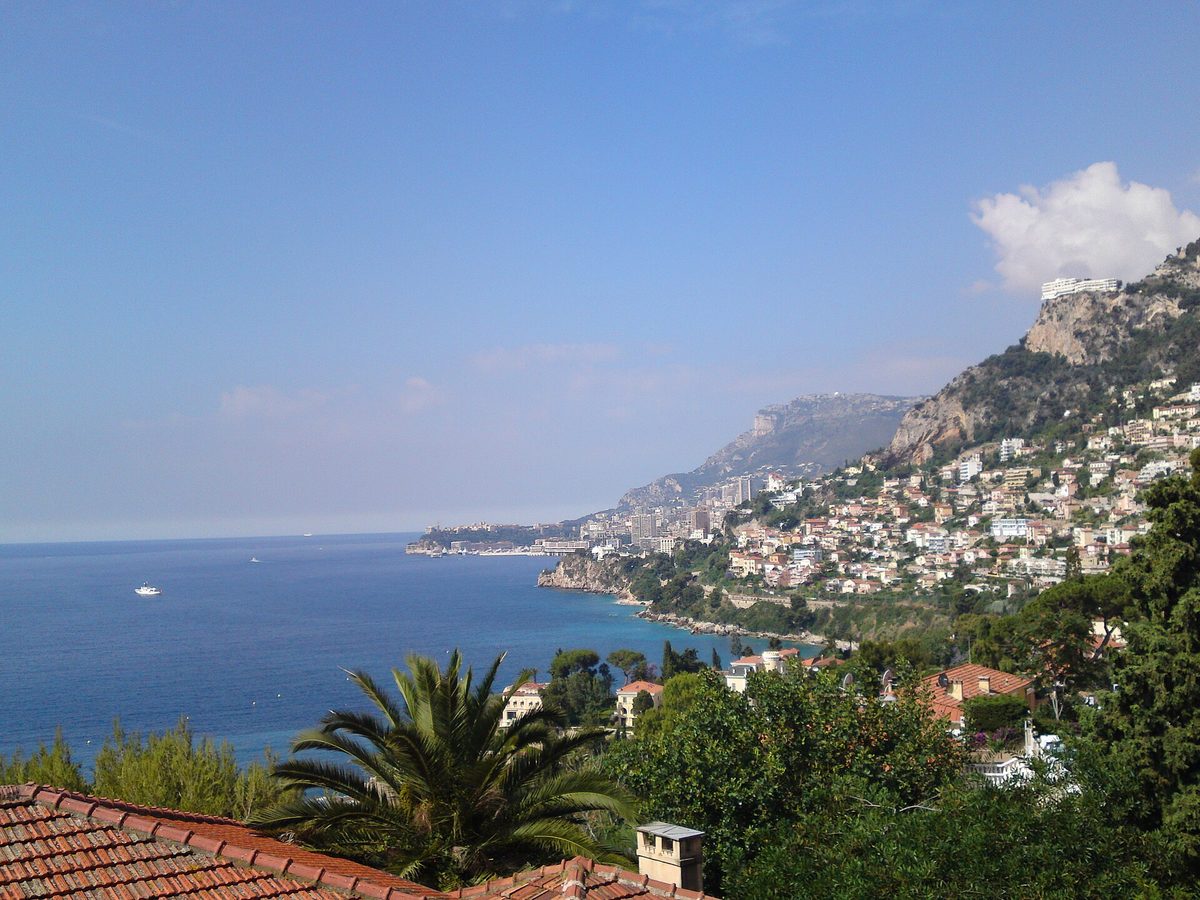
Monaco, under an hour east.
Driving tips for France
Tolls: Many French motorways are tolled. Most toll gates accept contactless bank cards — keep one within reach.
Speed limits: 130 km/h on motorways (110 in rain), 80 on main roads, 50 in towns.
Fuel: "essence" (SP95/SP98) for petrol engines, "gazole/diesel" for diesel.
City driving: several French cities have low-emission zones. Good news: your Eurodrive vehicle is exempt — no sticker is needed.
How far by car?
Approximate driving times from the delivery center.
📍 Your delivery center
Nice: The Jewel of the French Riviera
Book your vehiclePhotos : Tristan Mimet (CC BY 3.0) · Cayambe (CC BY-SA 3.0) · Spike (CC BY-SA 4.0) · Patrice Semeria (Public domain) · Tim Adams (CC BY 3.0) · zeisel (CC BY 3.0) — Wikimedia Commons.