

make >
-
 EURODRIVE

Porto: Port Wine, Tiles and the Soul of the North
The Eurodrive guide
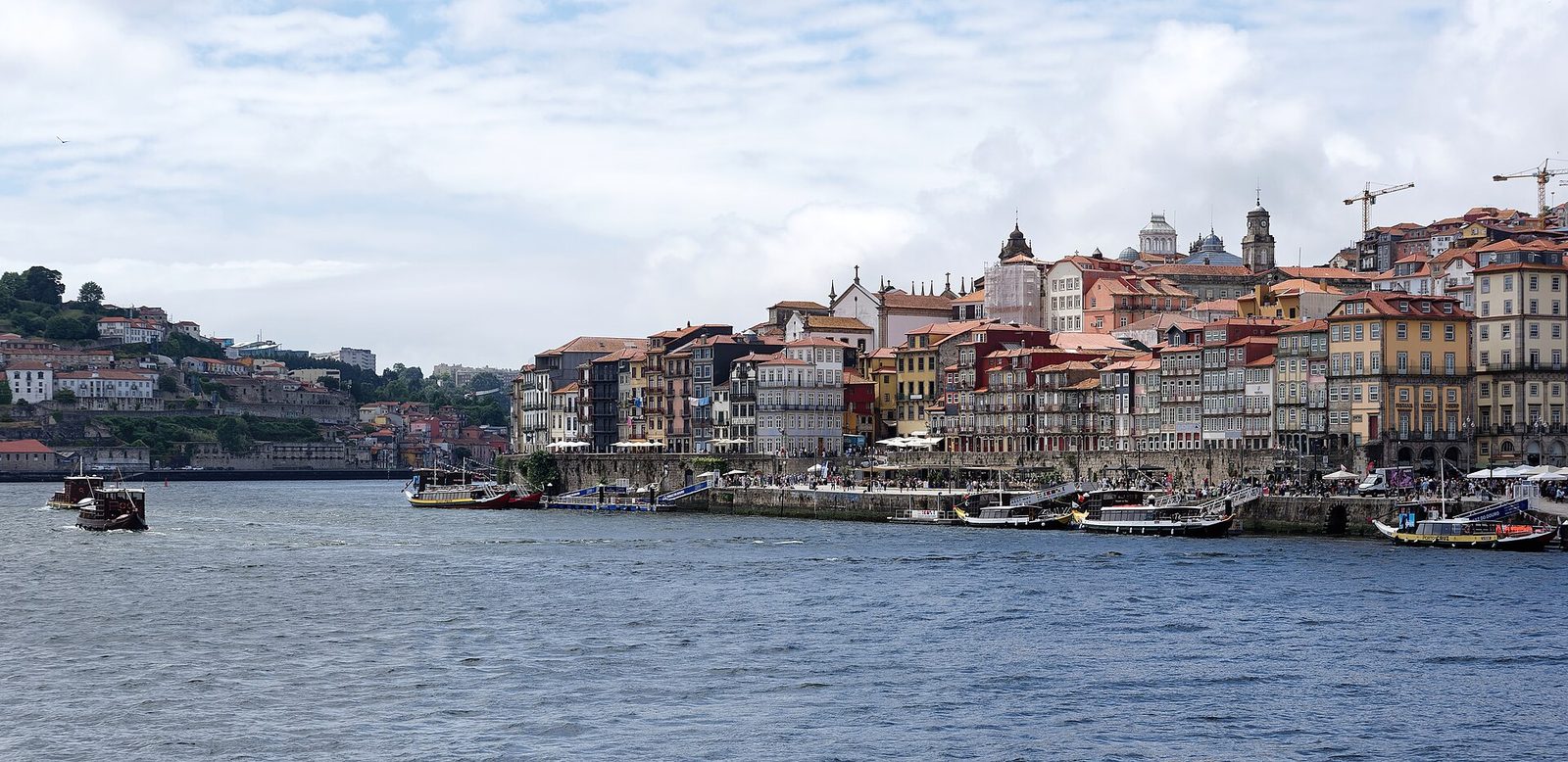
Porto, soul of the north.
Tumbling down to the Douro river in a cascade of terracotta roofs and azulejo tiles, Porto is Portugal's soulful second city — home to port wine, baroque churches and an unhurried charm. Land here and the Douro Valley vineyards, the northern coast and historic towns are all within reach. Here's how to begin.
⛽ Fuel up near the delivery center
First things first: the practical essentials
Refuelling near the airport. If you didn't take the optional full-tank service at pick-up, you can refuel near the airport — there's no obligation to return the car full. The handiest stop is the Galp station in Perafita, a few minutes from the delivery centre and open 24 hours — ideal whatever your flight time. Several more stations line the route through Matosinhos toward the city.
Getting into the city. The metro (line E, the purple line) links the airport to central Porto in around 30 minutes. By car, the A28 and the ring roads bring you into town quickly — though the final stretch into the historic centre is a maze of one-way streets.
Where to spend your first night. The UNESCO-listed Ribeira district on the riverbank and the streets around the Clérigos tower are atmospheric and central — just be ready for steep, narrow lanes and scarce parking; a hotel garage is worth its price here.
Your vehicle. Your brand-new Renault is waiting at the delivery centre near Francisco Sá Carneiro Airport, ready to roll under the short-term lease programme — tax-free, fully insured and yours for the whole trip.
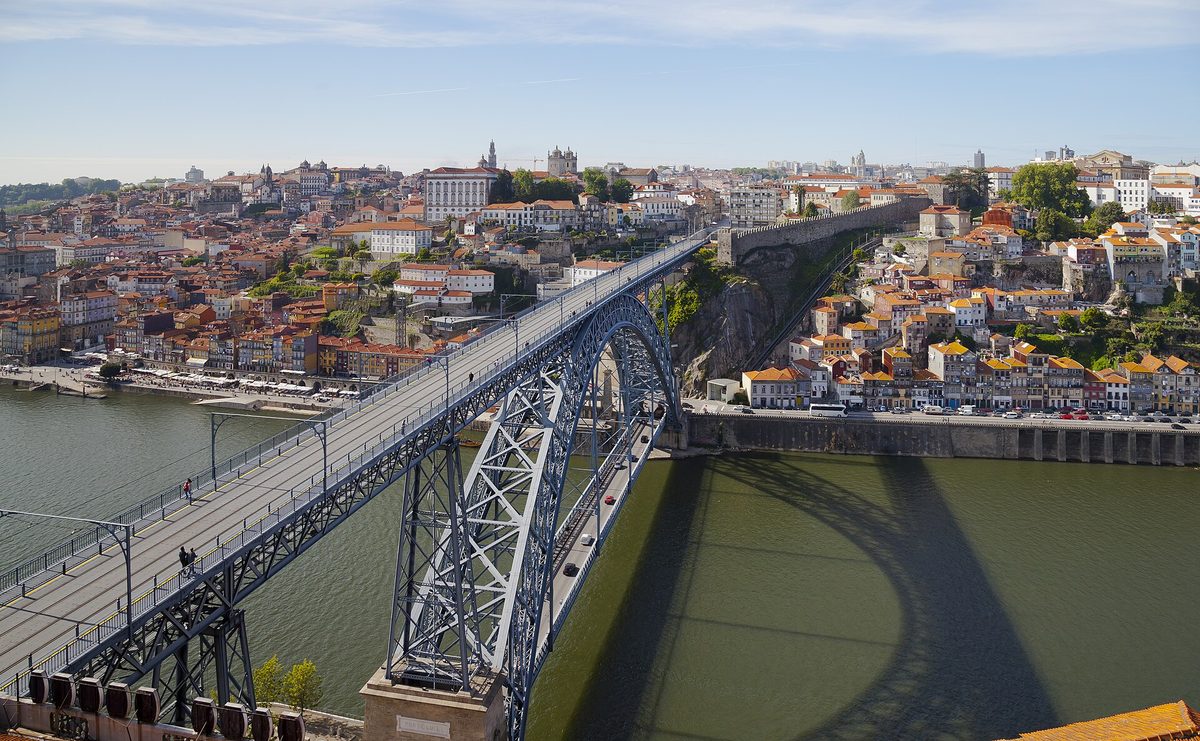
The Dom Luís I bridge over the Douro.
Porto's essential sights
The Ribeira and the Douro. Porto's postcard: a tumble of terracotta and pastel houses dropping to the quays, where rabelo boats — once used to carry the port barrels downriver — bob on the water. Wander the Cais da Ribeira, then let the alleys pull you uphill through the medieval core.
The Dom Luís I bridge. This double-deck iron arch, designed by a disciple of Eiffel, is the city's icon. Walk the upper deck for a dizzying view over the river, the old town and the cellars opposite, then cross to Gaia.
São Bento, Clérigos and Lello. Step into São Bento station to see some 20,000 azulejo tiles telling Portugal's history; climb the baroque Clérigos tower for the rooftops; and squeeze into the ornate Livraria Lello, one of the world's most beautiful bookshops.
The Gaia cellars. Cross the river to Vila Nova de Gaia, where the great port houses — Graham's, Taylor's, Sandeman and more — line the hillside. Tour a cellar and taste tawny or vintage at sunset, with Porto glowing across the water.
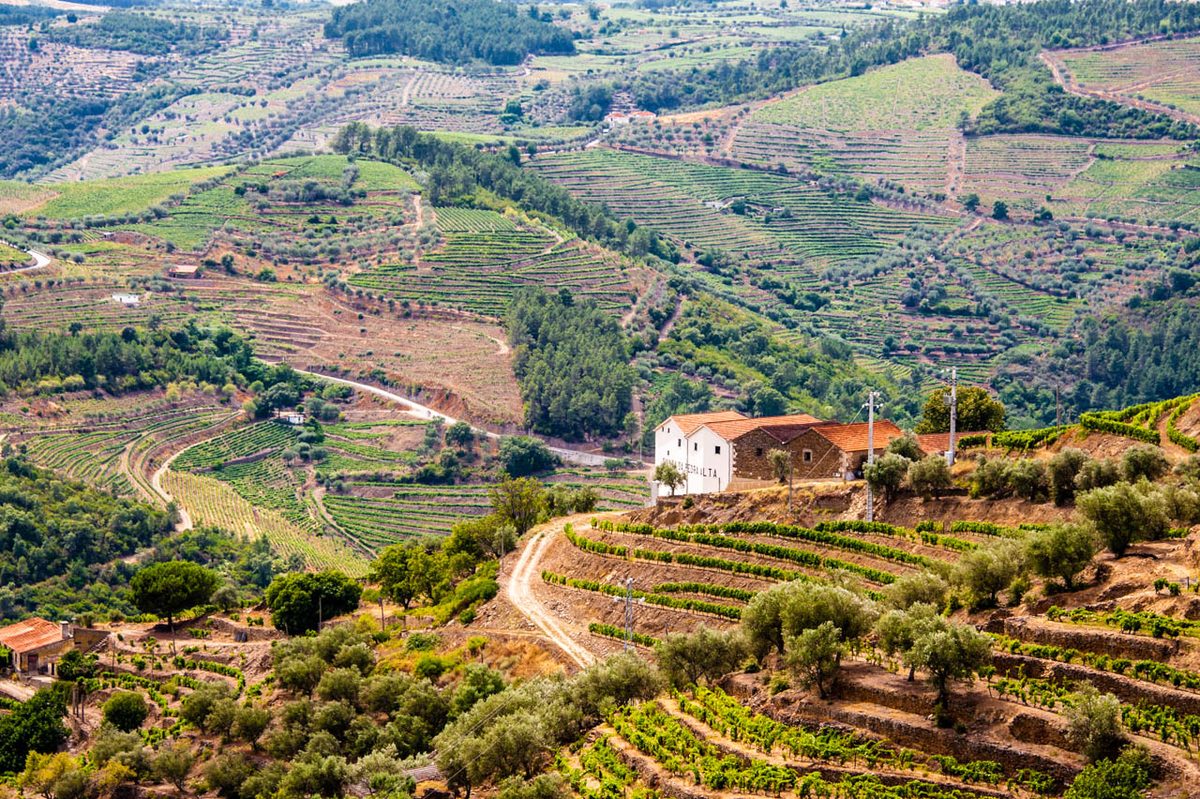
The terraced Douro Valley vineyards.
Foodie Porto: francesinha, markets and port
The francesinha. Porto's mighty signature sandwich: layers of steak, sausage and ham under melted cheese, drowned in a spiced tomato-and-beer sauce and usually crowned with a fried egg and a heap of fries. Café Santiago, Cufra and Brasão all have their devotees — go hungry.
The markets. The beautifully restored Mercado do Bolhão, a two-tier iron-and-stone hall, is back in full swing with fishmongers, greengrocers and tiny tascas; across the river, the Mercado Beira-Rio in Gaia is a lively modern food hall by the water.
Tripe and the sea. Locals are proudly nicknamed tripeiros for their tripe stew, tripas à moda do Porto; the coast delivers grilled sardines, fresh fish in Matosinhos and endless variations on bacalhau (salt cod).
Something sweet, and a glass. Finish with a warm pastel de nata and, of course, a glass of port — or explore the Douro's bold reds and the crisp, faintly sparkling vinho verde from the green Minho just to the north.
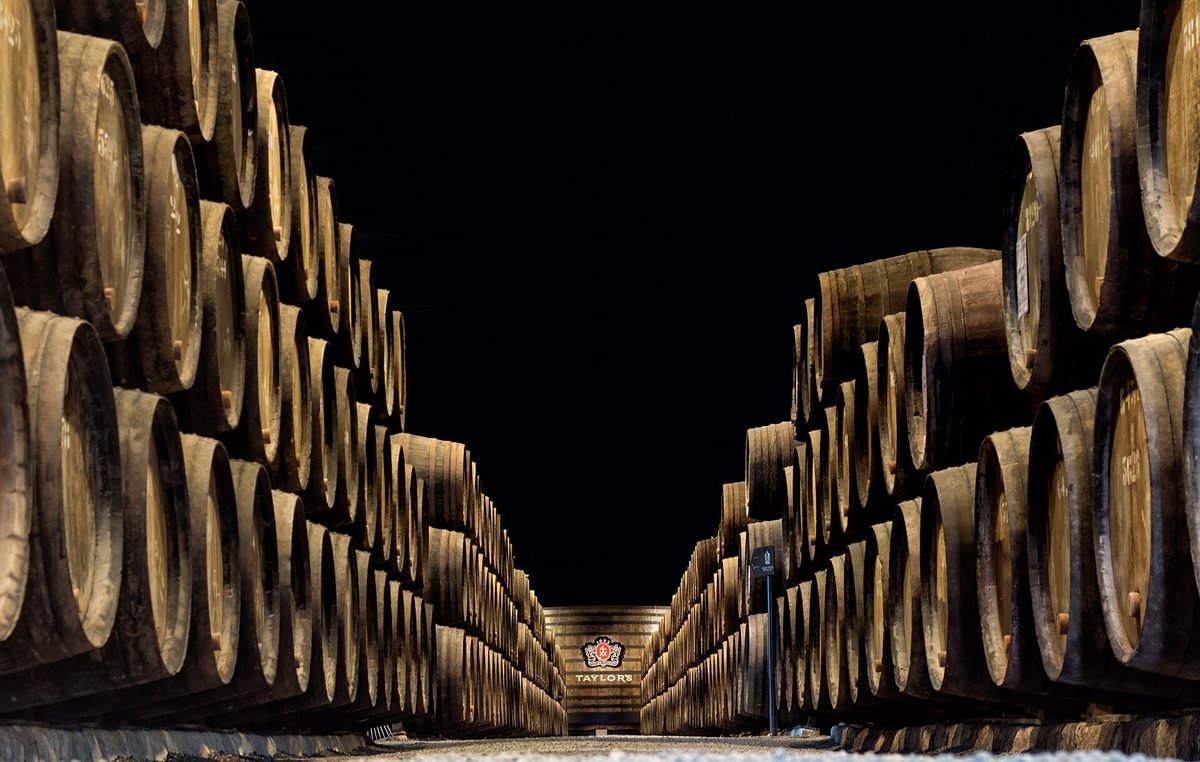
Port wine ageing in the Gaia cellars.
Your first road trip out of Porto
The north rewards drivers in every direction. East, the terraced Douro Valley — one of the world's most beautiful wine regions — unfurls about 90 minutes away, its river switchbacking between vineyards. North lies the green Minho: Guimarães, cradle of the nation, and baroque Braga, both under an hour. South, the canals of Aveiro and long Atlantic beaches make easy escapes.
The perfect first-day loop. Head north to Guimarães, where a hilltop castle and a UNESCO-listed old town mark the birthplace of Portugal; carry on to Braga to climb the theatrical Bom Jesus do Monte staircase; then loop back to Porto on the A3 — around 130 km that pack Minho history, baroque splendour and green hills into a single, unhurried day.
When to come: climate and seasons
Porto has a mild Atlantic climate — greener and rainier than the Algarve, and rarely scorching. May–June and September are the sweet spot: warm days, softer crowds and long golden light on the river. Summer is pleasant (mid-20s °C) and lively; if you're here on the night of 23 June, dive into the São João festival — a joyful street party of grilled sardines, bonfires and squeaky plastic hammers bopped on every passing head. Autumn brings the Douro grape harvest, when the terraces turn amber. Winter is mild but wet, with days around 14 °C — pack a rain jacket and grippy soles for the slick granite cobbles, and you'll have the sights almost to yourself.
Driving tips for Portugal
Tolls: Many Portuguese motorways are electronic and some are barrier-free. With a foreign plate, register your card via the EASYToll service at the automatic kiosks near the border, or settle within five days at a CTT post office or a Payshop point to avoid fines — if you're unsure how your car is set up, ask at the delivery centre.
Speed limits: 120 km/h on motorways, 90 on main roads, 50 in towns; police enforce them keenly.
Fuel: "gasolina" is petrol, "gasóleo" is diesel — check your fuel flap before the first fill.
Low-emission zones: Portugal has very few; only central Lisbon restricts older cars, and Porto has none — your new Euro 6 Eurodrive vehicle meets the standards, with no windscreen sticker required anywhere in the country.
Local note: old-town streets are steep, narrow and often one-way — take them slowly and lean on the metro or a central garage.
How far by car?
Approximate driving times from the delivery center.
📍 Your delivery center
Porto: Port Wine, Tiles and the Soul of the North
Book your vehiclePhotos : Jakub Hałun (CC BY 4.0) · Diego Delso (CC BY-SA 3.0) · mat's eye (CC BY 2.0) · Ray in Manila (CC BY 2.0) — Wikimedia Commons.