
make >
-
 EURODRIVE

Bordeaux: World Capital of Wine
The Eurodrive guide
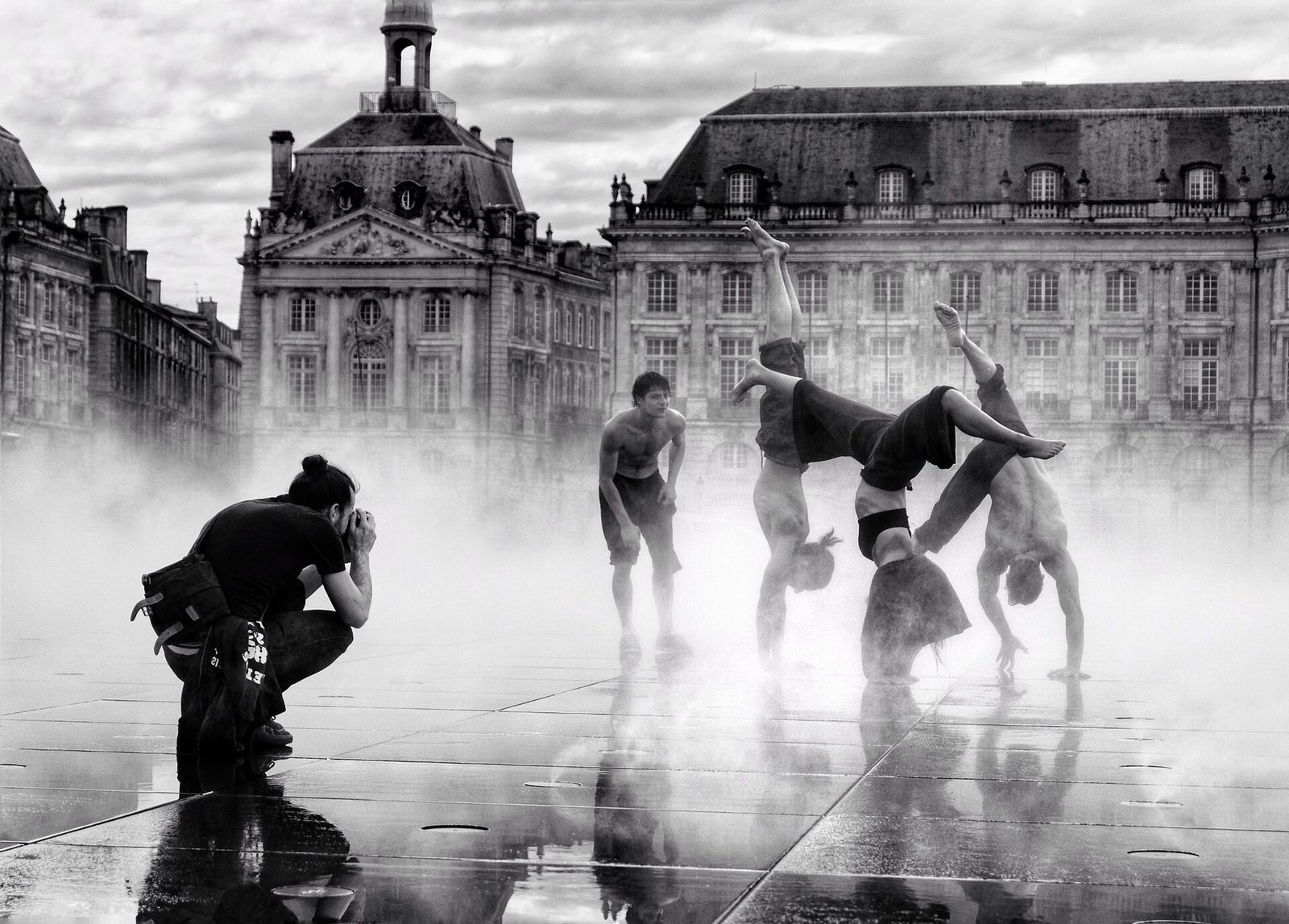
The Miroir d'eau and the Place de la Bourse, the heart of Bordeaux.
Elegant, golden-stoned and endlessly refined, Bordeaux is one of France's most beautiful cities and the undisputed capital of wine. Land at Mérignac and the great vineyards, the Atlantic dunes and the surfing beaches of the southwest are all within reach. Here's how to begin your adventure.
⛽ Fuel up near the delivery center
First things first: the practical essentials
Filling up near the airport. If you didn't take the optional full-tank service at pick-up, you can refuel near the airport — there's no obligation to return the car full. The handiest 24/7 stop is the TotalEnergies Access at the Aire du Truc, right on the ring road (the rocade) at Mérignac, about three kilometres away. A 24-hour Carrefour station on Avenue de la Somme makes a second option on the way in.
Getting into the city. Bordeaux's centre sits about twelve kilometres east: by car the rocade and the A630 bring you in within twenty minutes or so, while the 30'Direct shuttle links the airport to Gare Saint-Jean and the centre in around half an hour.
Where to spend your first night. The streets around the Place de la Bourse, the medieval Saint-Pierre quarter and the wine-merchant district of Chartrons are central, handsome and made for walking.
Your vehicle. Your brand-new Renault is waiting at the delivery centre beside Bordeaux-Mérignac airport, ready to drive away under the short-term lease programme.
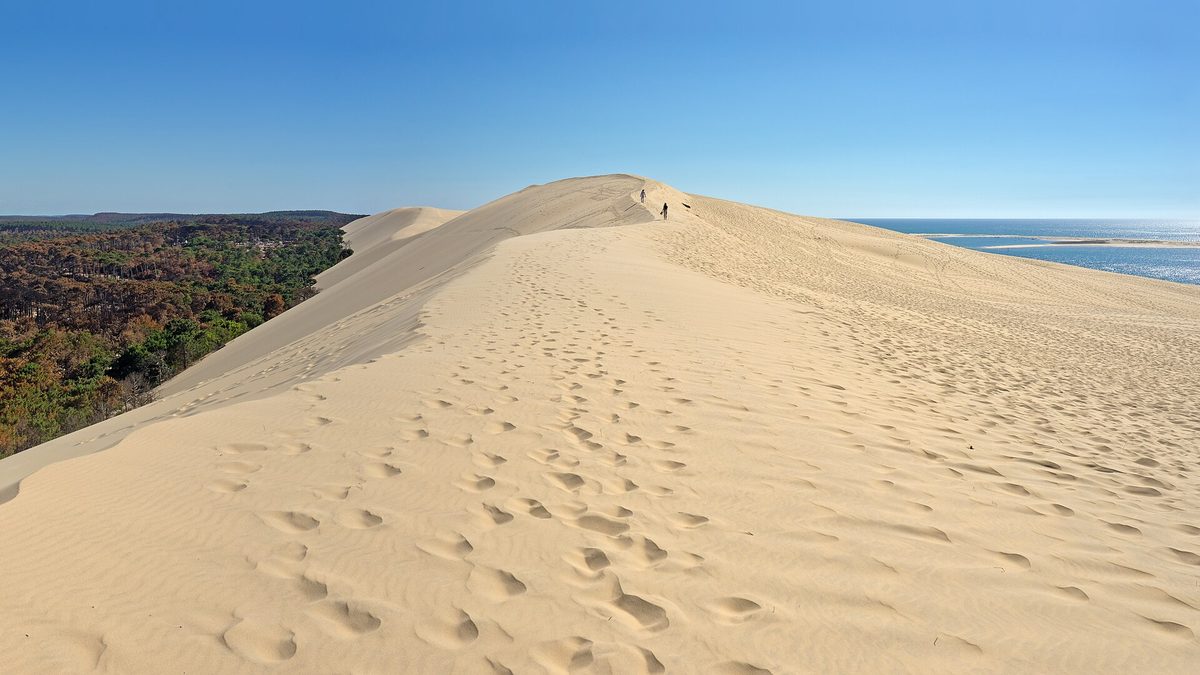
The Dune du Pilat, Europe's tallest sand dune, an hour from Bordeaux.
Bordeaux's essential sights
Place de la Bourse and the Miroir d'eau. The grandest ensemble of 18th-century Bordeaux faces the river across the world's largest reflecting pool — a thin sheet of water that mirrors the golden façade before dissolving into a cloud of mist. It is the photo that opens this page, and the city's living postcard.
Old Bordeaux and Saint-Pierre. Behind the quays lies a warren of medieval lanes: the Porte Cailhau, the great belfry of the Grosse Cloche, and the café-lined Place du Parlement. Getting pleasantly lost here, glass in hand, is the whole idea.
Towers and spires. Climb the Pey-Berland tower beside the UNESCO-listed Saint-André cathedral, or the soaring detached spire of the Basilique Saint-Michel — the tallest in southern France — for a sweeping view over rooftops and river.
La Cité du Vin and the quays. The striking, decanter-shaped wine museum stands downstream on the Garonne; nearby, the Bassins des Lumières fills a wartime submarine base with digital art. Between them runs the reborn riverfront promenade, from the Place des Quinconces — the largest square in France — to the Jardin Public.
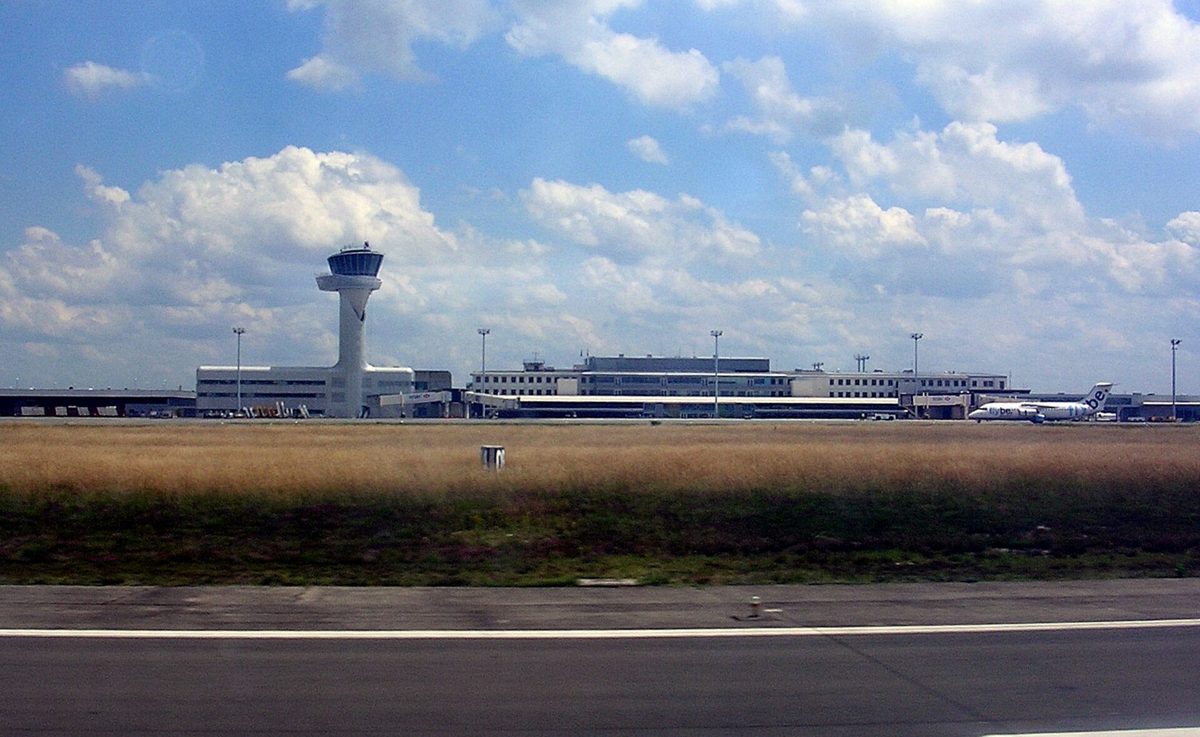
Bordeaux-Mérignac airport, gateway to the southwest.
Foodie Bordeaux: markets, cannelés and the vine
Le Marché des Capucins. Nicknamed "the belly of Bordeaux", the covered market is a Sunday-morning institution: order a dozen Arcachon oysters and a glass of chilled white and you have breakfast the local way. On the quays at Chartrons, the Sunday market unfurls along the river.
The sweet emblem. The cannelé — a small fluted cake, dark and caramelised outside, soft with rum and vanilla within — is Bordeaux in a mouthful; buy them warm at Baillardran or La Toque Cuivrée.
At the table. Entrecôte à la bordelaise grilled over vine cuttings with a shallot-and-red-wine sauce, oysters from the Bassin d'Arcachon served with hot crépinettes, autumn cèpes, lamb from Pauillac… southwest cooking is generous and unhurried.
And the wine, of course. The great reds of the Médoc, Saint-Émilion and Pomerol, the golden sweet Sauternes, the fresh whites of Entre-deux-Mers: start at the CIVB wine bar on the Cours du 30 Juillet, a glass of grand cru without the ceremony.
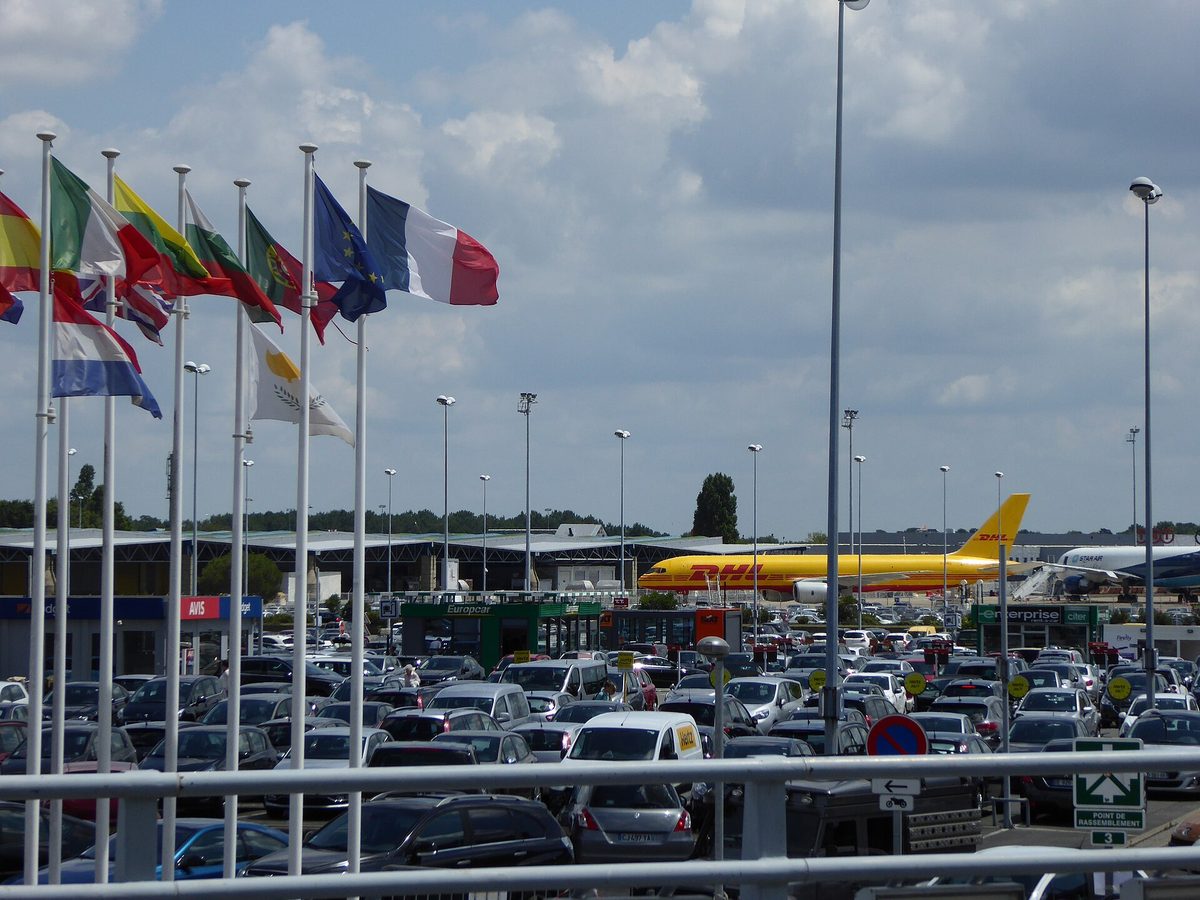
European flags on arrival: your Renault is waiting nearby.
Your first road trip out of Bordeaux
Wine country beckons in every direction. East across the Dordogne lie Saint-Émilion and its UNESCO village; north, the château-lined Route des Vins of the Médoc runs from Margaux to Pauillac; south, the golden vineyards of Sauternes. West, the Atlantic offers Europe's tallest sand dune at the Dune du Pilat, the oyster villages of the Bassin d'Arcachon and the surf of Cap Ferret, all about an hour away.
The perfect first-day loop. Head east to Saint-Émilion (about fifty minutes): wander the medieval, honey-coloured village, its monolithic church carved from the rock and its slopes of Merlot; lunch among the vines; then loop home through the gentle hills of the Entre-deux-Mers, scattered with bastides and old abbeys between the two rivers — roughly 100 km that distil the Bordeaux vineyard into a single day.
When to come: climate and seasons
Bordeaux enjoys a mild Atlantic climate, and there is no bad season to arrive. May–June and September–October are the sweet spots: warm days, long light and, in early autumn, the buzz of the grape harvest across the vineyards. Summer is warm and sunny — sometimes hot — and the coast at Arcachon and Cap Ferret fills up, so set off early for the beaches and dunes. Winter stays gentle but wet: expect grey, rainy spells and pack a waterproof rather than snow gear. Note that the region is flat and coastal — no winter tyres or chains are needed here, unlike the Pyrénées far to the south.
Driving tips for France
Tolls: Many French motorways are tolled, including the A10 and A63 out of Bordeaux. Most toll gates accept contactless bank cards — keep one within reach.
Speed limits: 130 km/h on motorways (110 in rain), 80 on main roads, 50 in towns.
Fuel: "essence" (SP95/SP98) for petrol engines, "gazole/diesel" for diesel.
City driving: Bordeaux Métropole has a low-emission zone (ZFE). Good news: your brand-new Eurodrive vehicle meets the cleanest standard and drives in freely — no sticker to worry about.
How far by car?
Approximate driving times from the delivery center.
📍 Your delivery center
Bordeaux: World Capital of Wine
Book your vehiclePhotos : Mathieu Lobet (CC BY 3.0) · Jörg Braukmann (CC BY-SA 4.0) · Jibi44 (CC BY 2.5) · Ardfern (CC BY-SA 3.0) — Wikimedia Commons.