

make >
-
 EURODRIVE

Frankfurt: Skyline City and the Heart of Germany
The Eurodrive guide
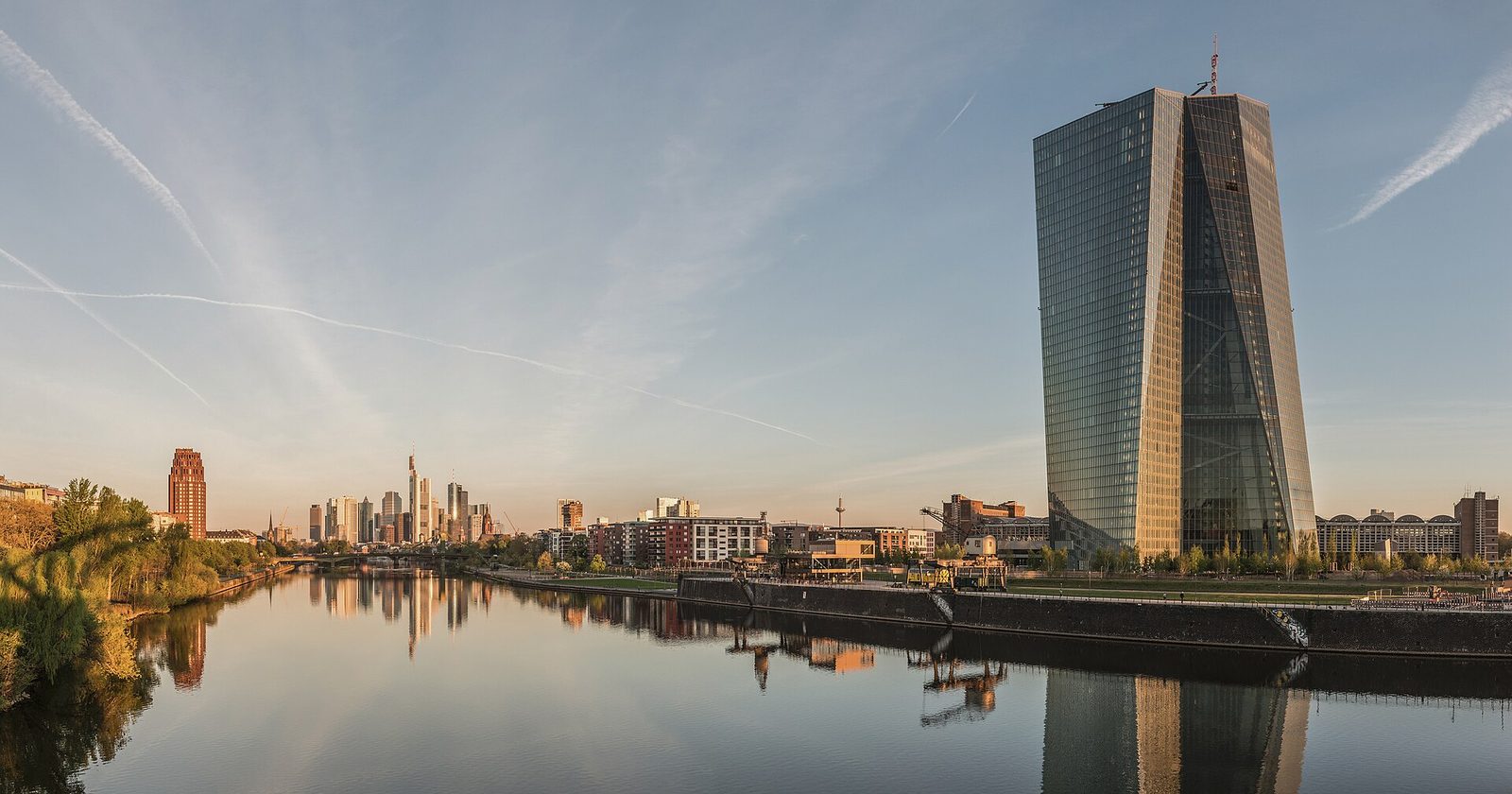
Frankfurt's skyline and the ECB mirrored in the Main at dawn.
Germany's financial capital surprises: behind the gleaming skyline ("Mainhattan") lie an old town rebuilt stone by stone, a riverbank lined with museums and a cheerful tradition of apple wine and hearty food. Land at one of Europe's busiest airports and the castle-studded Rhine Valley, Heidelberg and Germany's half-timbered towns are all within driving reach. Here's how to begin.
⛽ Fuel up near the delivery center
First things first: the practical essentials
Refuelling near the centre. If you didn't take the optional full-tank service at pick-up, feel free to refuel — there's no obligation to return the car full. The handiest stops are open 24 hours by the airport, a few minutes from the centre along the A5: the Shell on the Airportring, with the Esso at Unterschweinstiege right beside it. Pay at the pump or inside, and keep your receipt.
Getting into the city. From Langen, the A5 runs north and drops you into the heart of Frankfurt in about twenty minutes. Without a car, Langen's own station (S-Bahn S3/S4) reaches Frankfurt Hauptbahnhof in around 20 minutes.
Where to spend your first night. The rebuilt Altstadt around the Römer, and above all the Sachsenhausen district across the Main, are central, lively and full of taverns.
Your vehicle. Your brand-new Renault is waiting at the M.D.S Parc delivery centre in Langen, at the gateway to the airport — ready for the autobahn under the short-term lease programme.
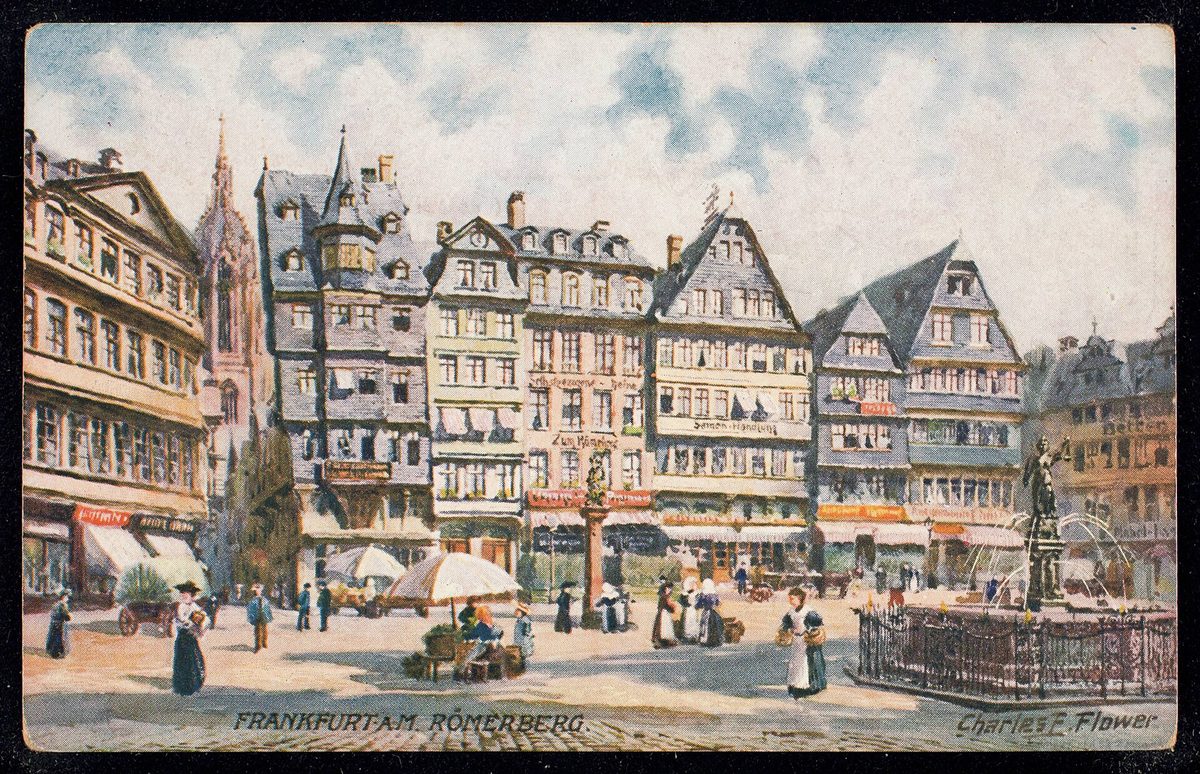
The Römerberg old town square.
Frankfurt's essential sights
The Römerberg and the new old town. The city's historic heart, Römer square lines up its gabled façades and medieval town hall. Beside it, the DomRömer quarter — rebuilt true to the originals and unveiled in 2018 — threads a maze of restored lanes from the Römer to the imperial cathedral (Kaiserdom).
The Museumsufer. The Main's south bank holds one of Europe's densest clusters of museums: the Städel with its old and modern masters, the Film Museum, the Museum of Applied Art… A riverside stroll takes you past them all.
The Main Tower. The only office tower in the financial district open to the public: 200 metres up, its viewing platform sweeps across all of "Mainhattan" and the river's bend — spectacular at sunset.
Sachsenhausen and Goethe's house. Cross the Main for Sachsenhausen's cobbled lanes and cider taverns; downtown, Goethe's birthplace recalls that Frankfurt was a literary capital too.
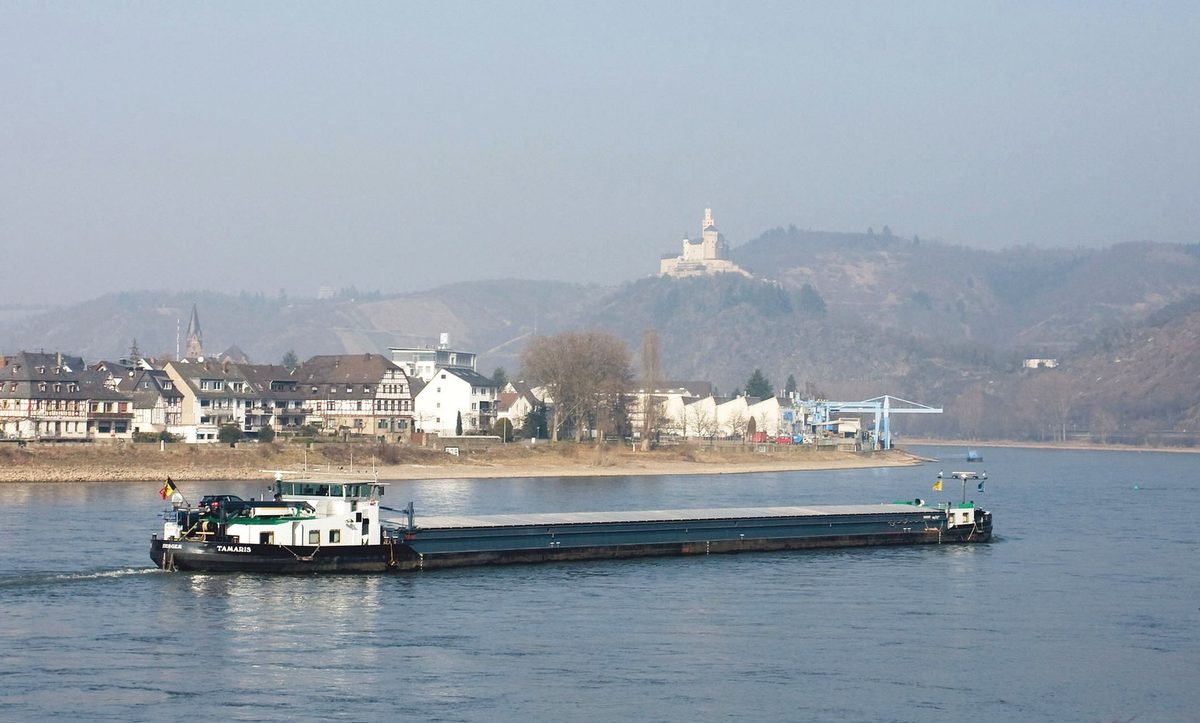
The castle-lined Rhine Valley.
Foodie Frankfurt: Ebbelwoi, Grüne Soße and the Kleinmarkthalle
The Kleinmarkthalle. Steps from the Römer, this covered market is Frankfurt's belly: charcuterie, cheeses, spices, and upstairs a run of counters where locals lunch elbow to elbow on Handkäse or a grilled sausage.
Grüne Soße. "Grie Soß" is THE Frankfurt dish: a cold sauce of seven herbs (borage, chervil, cress, parsley, salad burnet, sorrel, chives) poured over hard-boiled eggs and potatoes — a local institution, celebrated every spring.
Apple wine. Apfelwein — Ebbelwoi in dialect — is drunk cool in Sachsenhausen's taverns, served from a stoneware Bembel jug into a ribbed glass. Pair it with Rippchen mit Kraut (cured pork and sauerkraut) or Handkäse mit Musik.
Something sweet. Don't leave without a Frankfurter Kranz, a buttercream-and-praline ring cake, or a handful of Bethmännchen, little marzipan-and-almond balls.
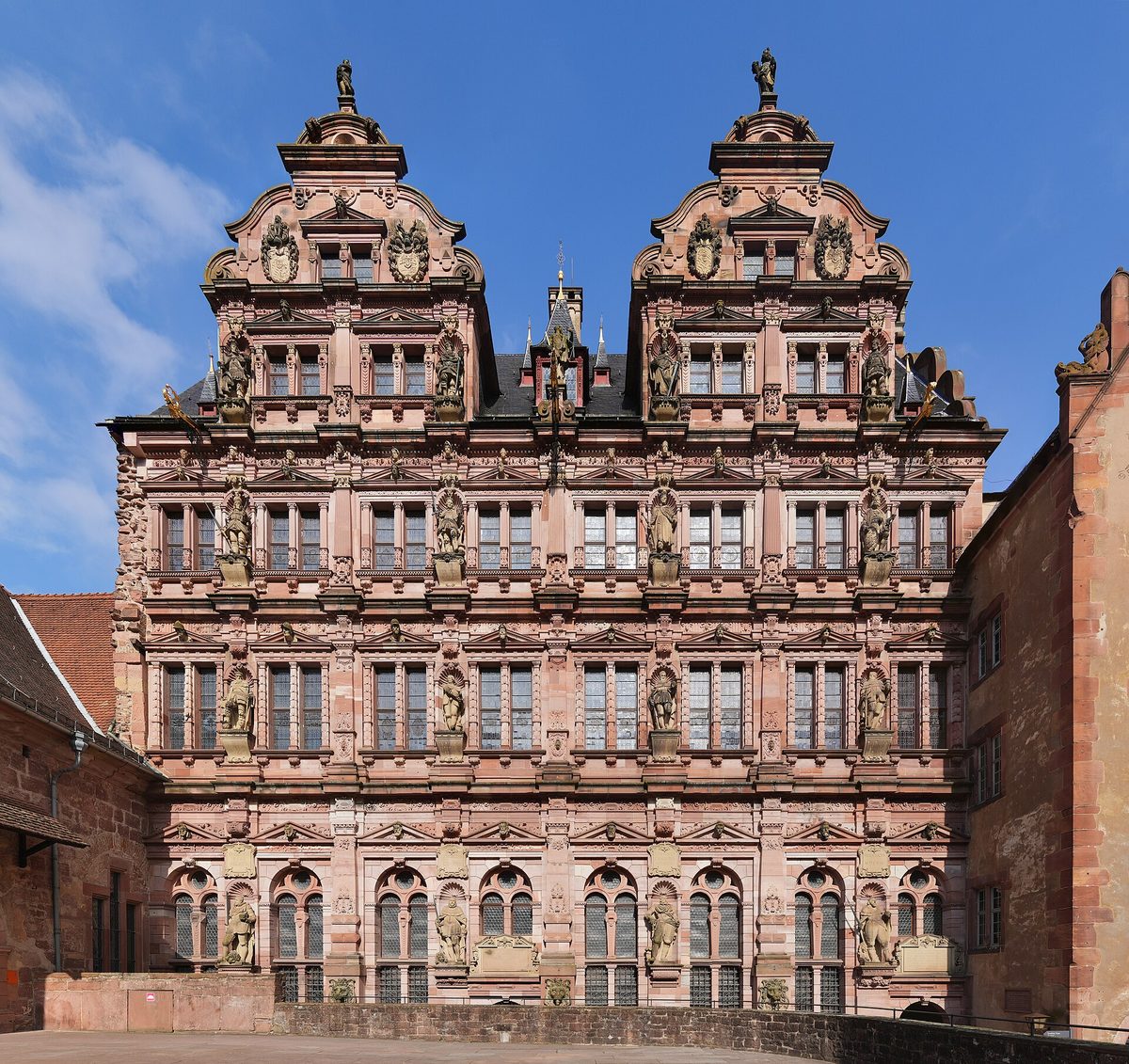
Heidelberg, an hour south.
Your first road trip out of Frankfurt
Postcard Germany begins an hour away. To the west, the romantic Rhine Valley unrolls its vineyards and hilltop castles between Rüdesheim and Koblenz — the UNESCO-listed Upper Middle Rhine, home to the famous Loreley rock. To the south, Heidelberg and its red-sandstone castle look down over the Neckar. Close by, the spa town of Wiesbaden and Mainz, Gutenberg's city, make an easy half-day. And for a fairytale set, the Romantic Road leads to walled Rothenburg ob der Tauber.
The perfect first-day loop. Take the A66 west to Wiesbaden, then Rüdesheim, a pretty Rheingau wine town; ride the cable car up to the Niederwald monument for the view over the river, then follow the Rhine bank (B42) past castle after castle to the foot of the Loreley; return via Mainz and the motorway — about 200 km that distil the valley into a single day.
When to visit Frankfurt: climate and seasons
Frankfurt is a year-round city, with a temperate climate and clear seasons. Spring (April–June) and early autumn (September–October) are the most pleasant: mild days, open terraces and, come September–October, the Rheingau grape harvest and wine festivals. Summer is warm (often 25–30 °C) and studded with riverside festivals such as the Museumsuferfest in August. Winter is cold and sometimes snowy, but magical in December when the Christmas market lights up the Römerberg. One practical note: Germany enforces a "situational" winter-tyre rule — whenever there is snow, ice or frost the car must be shod accordingly, especially if you climb into the Taunus; in the cold season, check your car's winter equipment.
Driving tips for Germany
Tolls: good news — Germany's motorways (Autobahn) are free for cars, and no vignette is required.
Speed: many autobahn stretches have no fixed limit (130 km/h recommended), but watch the signs, common around cities and roadworks; 100 km/h on main roads, 50 in towns. Keep right and overtake only on the left.
Fuel: "Benzin" or "Super" (E5/E10) for petrol, "Diesel" for diesel.
Low-emission zones: many German cities, Frankfurt included, enforce an Umweltzone you may enter only with the green sticker (Umweltplakette) on the windscreen. Your recent Renault meets the required standard, and the green sticker for these zones is already fixed to the glass — so you can drive them with peace of mind.
How far by car?
Approximate driving times from the delivery center.
📍 Your delivery center
Frankfurt: Skyline City and the Heart of Germany
Book your vehiclePhotos : DXR (CC BY-SA 4.0) · Unknown author (Public domain) · Sergey Ashmarin (CC BY-SA 3.0) · imehling (CC BY-SA 3.0) — Wikimedia Commons.