
make >
-
 EURODRIVE

Geneva: Lake, Mountains and the Gateway to the Alps
The Eurodrive guide
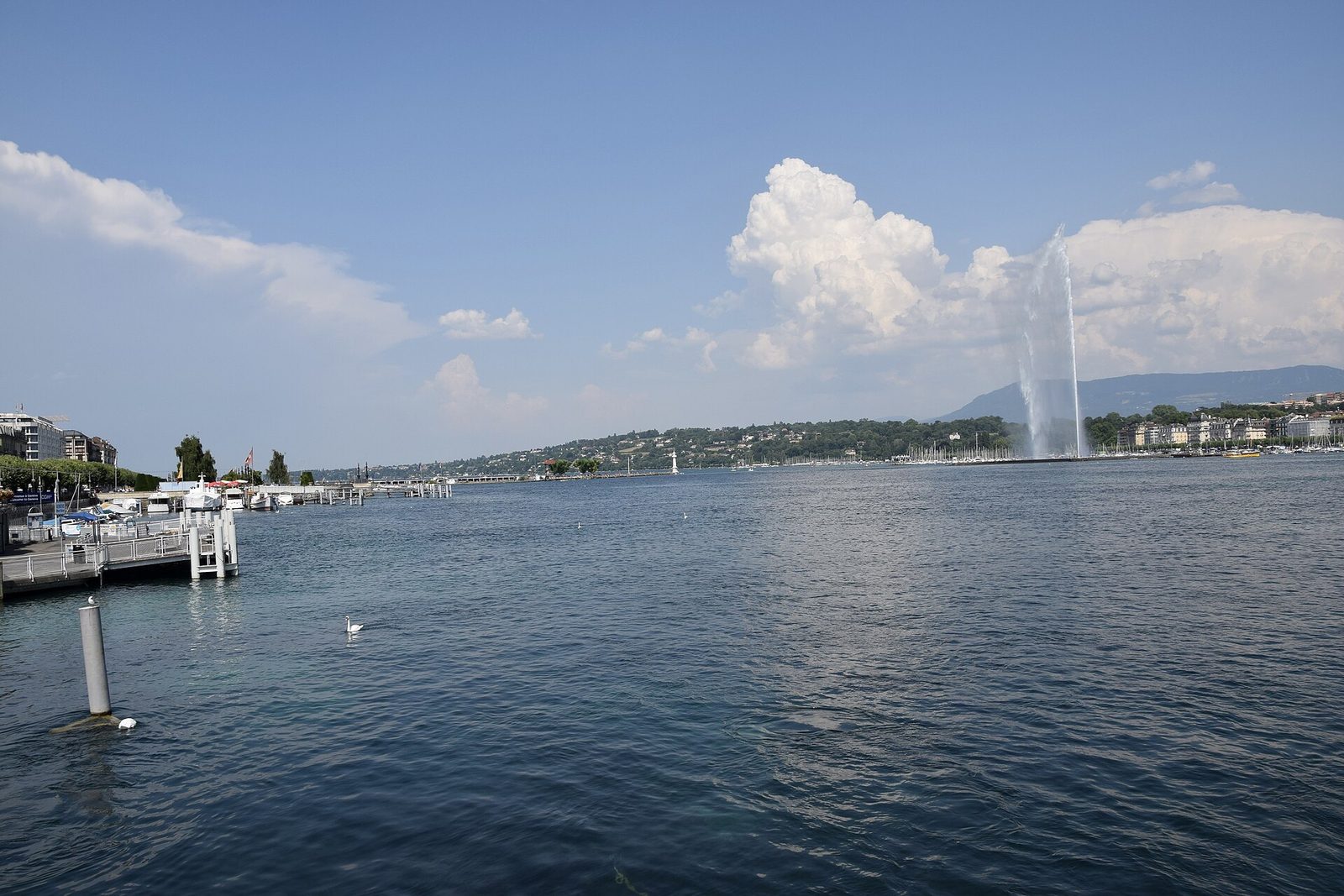
Geneva's Jet d'Eau fountain on Lake Geneva, the Alps beyond.
Set on its glittering crescent lake with Mont Blanc on the horizon, Geneva is a refined, international city where Switzerland meets France. Land here and the Alps, the vineyards of Lake Geneva and the mountain resorts are all within easy reach. Here's how to begin.
⛽ Fuel up near the delivery center
First things first: the practical essentials
Refuelling near the airport. If you didn't take the optional full-tank service at pick-up, you can top up near the airport — there's no obligation to return the car full. The closest stops sit right by the terminal on Avenue Louis-Casaï, in Cointrin: the Migrol Service (open until 10 p.m.) and the SOCAR directly across the road. Both are quick and used to drivers filling up before they set off.
Getting into the city. Geneva is refreshingly compact: the airport train reaches the main station, Cornavin, in just seven minutes, and by car the lakefront is only minutes away. Parking in the centre is limited and pricey, so leave the car and use the excellent trams and buses (your hotel usually provides a free Geneva Transport Card).
Where to spend your first night. Base yourself by the lake, around the Pâquis and the Rade, or up in the cobbled Old Town on the hill — both are central, walkable and full of restaurants.
Your vehicle. Your brand-new Renault is waiting at the delivery centre on the French side of the airport, ready for the Alps under the short-term lease programme.
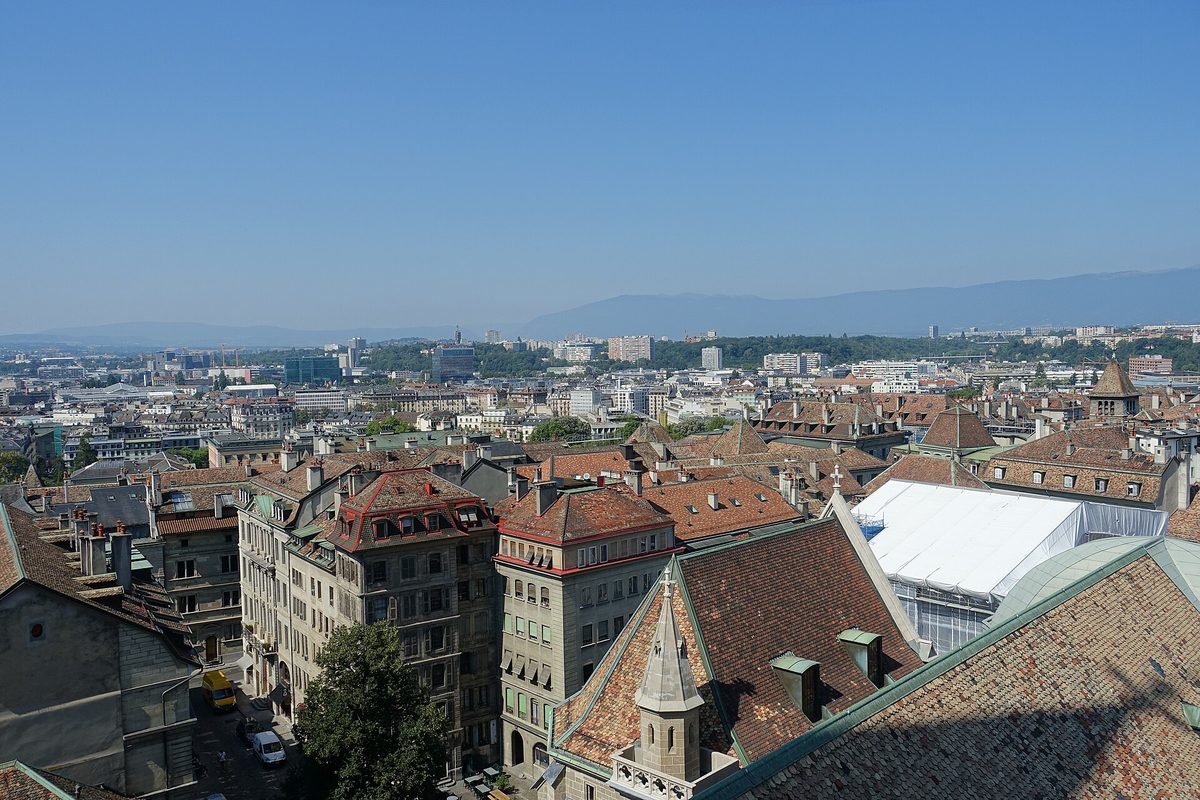
Geneva's cobbled Old Town and St Pierre Cathedral.
Geneva's essential sights
The Jet d'Eau and the lakefront. Geneva's signature fountain fires a plume of water 140 metres into the sky above the Rade. Stroll the flowered quays, photograph the Horloge Fleurie (flower clock) in the Jardin Anglais, and in summer dive in with the locals at the Bains des Pâquis.
The Old Town and St Pierre Cathedral. Climb the hill into the Vieille Ville, one of the largest medieval old towns in Europe: cobbled lanes, antique shops and café terraces around Place du Bourg-de-Four. Go up the towers of St Pierre Cathedral for a sweeping view over the rooftops and the lake.
International Geneva. On the north bank, the Palais des Nations (the UN's European headquarters), the giant Broken Chair on Place des Nations and the moving International Red Cross and Red Crescent Museum tell the city's humanitarian story. Just outside town, CERN opens its Science Gateway to visitors.
Parks and neighbourhoods. Play a game on the giant chessboards of Parc des Bastions beneath the Reformation Wall, then cross the Arve to Carouge, Geneva's Sardinian-built 'little Italy' of low houses, artisan workshops and leafy squares.
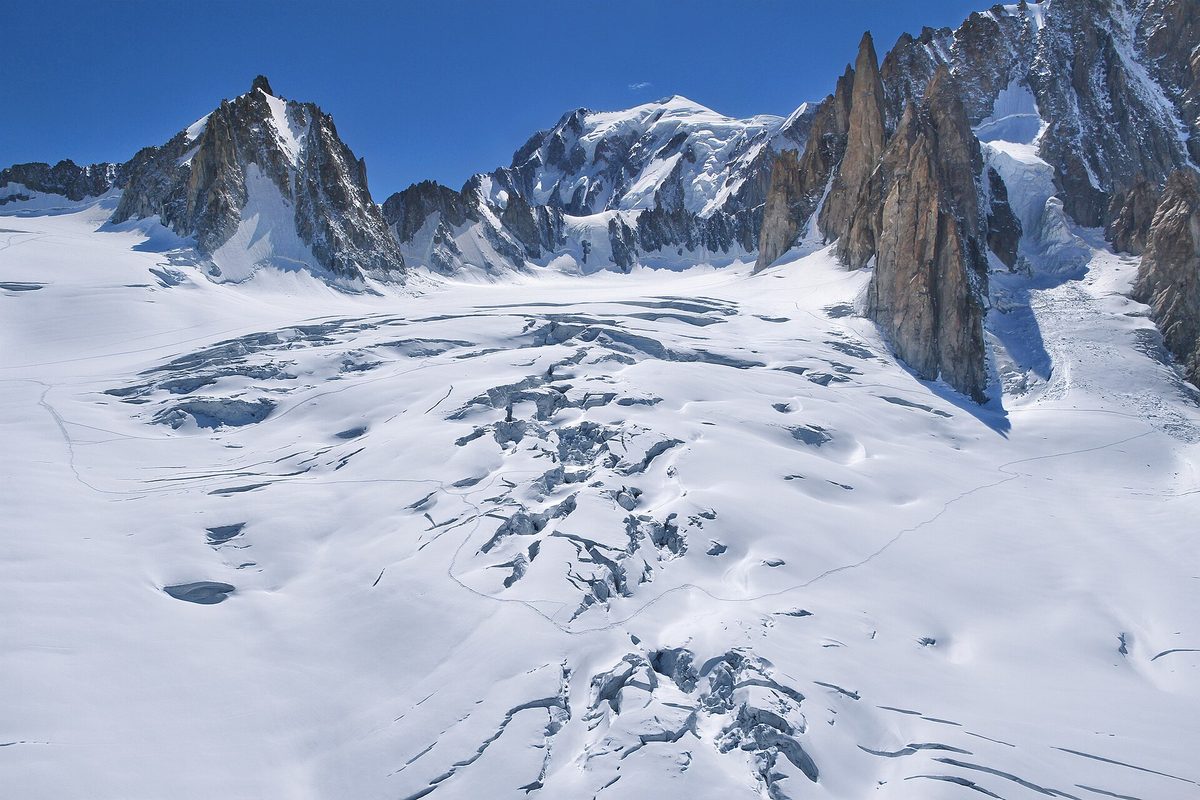
The Mont Blanc massif and its glaciers, an hour south.
Foodie Geneva: lake fish, markets and Alpine cheese
The markets. Plainpalais hosts a fine produce market on Tuesday, Friday and Sunday mornings and a huge flea market on Wednesday and Saturday. Across the river, the market on Place du Marché in Carouge (Wednesday and Saturday) is one of the prettiest in the region.
Local specialities. Order filets de perche — delicate lake-perch fillets, pan-fried with lemon and served with fries — the classic lakeside lunch. In the cooler months look out for longeole, Geneva's cumin-scented pork sausage (IGP), the AOP silver cardoon of Plainpalais gratinéed at Christmas, and malakoffs, the deep-fried cheese fritters of the Geneva countryside.
Cheese, chocolate and wine. This is fondue and raclette country — the local moitié-moitié blends Gruyère and Vacherin Fribourgeois. Finish with Swiss chocolate (in December, the chocolate marmite of the Escalade festival) and a glass of Geneva wine: the vineyards around Satigny and the Mandement make up the largest wine-growing area in Switzerland.
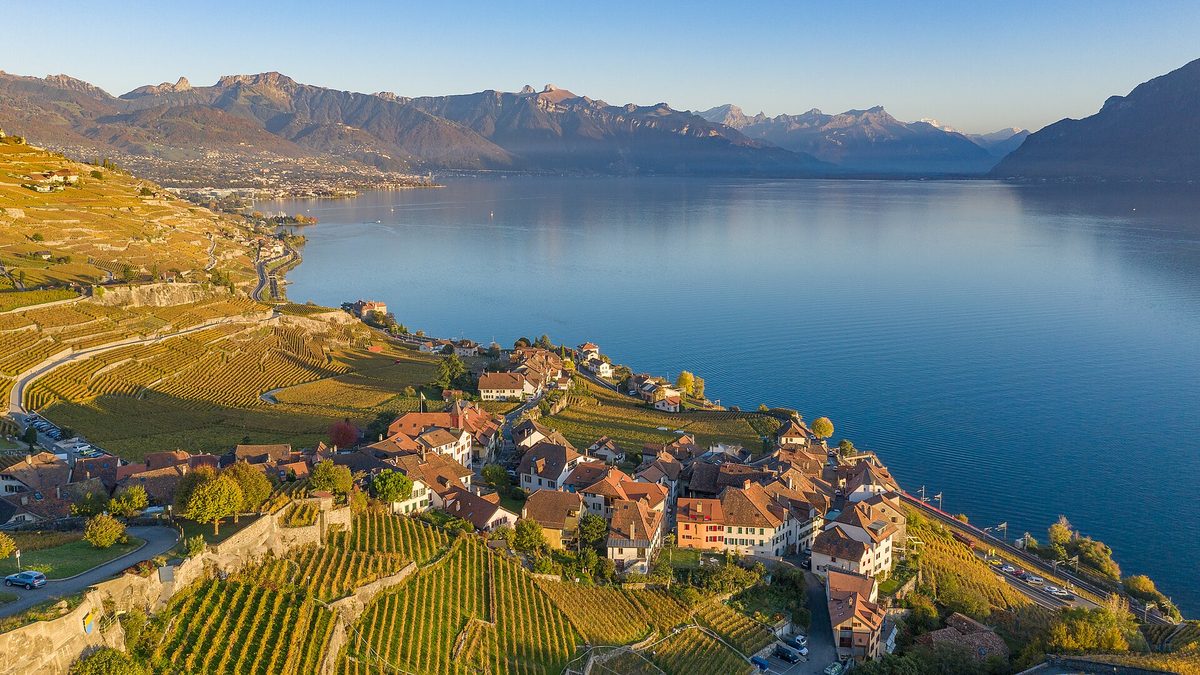
The terraced Lavaux vineyards above the lake.
Your first road trip out of Geneva
The mountains and the lake pull you in opposite directions, and both are close. South across the French border, Chamonix and the Mont Blanc massif are about an hour away, ringed by the ski resorts of the Alps. East along the water lie the UNESCO-listed Lavaux terraced vineyards and the fairy-tale Château de Chillon near Montreux, under an hour and a half.
The ideal first-day loop. Follow the lake's north shore east to Lausanne, then drop into the Lavaux vineyards, stopping in the wine villages of Lutry and Saint-Saphorin for a tasting and a view. Carry on to the Château de Chillon, moored at the water's edge below the mountains, and Montreux with its flowered promenade. Return on the A1 motorway: about 200 km that gather the whole Swiss Riviera into a single day (make sure the motorway vignette is on the windscreen first).
Geneva's seasons: climate and when to come
Geneva has a temperate climate softened by the lake, with warm summers and cold, sometimes foggy winters sharpened by the bise, the dry north wind. May–June and September are the sweet spots: mild days, clear light over the water and the vineyards at their greenest. Summer is lively — lake swimming, open-air cinema and long evenings on the quays — while autumn brings the grape harvest to Lavaux and the Mandement. Winter turns the city into a base for skiing, an hour from the slopes.
If your road trips climb into the French Alps (Chamonix, Megève, the Aravis), France's Mountain Law requires winter tyres or chains in Alpine areas from 1 November to 31 March. In Switzerland winter tyres are not compulsory but are strongly advised, and you can be held liable if an under-equipped car blocks traffic — carry chains for the high passes.
Driving tips: Switzerland (and the French side)
The Swiss vignette. Switzerland charges no per-trip tolls but requires an annual motorway vignette (CHF 40). Check it is stuck on the windscreen at pick-up; if it isn't, buy one at the border, a post office or a petrol station before joining any motorway.
Speed limits (Switzerland): 120 km/h on motorways, 100 on semi-motorways, 80 on main roads, 50 in towns (often 30 in residential zones) — limits are strictly enforced.
Fuel: 'Bleifrei'/'sans plomb' is petrol, 'Diesel' is diesel.
Alpine passes: spectacular but demanding, and many close in winter — check seasonal openings before you set off.
On the French side. Your pick-up point is just over the border, and French motorways (such as the A40 to Chamonix) are tolled — keep a contactless card handy. Switzerland has no urban low-emission zones; a few French cities do, but your recent Eurodrive car meets the strictest emission standards — leave any Crit'Air sticker in place on the windscreen.
How far by car?
Approximate driving times from the delivery center.
📍 Your delivery center
Geneva: Lake, Mountains and the Gateway to the Alps
Book your vehiclePhotos : Ank Kumar (CC BY-SA 4.0) · Guilhem Vellut (CC BY 2.0) · Ximonic, Simo Räsänen (CC BY-SA 3.0) · Lorenz Poffet (CC BY-SA 4.0) — Wikimedia Commons.