

make >
-
 EURODRIVE

Milan City Centre: Fashion, Art and Italian Style
The Eurodrive guide
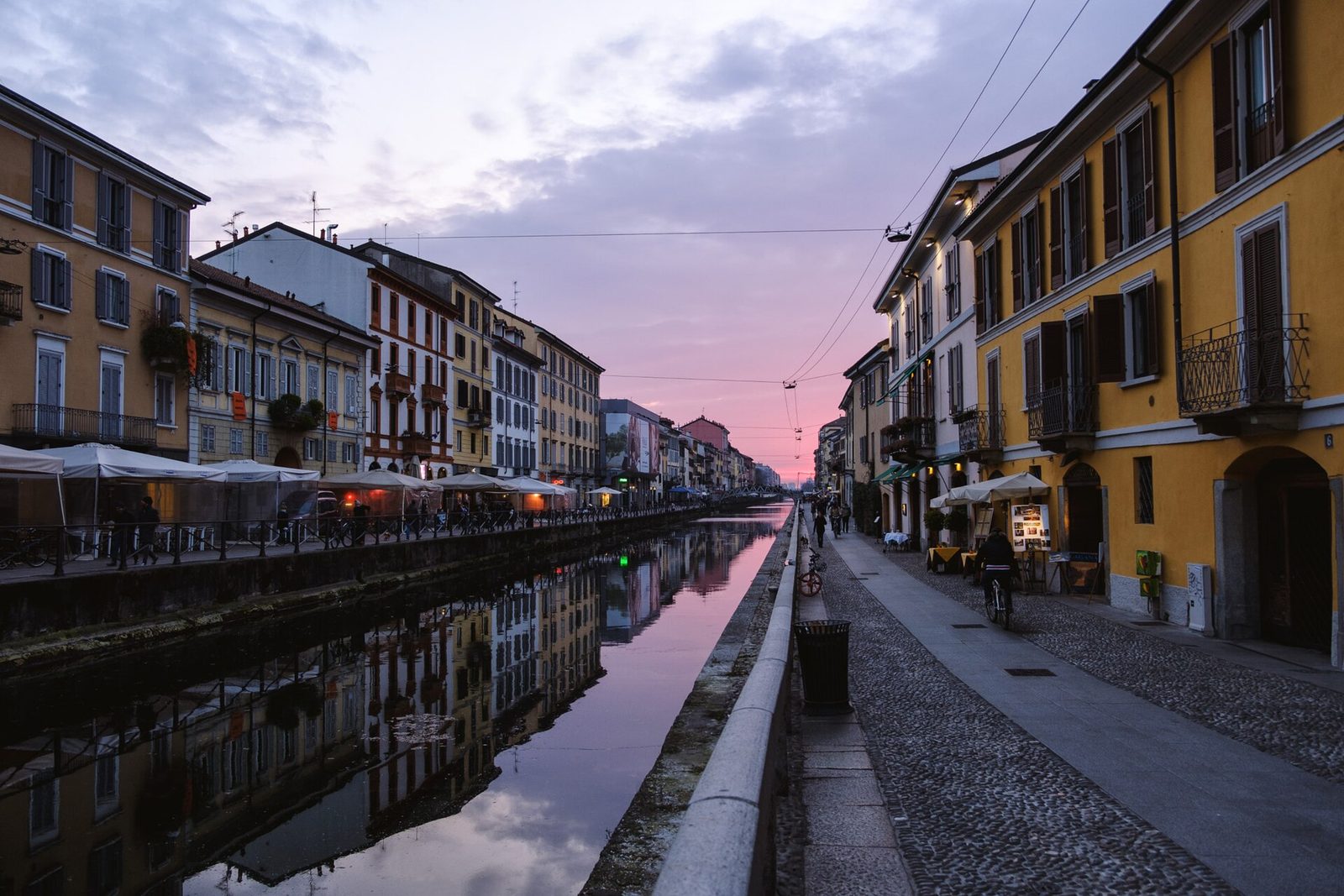
The Navigli canals glowing at dusk, Milan's aperitivo heartland.
Pick up your car in the beating heart of Milan and you're surrounded by the city that sets the pace for Italian style — soaring Gothic spires, hushed design showrooms, world-class art and the nightly ritual of aperitivo. From here the Alpine lakes, the vineyards of Piedmont and the art cities of the Veneto are all an easy drive away. Here's how to make the most of it.
⛽ Fuel up near the delivery center
First things first: the practical essentials
Refuelling in the city. If you didn't take the optional full-tank service at pick-up, you can top up right in the centre — there's no obligation to return the car full. The Esso on Via Galvani is handy on weekdays, while the IP on Piazza della Repubblica is a dependable 24-hour option a little further in.
Getting around town. Milan's metro and tram network is superb, so within the city you rarely need the car at all — and central Milan is ringed by the Area C congestion charge and a web of ZTL (limited-traffic zones) that fine uncredentialed vehicles. The smart move is to leave the car parked and ride the metro until you're ready to strike out for open country.
Where to spend your first night. You're already in the thick of it: the Duomo, the arty lanes of Brera and the canal-side Navigli are all central, stylish and alive well past midnight.
Your vehicle. Your brand-new Renault is waiting at the M.D.S. PARC delivery centre in the city, fuelled and ready to slip out to the lakes the moment Milan has shown you its treasures — all under the short-term lease programme.
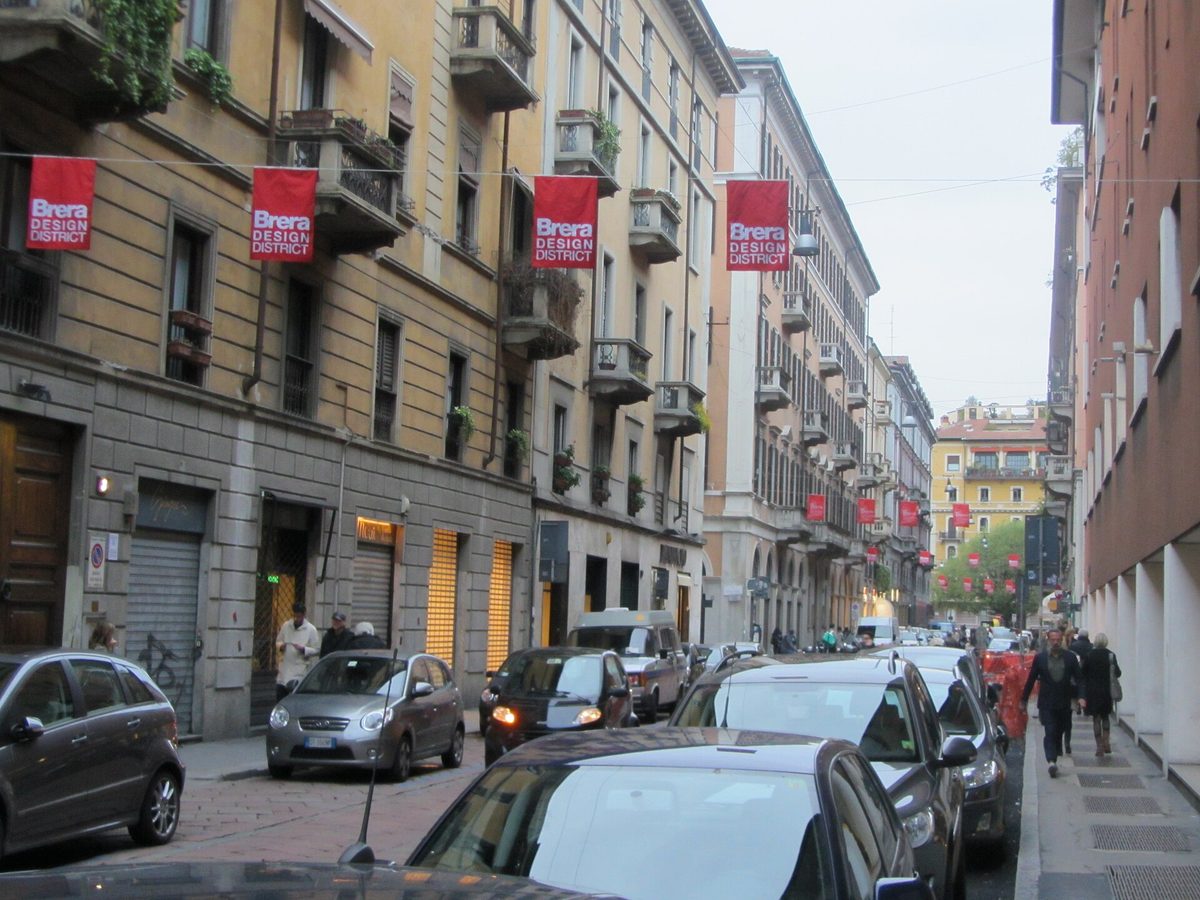
The artsy Brera quarter.
Milan's essential sights
The Duomo and its rooftops. Milan's vast Gothic cathedral, a forest of marble pinnacles crowned by the golden Madonnina, took almost six centuries to finish. Admire the stained glass inside, then climb (or take the lift) to the roof terraces and walk among the spires, the city — and on clear days the Alps — laid out below.
The Last Supper. In the refectory of Santa Maria delle Grazie, Leonardo da Vinci's fragile masterpiece still commands the room five centuries on. Only a few dozen visitors are admitted at a time, so book weeks ahead — it is one of the great things to stand before in Italy.
Brera and the Quadrilatero. The cobbled Brera quarter mixes the masterpieces of its Pinacoteca with tiny galleries, wine bars and Milan's most photogenic corners. A few steps east lies the Quadrilatero della Moda, the couture grid of Via Montenapoleone and Via della Spiga where the great fashion houses keep their flagships.
Castello Sforzesco and the Navigli. The mighty Sforza castle guards Michelangelo's unfinished Rondanini Pietà and opens onto the green sweep of Parco Sempione. Come evening, drift down to the Navigli, the old canals engineered in part by Leonardo and now the city's liveliest stage for dinner and a drink.
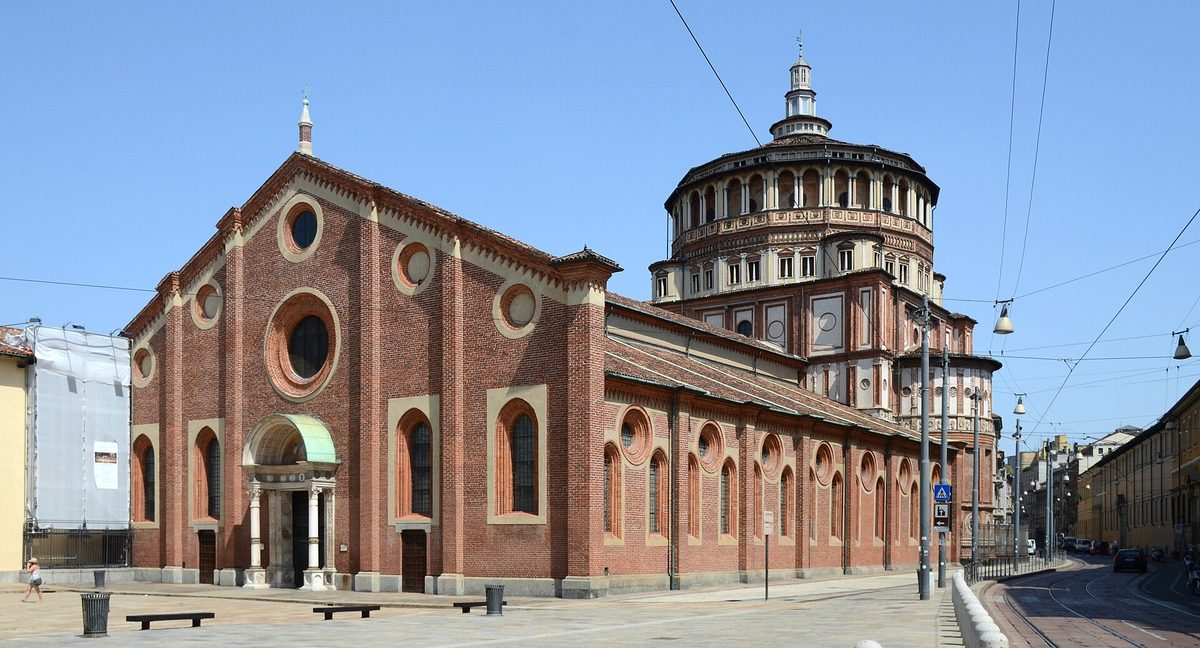
Where Leonardo's Last Supper waits.
Foodie Milan: risotto, panettone and aperitivo
The classics. Milan gave the world risotto alla milanese, gilded with saffron and often paired with ossobuco (braised veal shank); the thin, bone-in cotoletta alla milanese; and, in the cold months, cassoeula, a rich pork-and-cabbage stew. At Christmas the whole city smells of panettone, the tall domed sweet bread born here.
Markets and quick bites. Graze the historic Peck food hall near the Duomo, the stalls of the Mercato Centrale inside Milano Centrale station, or join the queue at Luini behind the cathedral for a panzerotto — a fried, molten pocket of tomato and mozzarella. On the last Sunday of the month, antique dealers line the Naviglio Grande.
Aperitivo hour. Milan invented the ritual: from around 6 p.m., order a Negroni (or the Negroni Sbagliato, dreamed up at the city's Bar Basso) and the counter fills with nibbles to match. The Navigli — the canals glowing at dusk that open this page — and Brera are the classic stages.
Your first road trip out of Milan
From the city centre every direction rewards you. North, the lakes appear within the hour — Como for its villa-lined shores and mountain backdrop, Maggiore for the palaces and gardens of the Borromean Islands. East lies Lake Garda, Italy's largest, on the road to Verona and Venice; south spread the rice fields and vineyards of Lombardy and Piedmont, with elegant Turin beyond.
The ideal first-day loop. Make it Lake Maggiore. Take the A8 up to Stresa (about an hour and a quarter) for its belle-époque waterfront, catch the little boat out to Isola Bella and its baroque palace gardens and to the fishermen's houses of Isola dei Pescatori, then ride the cable car up Mottarone for a sweep across lake and Alps before heading home: roughly 180 km that trade the city for the water in a single, unhurried day.
When to come: climate and seasons
Milan sits in the Po plain and has a humid continental climate — hot, sticky summers and cold, often foggy winters. April to June and September to October are the sweet spots: mild days, gardens and vines at their best, and the lakes glorious. Summer is hot and humid, and in August much of the city closes for the Ferragosto holiday, so head for the water. Winter is grey and chilly but full of atmosphere — the opera season at La Scala opens on 7 December, the feast of the city's patron Sant'Ambrogio, and the streets fill with panettone and Christmas lights. Note that the fashion weeks (February and September) and April's Salone del Mobile pack the hotels, so book well ahead.
If your drives climb toward the lakes or the Alps, remember that on many northern-Italian roads winter tyres or on-board snow chains are compulsory from 15 November to 15 April — watch the signs and equip the car before you head up.
Driving tips for Italy
Tolls. Italy's motorways (autostrade) are tolled: take a ticket as you enter and pay as you exit, by card or cash — steer clear of the yellow Telepass-only lanes.
Speed limits: 130 km/h on motorways (110 in the wet), 90 on main roads, 50 in towns, with speed cameras (autovelox) common.
Fuel: 'benzina' is petrol, 'gasolio/diesel' is diesel.
ZTL and Milan's zones: most Italian old towns have a ZTL (limited-traffic zone) that fines cars without a permit, so park outside and walk in. Milan layers two schemes: Area C is a congestion charge you must pay to enter the historic core, while Area B is a low-emission zone covering almost the whole city — your recent Euro 6 Eurodrive car meets the Area B standards, but you still pay for Area C, so parking on the edge and taking the metro is usually simplest.
How far by car?
Approximate driving times from the delivery center.
📍 Your delivery center
Milan City Centre: Fashion, Art and Italian Style
Book your vehiclePhotos : Renault Eurodrive (©) · Renault Eurodrive (©) · Renault Eurodrive (©) — Wikimedia Commons.