

make >
-
 EURODRIVE

Nantes: Where the Loire Meets the Atlantic
The Eurodrive guide
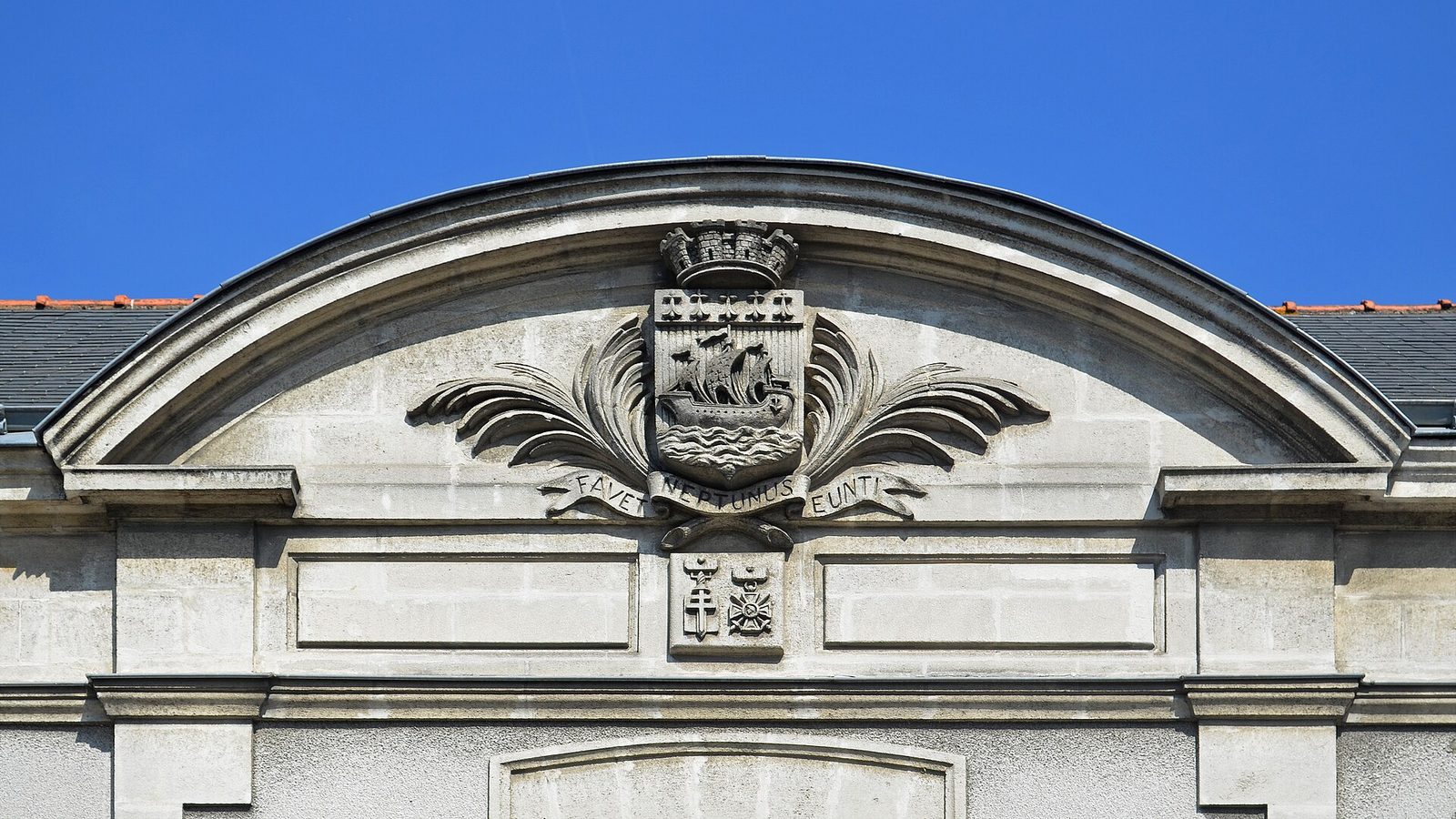
The arms of Nantes — a ship on the waves — crowning the city hall.
Once a great port at the mouth of the Loire, Nantes is a city of inventive energy — playful, green and a little surreal. Land here and you're perfectly placed for the Atlantic coast, the wild salt marshes and the famous white wine of the Loire's western reaches. Here's how to make the most of your stay or your send-off.
⛽ Fuel up near the delivery center
First things first: the practical essentials
Refuelling near the airport. If you didn't take the optional full-tank service at pick-up, you can refuel near the airport — there's no obligation to return the car full. The handiest 24-hour option is the TotalEnergies Access at Pont de Cheviré, on the road heading into the city, with a station at the airport itself as well. Both let you top up right by the return point.
Getting into the city. The delivery centre sits at Saint-Aignan-de-Grand-Lieu, just south of the airport; a shuttle bus reaches the heart of Nantes in around twenty minutes, and by car the ring road (périphérique) brings you in quickly.
Where to spend your first night. The medieval Bouffay quarter, a maze of cobbled lanes, and the streets around the château are central and entirely walkable.
Your vehicle. Your brand-new Renault is waiting at the Alterpark delivery centre, a stone's throw from Nantes Atlantique airport, under the short-term lease programme — ready to drive off toward the Loire or the ocean.
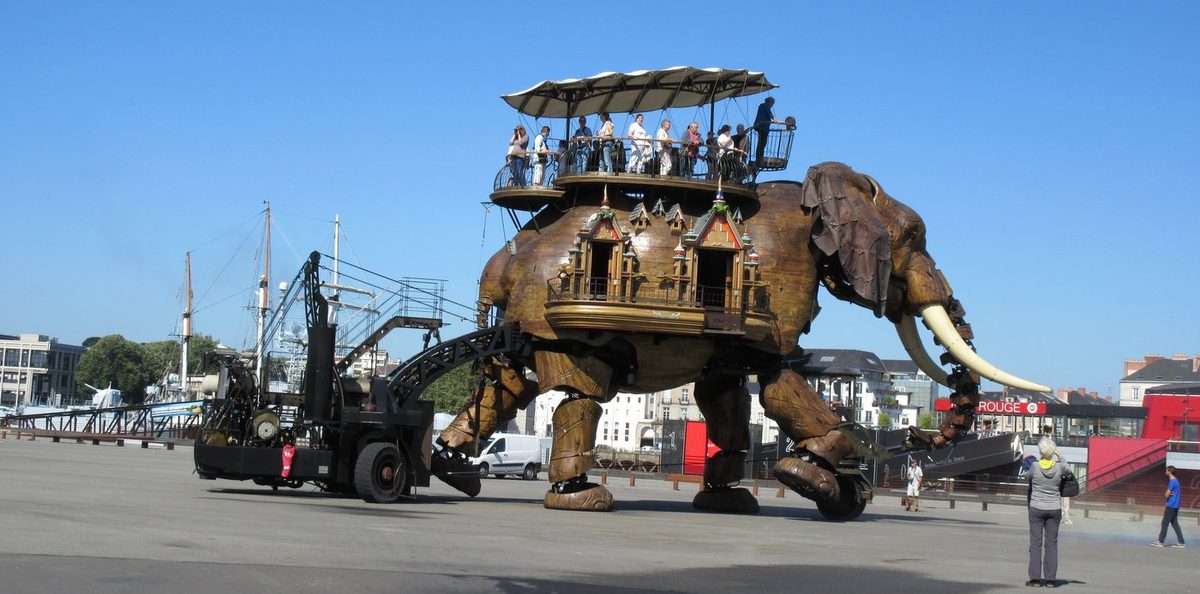
The Great Mechanical Elephant of Les Machines de l'île.
Nantes's essential sights
The Château des ducs de Bretagne. Ringed by a moat in the very centre of the city, this last great castle before the ocean was the home of the Dukes of Brittany and of Anne de Bretagne. The rampart walk is free and open; inside, the Nantes History Museum traces the city's seafaring — and slave-trading — past across some thirty rooms.
Les Machines de l'île. On the former shipyards of the Île de Nantes stands a mechanical bestiary worthy of Jules Verne, the city's most famous son. The Great Elephant, twelve metres of wood and steel, carries passengers as it trumpets; alongside are the Carousel of the Marine Worlds and the Machine Gallery. It's the city's signature attraction.
Le Voyage à Nantes. Follow the green line painted on the pavement: over a dozen kilometres it links the landmarks and the contemporary artworks scattered through the city. Each summer the trail gains new temporary installations — a playful way to see it all without getting lost.
Passage Pommeraye and old Nantes. This 1843 shopping arcade, with its monumental staircases and statues, is a gem. Round it off with the Saint-Pierre-et-Saint-Paul cathedral, the botanical garden (Jardin des plantes), the shipowners' mansions of Île Feydeau and a pause on a terrace on Place du Bouffay.
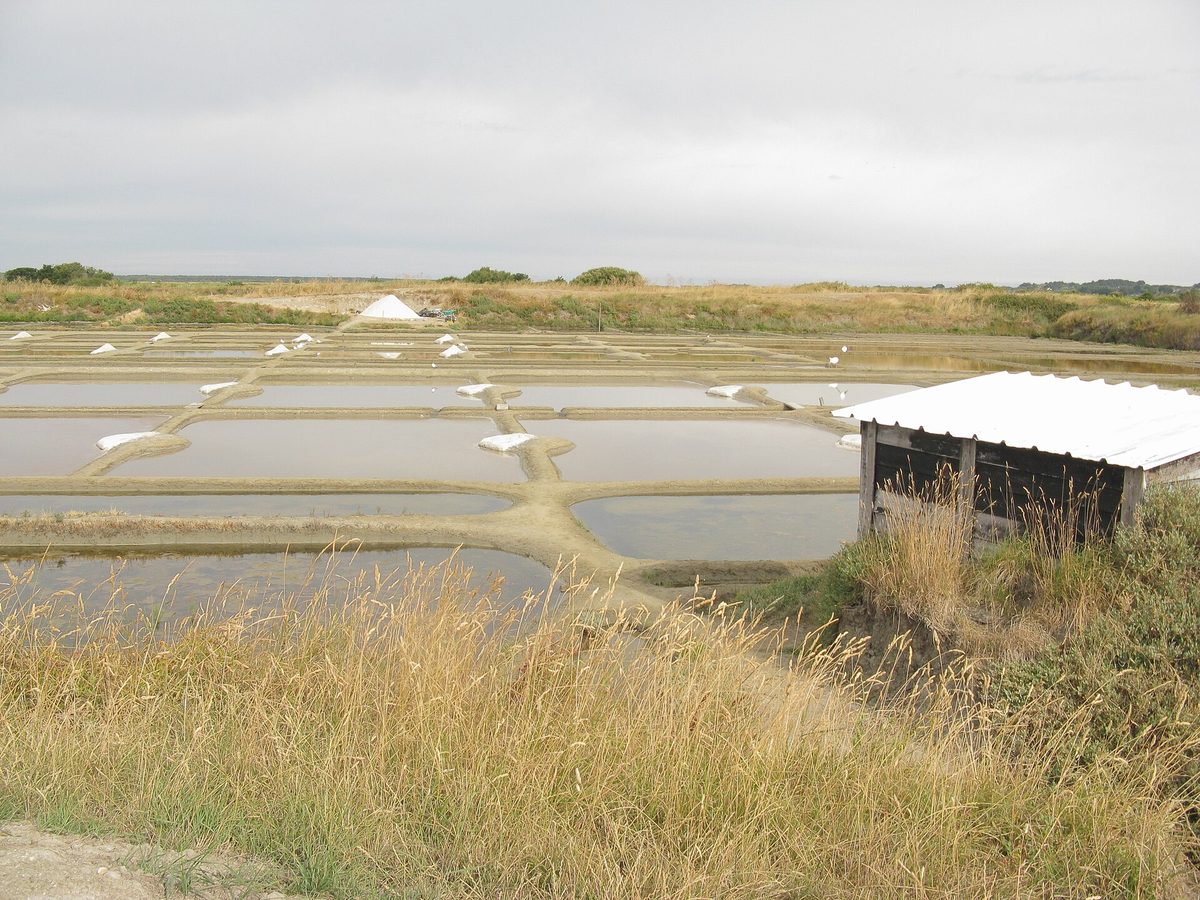
The salt marshes of Guérande.
Foodie Nantes: markets, Muscadet and beurre blanc
Talensac market. Tuesday to Sunday mornings, the largest market in Nantes overflows with Atlantic fish, produce from the Nantes countryside and cheeses — the whole region in one open-air spread, a short walk from the centre.
Muscadet and beurre blanc. The Nantes vineyards, south-east of the city, yield Muscadet, a crisp dry white aged on its lees and the perfect partner for oysters and fish. The great local dish? Pike in beurre blanc, that emulsion of butter, shallot and white wine invented on the banks of the Loire.
Nantes sweets. The gâteau nantais (an almond-and-rum cake), multicoloured berlingot sweets and, above all, the LU petit-beurre biscuit, born here — the LU Tower, a former biscuit factory, still watches over the city. For cheese, try the orange-rinded curé nantais.
Where to sit down. Push open the door of the La Cigale brasserie, facing the Graslin theatre: its listed 1895 Belle Époque interior is worth the trip on its own, a seafood platter and a glass of Muscadet in hand.
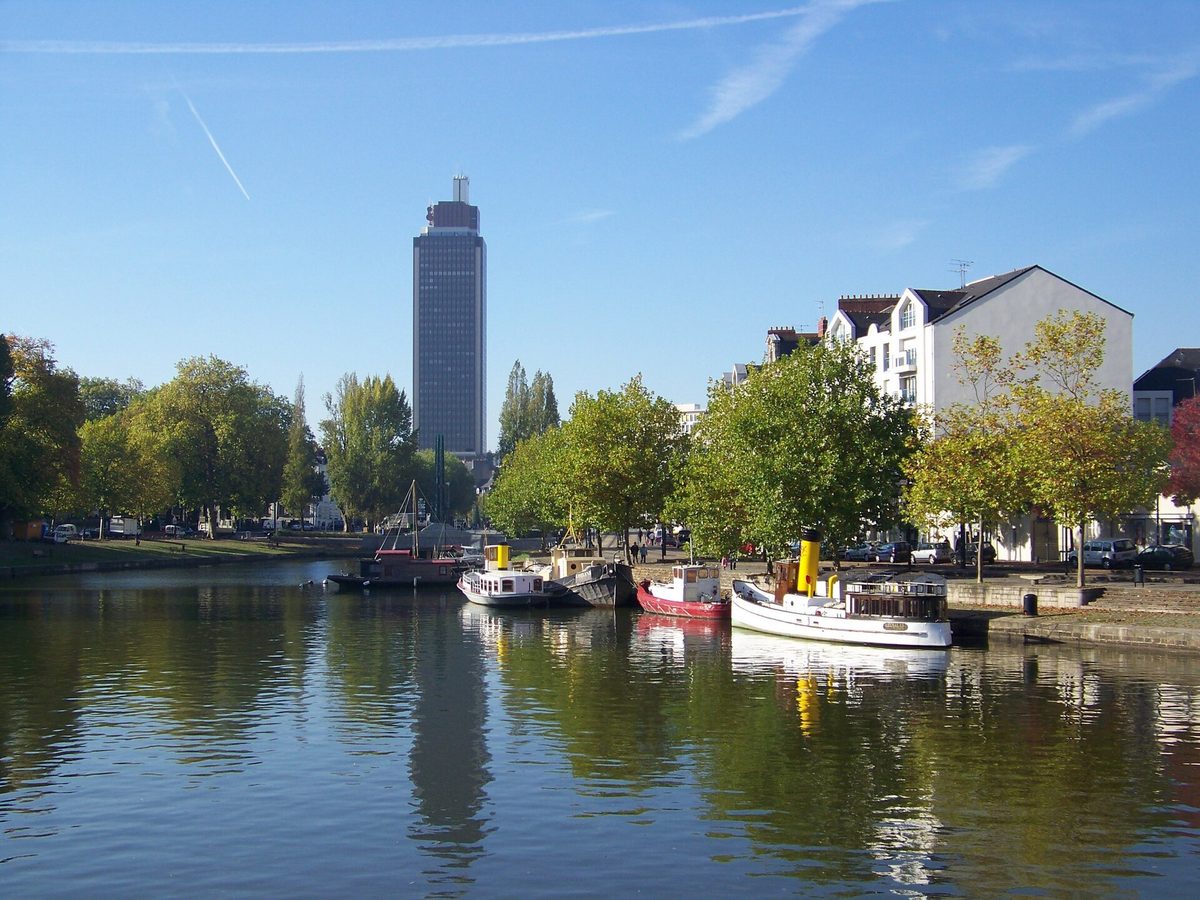
Boats moored on the Erdre, the Tour Bretagne beyond.
Your first road trip out of Nantes
The ocean is close and the estuary fans out into a wealth of landscapes. West, the grand beach of La Baule, the medieval town of Guérande and its salt marshes lie about an hour away. South, the Côte de Jade around Pornic, the Vendée and the Marais Poitevin — the "Green Venice" you explore by punt. Follow the Loire east and you reach Angers, Saumur and the first of the great châteaux within one to one and a half hours.
The perfect first-day loop. Head due west to walled Guérande; wander the salt marshes where fleur de sel is still harvested by hand, then lunch on seafood at Le Croisic or along the La Baule seafront. Come home via Saint-Nazaire, with its immense estuary bridge and transatlantic shipyards: about 180 km that sum up the whole Nantes country — salt, sand and great industry — in a single day.
When to come: climate and seasons
Nantes enjoys a mild oceanic climate: winters are gentle but grey and damp, summers warm without excess, tempered by the nearby ocean. May–June and September are ideal — long, mild days, the vineyards and marshes at their best, the beaches still quiet. July–August fill the coast: set off early for La Baule or Noirmoutier to beat the queues on the ring road. Rain can come in any season, so keep a raincoat within reach.
For the diary, the city moves to the beat of its events: La Folle Journée, a great classical-music festival in late January, Le Voyage à Nantes all summer, and the carnival in spring. There's no particular winter constraint here — the region is flat, with no winter-tyre requirement.
Driving tips for France
Tolls: Many French motorways are tolled. Most toll gates accept contactless bank cards — keep one within reach.
Speed limits: 130 km/h on motorways (110 in rain), 80 on main roads, 50 in towns.
Fuel: "essence" (SP95/SP98) for petrol engines, "gazole/diesel" for diesel.
City driving: Nantes Métropole has a low-emission zone (ZFE). Good news: your brand-new Eurodrive vehicle is exempt — no sticker is needed.
How far by car?
Approximate driving times from the delivery center.
📍 Your delivery center
Nantes: Where the Loire Meets the Atlantic
Book your vehiclePhotos : Selbymay (CC BY-SA 3.0) · Mechtraveller (CC BY-SA 4.0) · Demeester (CC BY-SA 3.0) · Eusebius (Guillaume Piolle) (CC BY 3.0) — Wikimedia Commons.