

make >
-
 EURODRIVE

Strasbourg: Storybook Alsace and the Heart of Europe
The Eurodrive guide
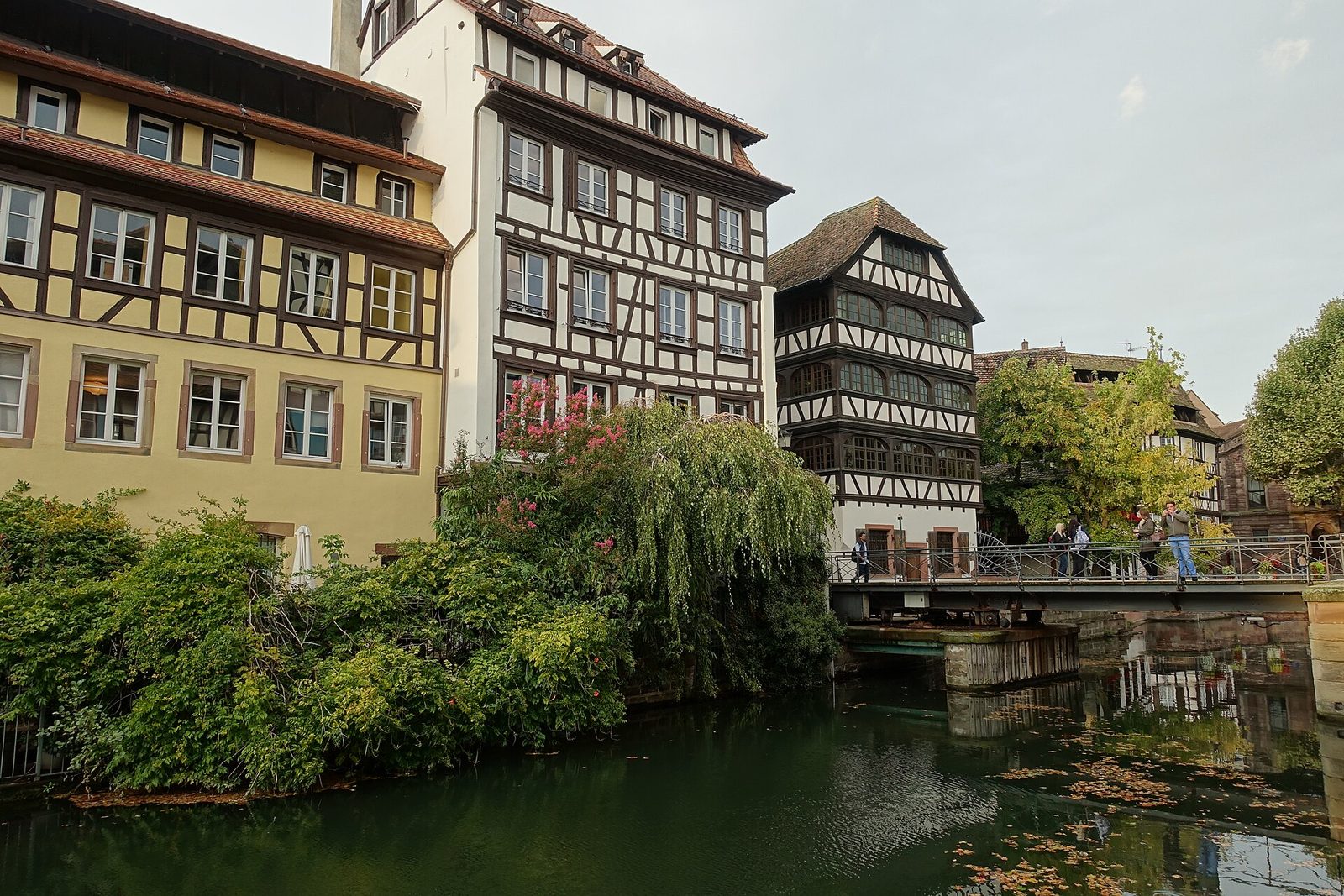
Strasbourg, a storybook on the Rhine.
Half-timbered houses, flower-decked canals and a soaring pink-sandstone cathedral: Strasbourg feels like a fairy tale, yet it is also a great European capital, home to the Parliament. On the Franco-German border, it opens onto the Alsace Wine Route, the rounded summits of the Vosges and, just across the Rhine, the Black Forest. Here's how to begin.
⛽ Fuel up near the delivery center
First things first: the practical essentials
Fill up on the spot. Good news: the delivery centre sits at a TotalEnergies station on the route de Schirmeck in Duppigheim. If you didn't take the optional full-tank service at pick-up, you can top up right there before setting off — there's no obligation to return the car full. The station is open Monday to Saturday 6 a.m. to 9 p.m. and Sunday 8 a.m. to 8 p.m. A second TotalEnergies, Porte de Schirmeck, then marks the way into town.
Getting into the city. Duppigheim lies about 15 km southwest of Strasbourg: allow 15–20 minutes on the A35. Strasbourg-Entzheim airport is right nearby, with a TER shuttle train reaching the central station in around ten minutes.
Where to spend your first night. The Grande Île — the UNESCO-listed historic core — has it all: the Petite France quarter and the streets around the cathedral are central, full of charm and largely pedestrian.
Your vehicle. Your brand-new Renault is waiting at the Duppigheim delivery centre, ready to head for the vineyards, under the short-term lease programme — the scheme that lets you drive a factory-fresh car, plates and insurance included, for the length of your European trip.
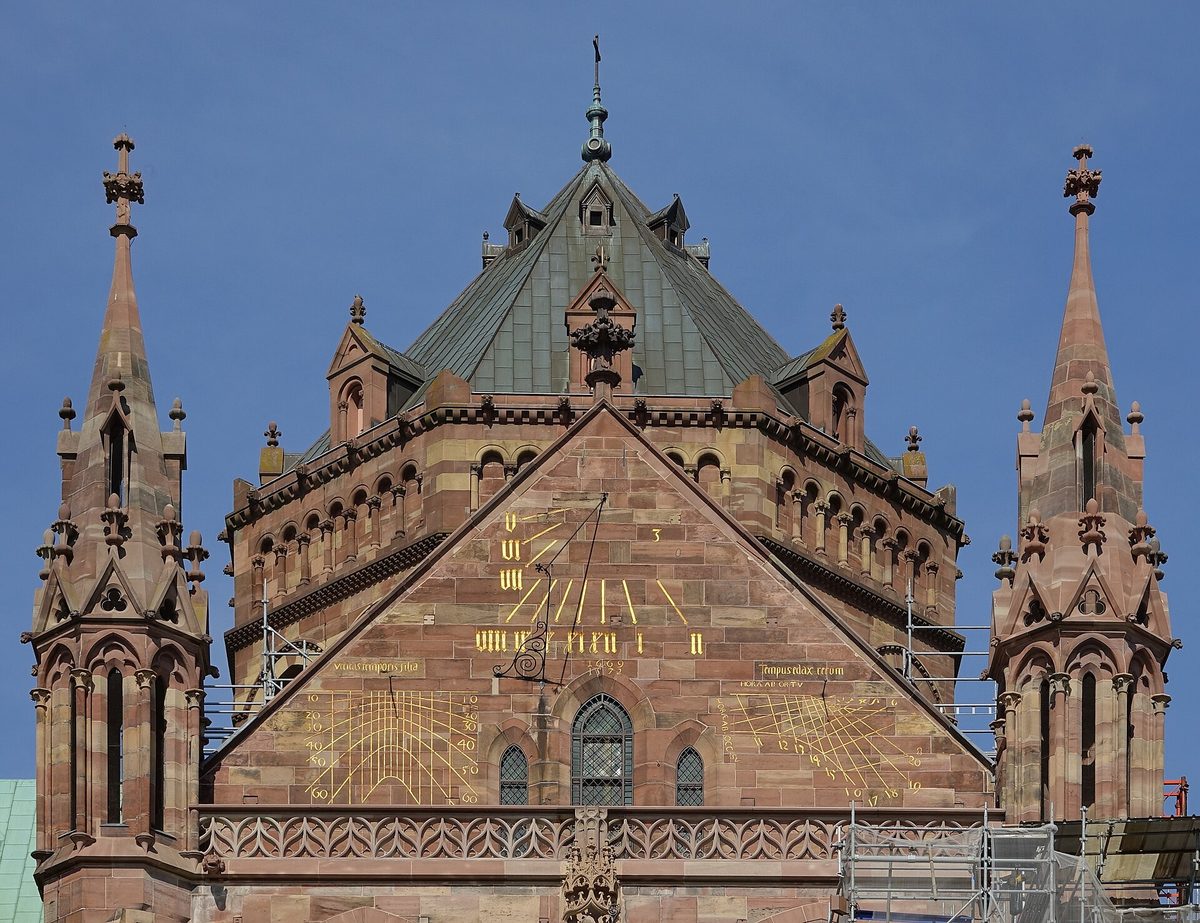
The Gothic cathedral of Strasbourg.
Strasbourg's essential sights
Petite France. The old tanners' district is postcard Strasbourg: half-timbered houses leaning over the water, canals of the Ill, covered bridges and locks, and the Vauban dam with its panoramic terrace. It's the image that opens this page — wander it early, before the crowds, when the façades mirror in the canals.
The Cathedral of Notre-Dame. A masterpiece in pink Vosges sandstone, its single spire rises to 142 metres — the tallest building in Christendom for centuries. Inside, don't miss the astronomical clock and its parade of automata at 12.30 p.m.; then climb to the platform for a view over the rooftops, the Rhine and, on a clear day, the Black Forest.
The Grande Île and a boat trip. The entire historic centre sits on an island between the two arms of the Ill, listed by UNESCO. A boat tour (Batorama) loops around it and out to the European quarter — the easiest way to take the city in at a glance.
The European quarter and the Neustadt. Strasbourg is a capital of Europe: the European Parliament, the Council of Europe and the European Court of Human Rights stand to the northeast. Between them, the Neustadt — the German imperial city of the late 19th century, with its broad avenues and monumental façades — rounds out the UNESCO listing.
Colmar, on the Alsace Wine Route.
Foodie Strasbourg: winstubs, tarte flambée and Alsace wine
The winstubs. These cosy taverns, all wood panelling and checked cloths, are the soul of Alsatian dining. Here you share a choucroute garnie (sauerkraut with charcuterie), a baeckeoffe (meats marinated in Riesling and slow-baked) or a coq au Riesling, often elbow to elbow.
Tarte flambée. The flammekueche — thin dough, cream, onions and bacon, fired in a wood oven — comes round after round, finishing sweet with apple and cinnamon. It's the convivial dish par excellence, washed down with a glass of white or a local beer.
Sweets and the Christmas market. Bretzel, kougelhopf, gingerbread, quetsche-plum tart, Munster cheese… And if you come in December, the Christkindelsmärik — one of Europe's oldest Christmas markets (since 1570) — turns the whole city into an illuminated village.
Alsace wine and beer. The region is a great white-wine vineyard: Riesling, Gewurztraminer, Pinot Gris, Sylvaner and Crémant d'Alsace. It's brewing country too — beer flows freely in Strasbourg. Push open the door of a cellar or a winstub and taste your way, glass by glass, through the local grapes.
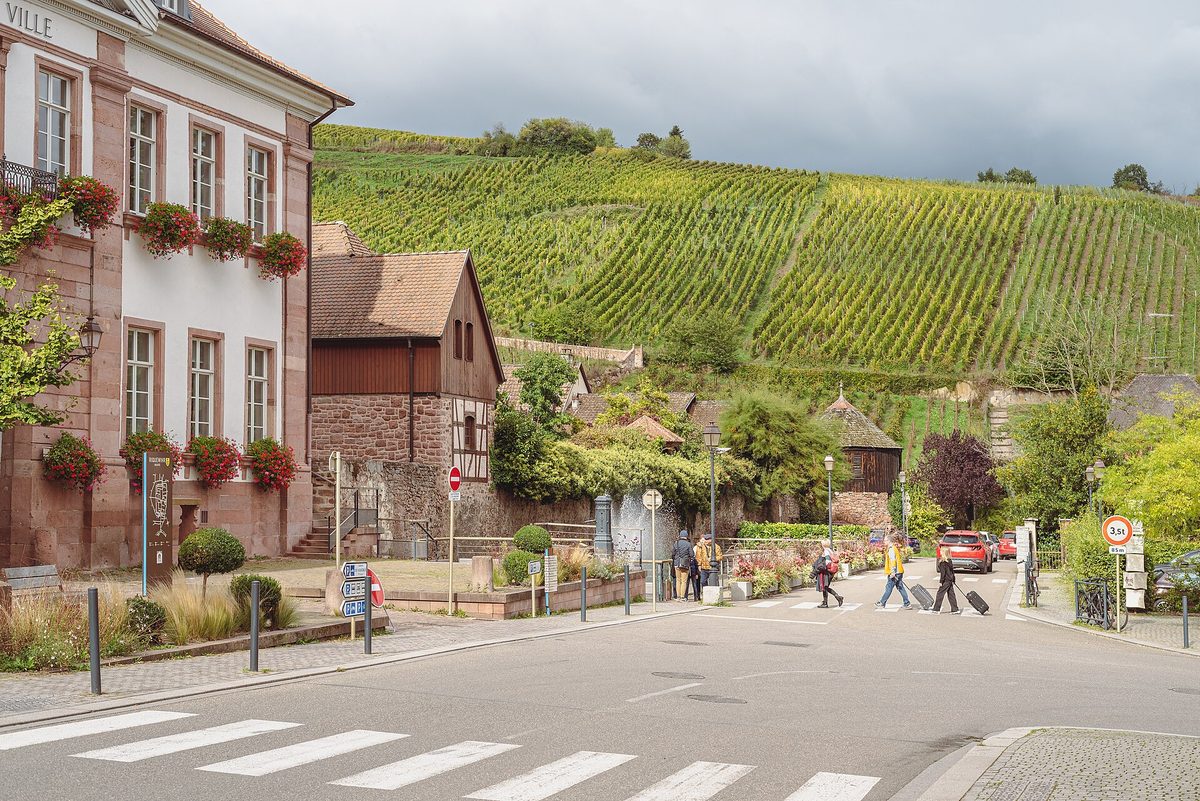
The vineyards of Alsace.
Your first road trip out of Strasbourg
The Alsace Wine Route is the jewel: 170 kilometres of vines and postcard villages from Marlenheim to Thann, starting just south of the delivery centre. Obernai, Barr, Ribeauvillé, Riquewihr, Kaysersberg, Eguisheim and Colmar string together half-timbered houses, ramparts and cellars to taste in. Above them stands the Haut-Kœnigsbourg castle, and higher still the Vosges: Mont Sainte-Odile, the Route des Crêtes and its panoramic passes. Just across the Rhine, Germany's Black Forest makes a fine day out.
The perfect first-day loop. Head for Obernai, a pretty walled town, then climb to Mont Sainte-Odile for the view over the plain; carry on to the Haut-Kœnigsbourg, perched at 750 metres, before dropping back onto the wine route through Ribeauvillé and Riquewihr. Return via Sélestat and the A35: about 150 km that sum up Alsace in a day — vineyards, castles and flower-decked villages.
When to come: climate and seasons
Alsace has a semi-continental climate: cold winters, warm summers and a glorious late season. May–June and September–October are ideal: golden vineyards, soft light and, in autumn, the buzz of the grape harvest. Summer is warm and lively, dotted with festivals and village wine fairs. Winter is crisp and sometimes snowy, but it's the magical season of the Christmas markets, when Strasbourg lights up and smells of mulled wine and cinnamon.
One thing to note if you head up into the Vosges (the Route des Crêtes, the passes, the heights around Haut-Kœnigsbourg): the plain stays flat, but in the designated mountain communes France's Mountain Law requires winter tyres or chains from 1 November to 31 March. Equip yourself before gaining altitude.
Driving tips for France
Tolls: a pleasant surprise — the A35 running the length of Alsace is free. The A4 toward Metz and Paris, however, is tolled: most gates accept contactless bank cards, so keep one within reach.
Speed limits: 130 km/h on motorways (110 in rain), 80 km/h on main roads, 50 km/h in towns.
Fuel: "essence" (SP95/SP98) for petrol engines, "gazole/diesel" for diesel.
City driving: the Strasbourg Eurométropole runs a low-emission zone (ZFE). Good news: your brand-new Eurodrive vehicle falls outside the restrictions — there's nothing you need to do.
Crossing into Germany: to enter the environmental zones (Umweltzone) of German cities such as Freiburg, a green Umweltplakette sticker must be displayed on the windscreen. Your new car qualifies for one, but the sticker still has to be affixed: ask at the delivery centre before crossing the Rhine.
How far by car?
Approximate driving times from the delivery center.
📍 Your delivery center
Strasbourg: Storybook Alsace and the Heart of Europe
Book your vehiclePhotos : Renault Eurodrive (©) · Renault Eurodrive (©) · Renault Eurodrive (©) · Flocci Nivis (CC BY 4.0) — Wikimedia Commons.