

make >
-
 EURODRIVE

Lyon: Gastronomy, History and the Road to the Alps
The Eurodrive guide
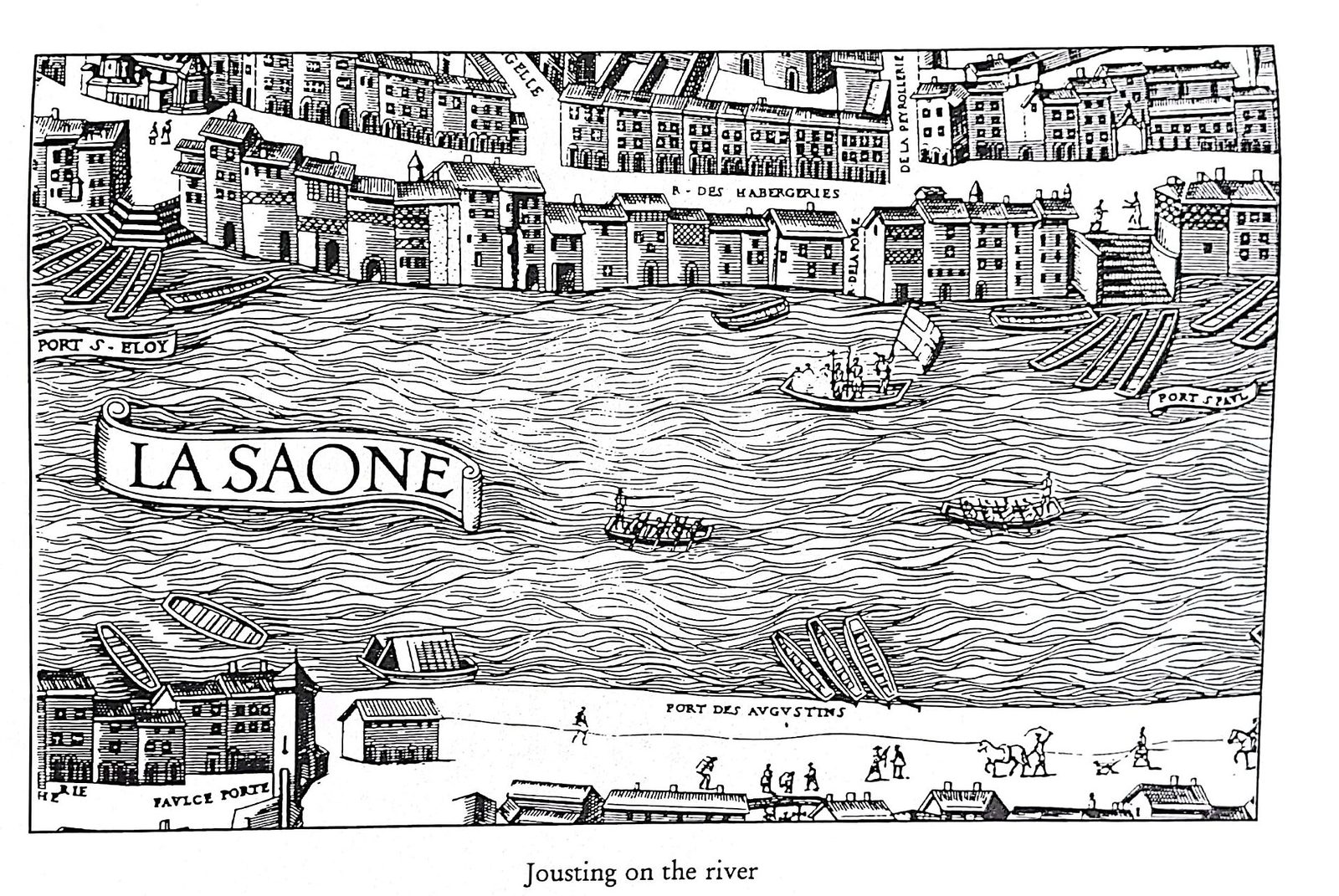
The Saône in Renaissance-era old Lyon, an antique engraving.
Land at Lyon Saint-Exupéry and you're at the crossroads of France: the Alps to the east, Provence to the south, Burgundy to the north. Lyon itself is a UNESCO-listed beauty and the country's undisputed food capital, where Roman ruins, Renaissance lanes and riverside quays meet some of the best eating in Europe. Here's how to begin.
⛽ Fuel up near the delivery center
First things first: the practical essentials
Refuelling near the airport. If you didn't take the optional full-tank service at pick-up, you can top up right nearby — there's no obligation to return the car full. The closest stop is the Esso Express in Saint-Laurent-de-Mure, on Avenue Jean Moulin (the D306), open 24 hours: handy whatever time your flight lands. By day and on weekdays, the TotalEnergies Jean Moulin Automobiles just up the road is a manned alternative.
Getting into the city. From the delivery centre, Lyon is about thirty kilometres away: take the A43 westbound, then the ring road (A46/A42), and you'll reach the riverside quays in roughly 30 minutes. If you'd rather leave the car parked for your first night in town, the Rhônexpress tram links the airport to Part-Dieu station in under 30 minutes.
Where to spend your first night. Vieux Lyon, at the foot of Fourvière, and the Presqu'île between the Rhône and the Saône are central, walkable and full of character, with plenty of covered car parks to leave the car worry-free.
Your vehicle. Your brand-new Renault is waiting at the delivery centre in Saint-Laurent-de-Mure, on the doorstep of Lyon Saint-Exupéry airport, under the short-term lease programme.
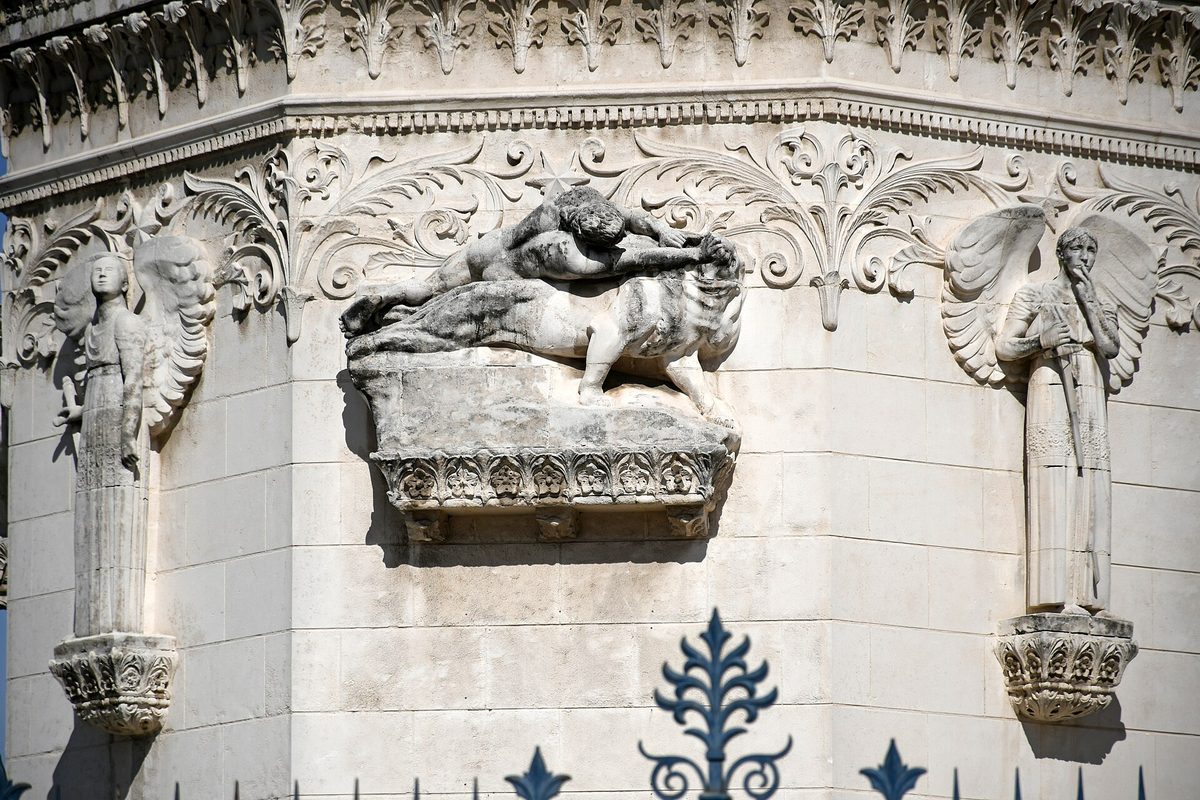
A carved detail on the façade of the Fourvière basilica.
Lyon's essential sights
Vieux Lyon and its traboules. Along the Saône stretches one of Europe's largest Renaissance quarters: cobbled lanes, galleried courtyards and colourful UNESCO-listed façades. The locals' secret is the traboules — covered passageways that cut through the buildings from one street to the next. Push open the doors (those open to the public) to find spiral staircases and hidden wells.
Fourvière and Roman Lyon. Climb to the Notre-Dame de Fourvière basilica, white and bristling with sculpture (like the detail pictured on this page), for the finest view over the city and, on a clear day, all the way to Mont Blanc. Right beside it, the ancient theatres of Lugdunum recall that Lyon was the capital of Roman Gaul — the great theatre still hosts concerts in summer.
The Presqu'île and the Croix-Rousse. Between the Rhône and the Saône, the Presqu'île lines up grand squares (Bellecour, Terreaux with its Bartholdi fountain), department stores and cafés. To the north, the Croix-Rousse hill, once the stronghold of the canuts (silk weavers), keeps a village feel and workshops opening onto the city below.
Lyon, capital of the Resistance. The city also carries a powerful memory: discreet plaques on street corners, like the one honouring a young Lyonnais who fell in 1943, and the Centre d'Histoire de la Résistance et de la Déportation, housed in the former military medical school the Gestapo once occupied.
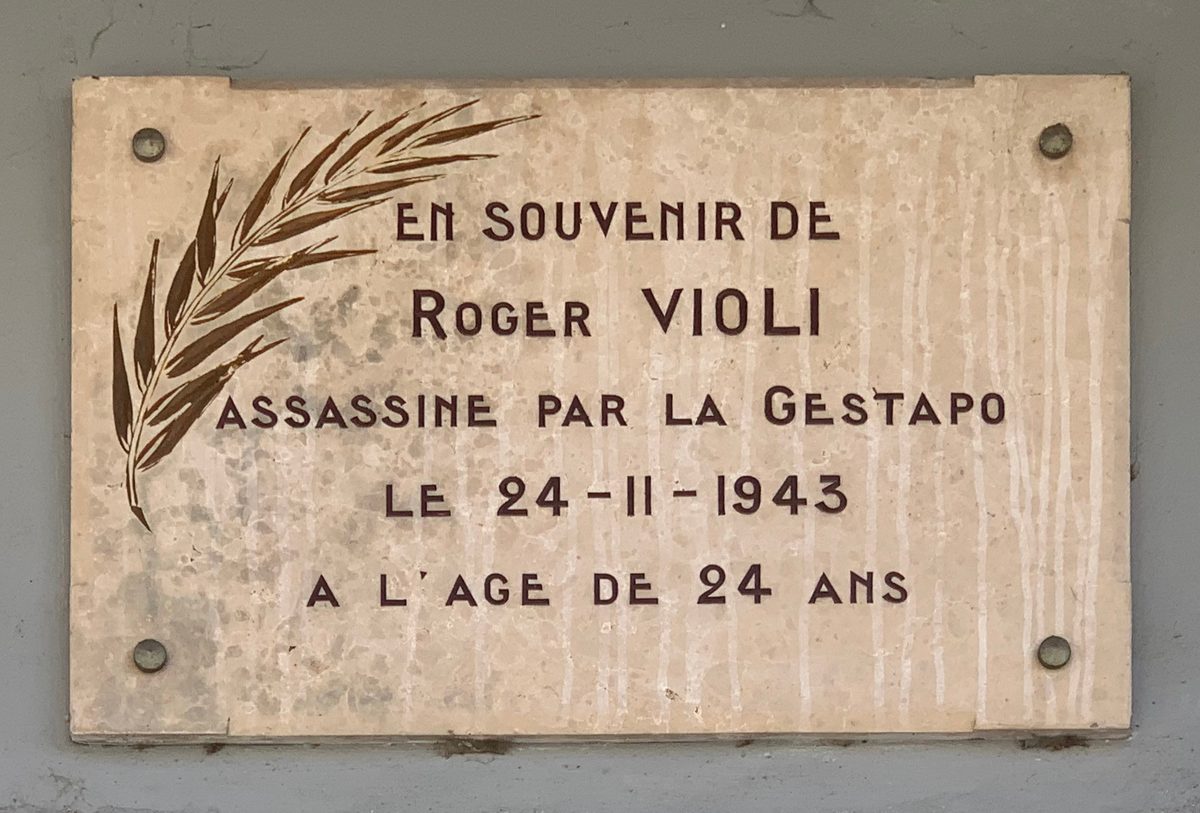
A plaque remembering Roger Violi, killed by the Gestapo in 1943 — Lyon, capital of the Resistance.
Foodie Lyon: bouchons, markets and pink pralines
The bouchons. Lyon claims the title of world capital of gastronomy, and it starts in its bouchons — small, convivial restaurants with checked tablecloths. Here you'll try pike quenelles in Nantua sauce, andouillette, tablier de sapeur, a hearty saladier lyonnais and, to finish, cervelle de canut (herbed fresh cheese). This heritage owes much to the "mères lyonnaises", the women cooks who made the city's name.
The Halles and the markets. The Halles de Lyon Paul Bocuse gather the finest artisans under one roof: cheesemongers, charcutiers (try the rosette sausage and the saucisson brioché), pastry chefs. For open-air bustle, head to the Croix-Rousse market or the Saint-Antoine quays along the Saône in the morning.
Pink pralines… and a glass of Beaujolais. You can't leave without a slice of tarte aux pralines roses, the city's sweet signature, or without raising a glass: Lyon is said to be "watered by three rivers" — the Rhône, the Saône and… Beaujolais. The northern crus and the southern Côtes du Rhône are both close at hand.
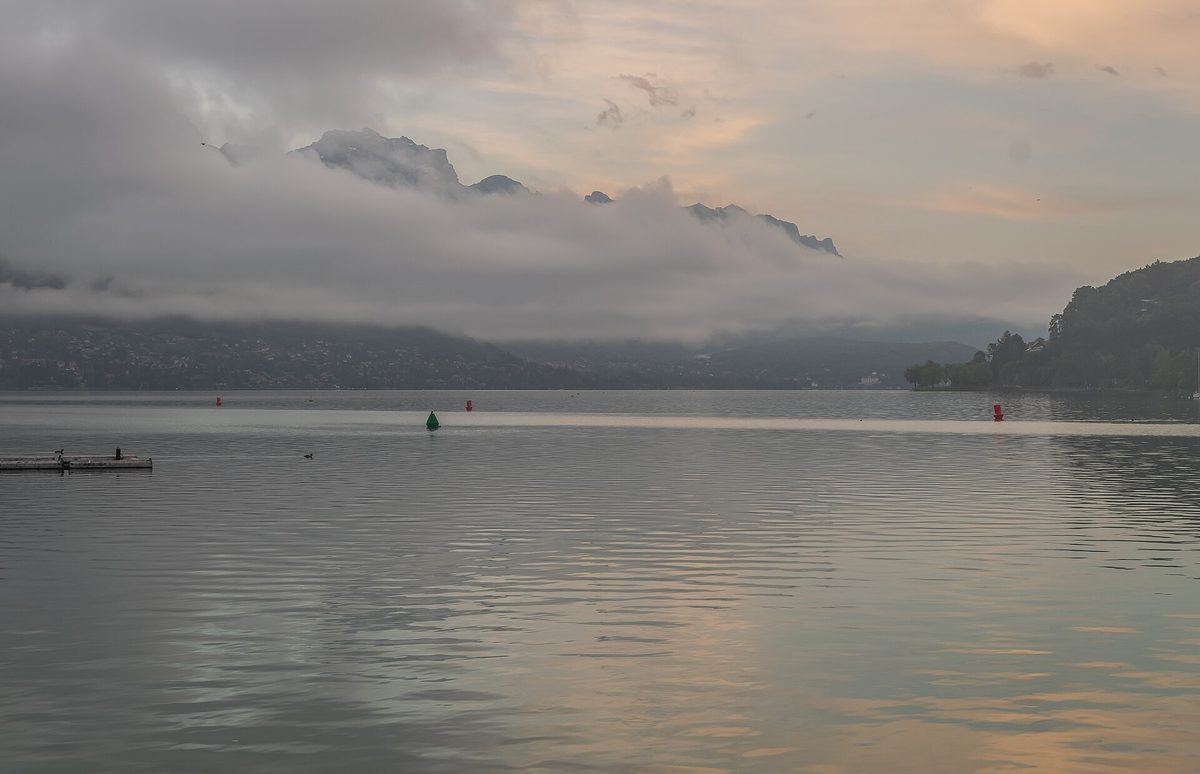
Lake Annecy at dusk, under an hour and a half to the east.
Your first road trip out of Lyon
Lyon is the best springboard in France. To the east, the Alps: the turquoise lake of Annecy is under an hour and a half away, with Chamonix and Mont Blanc a little beyond. To the south, the A7 runs down the Rhône valley into Provence — Avignon, the Pont du Gard and the lavender fields in a little over two hours. To the north, the vineyards roll on, from Beaujolais to Burgundy.
The perfect first-day loop. Head north-west into the land of the Pierres Dorées, the "golden stones" — Beaujolais villages built from an ochre stone that glows in the sun. Make for Villefranche-sur-Saône, climb up to Oingt, listed among France's most beautiful villages, wander from Ternand to Bagnols among vines and chapels, taste a glass at a winemaker's, then come home along the ridges: about 130 km and a full day of Lyonnais countryside, with a glass of Beaujolais to show for it.
When to come: climate and seasons
Lyon has a semi-continental climate with clearly marked seasons. Spring and autumn (April–June, September–October) are ideal: mild temperatures, pleasant terraces and perfect light on the quays. Summer is hot, often above 30 °C — a fine excuse to escape to the Alpine lakes or the Ardèche gorges to cool off. Winter is cold and sometimes foggy, but magical in early December: the Fête des Lumières lights up the whole city over four evenings, one of the finest spectacles in France.
A word for mountain-lovers: if you're heading for the Alps (Annecy, Chamonix, the ski resorts), France's Mountain Law requires winter tyres or chains on board in many communes from 1 November to 31 March. Sort out the equipment before you gain altitude.
Driving tips for France
Tolls: many French motorways are tolled, including the A7 heading south and the A43 towards the Alps. Most toll gates accept contactless bank cards — keep one within reach.
Speed limits: 130 km/h on motorways (110 in rain), 80 on main roads, 50 in towns — and 30 across many Lyon neighbourhoods.
Fuel: "essence" (SP95/SP98) for petrol engines, "gazole/diesel" for diesel; charging points are plentiful in the city and along motorways.
Lyon's low-emission zone: the metropolitan area runs one of France's most active low-emission zones (ZFE), based on the Crit'Air sticker. Rest assured: your Eurodrive vehicle is brand-new and meets the latest Euro standards — it falls into the least-polluting category and so is not targeted by the restrictions, which apply to the oldest cars.
How far by car?
Approximate driving times from the delivery center.
📍 Your delivery center
Lyon: Gastronomy, History and the Road to the Alps
Book your vehiclePhotos : Maurice Scève (Public domain) · Phyrexian (CC BY-SA 4.0) · Benoît Prieur (CC0) · Krzysztof Golik (CC BY-SA 4.0) — Wikimedia Commons.