

make >
-
 EURODRIVE

Madrid: Your Spanish Road Trip Starts Here
The Eurodrive guide
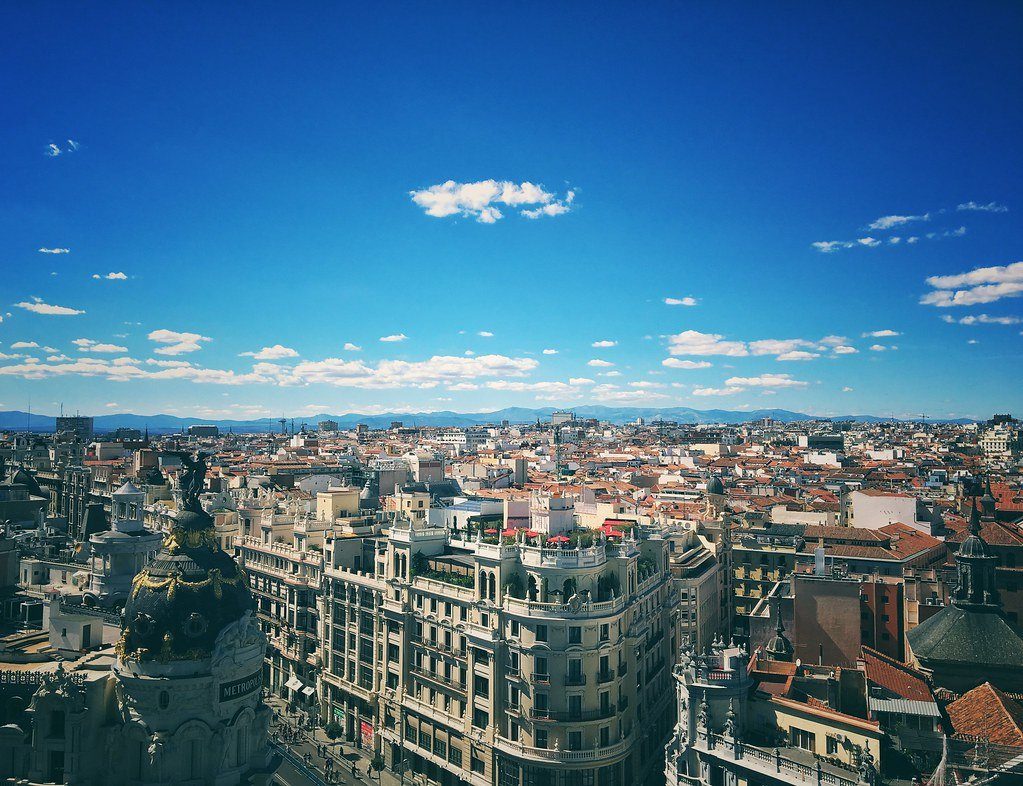
Madrid glows at dusk.
There's a particular kind of freedom in stepping off a plane, picking up the keys to a brand-new car, and realising the whole Iberian Peninsula is now yours to explore. Madrid is the perfect launchpad: a sun-soaked capital that mixes royal grandeur, world-class art and some of the best food on the continent — and from here, the open road stretches in every direction. Whether you're spending a few days in the city before heading off or coming back to drop the car, here's everything you need to make the most of it.
⛽ Fuel up near the delivery center
First things first: the practical essentials
Refuelling near the airport. If you didn't take the optional full-tank service at pick-up, there's no obligation to return the car full — but here's where to top up without a detour. The easiest stop is the Repsol station on the N-2 (P.K. 12.60, San Blas–Canillejas), open daily from 6 a.m. to 10 p.m., barely two kilometres away — perfect for a final fill-up on the way in. For a dawn departure or a late return, head instead to Plenergy Coslada I on Avenida de San Pablo 29, open 24 hours and usually cheaper.
Getting into the city. Barajas is exceptionally well connected. The Metro (Line 8) reaches the centre in about half an hour, and the city's two ring roads — the M-30 and M-40 — make driving in straightforward, if busy at rush hour.
Where to spend your first night. To avoid diving straight into traffic, base yourself in Salamanca (elegant, central) or Malasaña (bohemian, buzzing): two ideal neighbourhoods, both with parking garages close at hand.
Your vehicle. Your brand-new Renault is waiting at the Barajas delivery centre; keys in hand, the whole Iberian Peninsula opens up before you under the short-term lease programme.
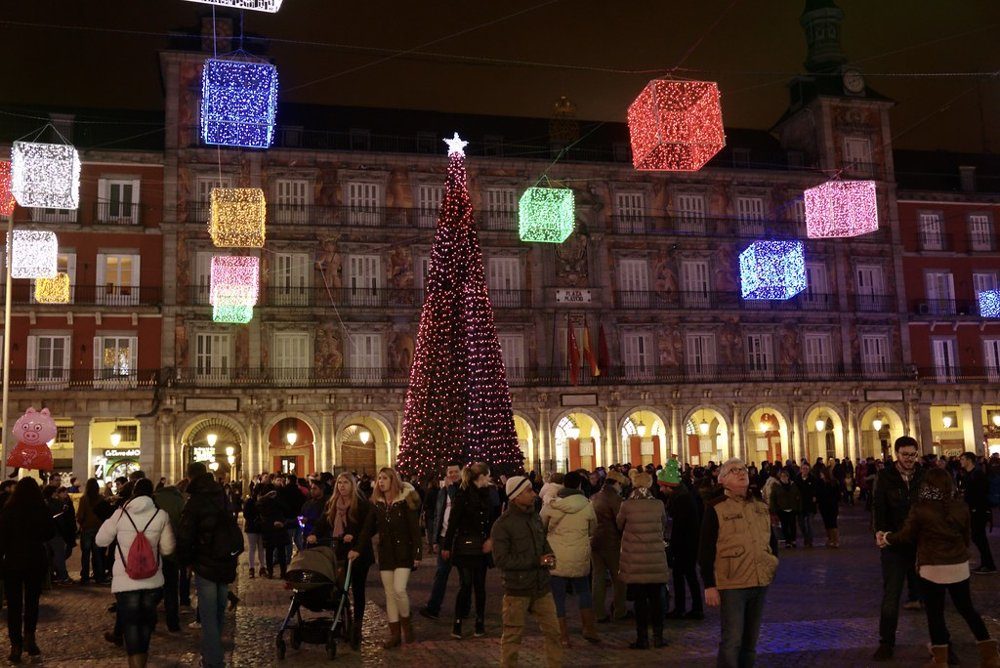
The heart of old Madrid.
Madrid's essential sights
Habsburg Madrid. Start in the historic core: the arcaded Plaza Mayor, the Royal Palace with its Sabatini Gardens, the Almudena Cathedral, then the Mercado de San Miguel — a glass-and-iron hall where you graze standing at the counter.
The Golden Triangle of Art. Three of Europe's finest museums stand shoulder to shoulder along the Paseo del Prado: the Prado (Velázquez, Goya), the Reina Sofía — home to Picasso's Guernica — and the Thyssen-Bornemisza, eight centuries of painting in one sweep. Allow half a day per museum, or aim for the free late-afternoon entry slots.
Retiro Park. When the heat builds, this great garden is the city's lungs: row a boat on the lake below the monument to Alfonso XII, seek out the glass Crystal Palace, then exit by the Puerta de Alcalá.
The city that never sleeps. After dark, make for the tapas taverns of La Latina, the terraces of Malasaña, or the rooftop of the Círculo de Bellas Artes: here the evening starts late and ends later still.
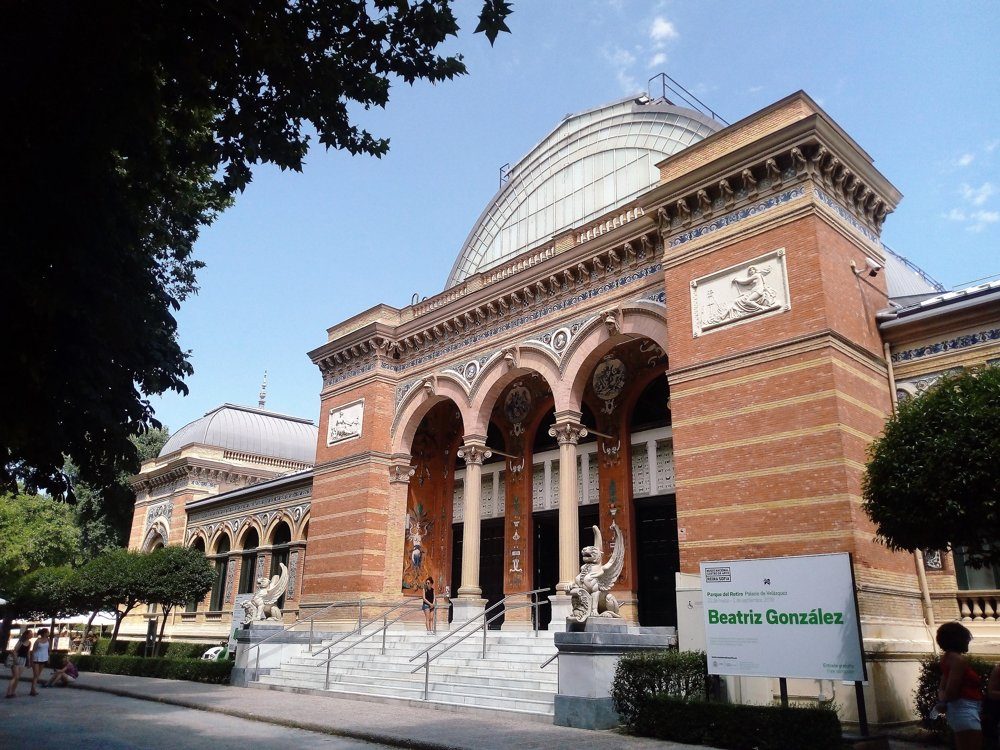
A peaceful escape in the city centre.
Foodie Madrid: markets and Castilian flavours
The markets. Beyond the tourist-heavy San Miguel, push open the doors of the Mercado de San Antón in Chueca or the Mercado de la Cebada in La Latina — more local, and a truer taste of how Madrid really eats.
Castilian classics. Cocido madrileño, a chickpea stew served in several courses, is the king of winter dishes; in summer, locals turn to huevos rotos, callos (tripe) or a plate of Iberian ham. Don't miss the bocadillo de calamares — a fried-squid sandwich — eaten on a square just off the Plaza Mayor.
Vermouth hour. "Hacer el vermut" is the quintessential Madrid Sunday aperitif: a red vermouth on tap, a few olives, perched on a stool in a Cava Baja tavern.
A sweet sin. Finish with chocolate con churros at Chocolatería San Ginés, open since 1894 and, at times, almost around the clock.
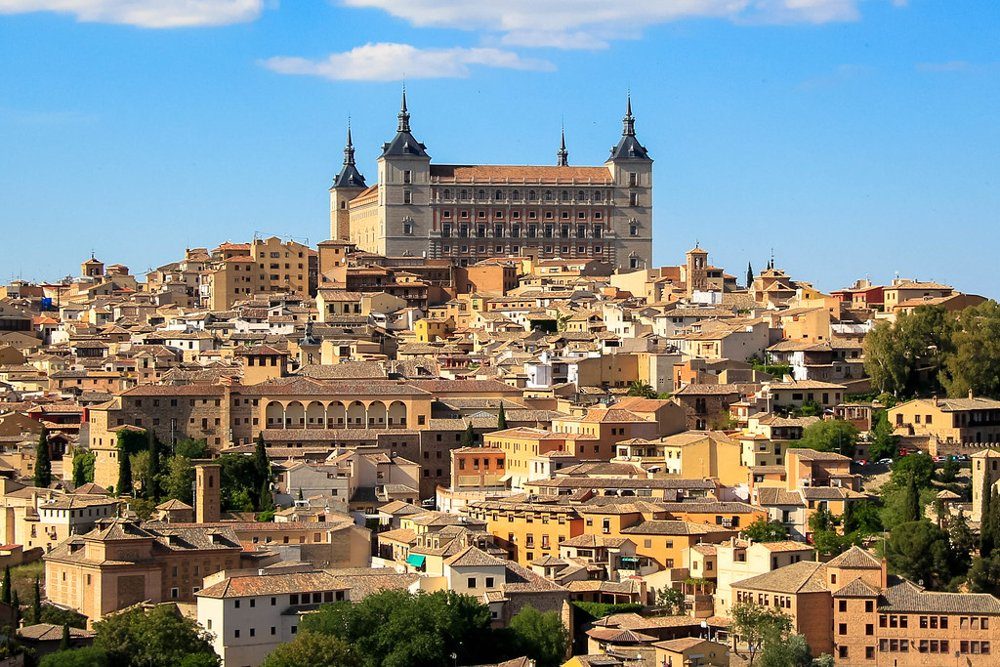
Toledo, under an hour from the capital.
Your first road trip out of Madrid
Madrid sits almost at Spain's exact geographical centre, so every road leads out from it. A favourite first leg runs northwest to Segovia (about an hour), beneath a dizzying Roman aqueduct and a fairytale castle, the Alcázar. A little further lie Ávila's medieval walls; to the south, Toledo — the imperial former capital perched above the Tagus, under an hour away and unforgettable. For something grander, the A-1 climbs north into the Sierra de Guadarrama, while the A-3 runs east all the way to Valencia and the Mediterranean.
The perfect first-day loop. Take the A-6 then the AP-6 to Segovia in the morning (aqueduct, Alcázar, roast suckling pig for lunch), drop back over the Navacerrada pass through the Sierra de Guadarrama, stop at the monastery of San Lorenzo de El Escorial, and return to Madrid on the A-6: about 200 km that distil Castile into a single day.
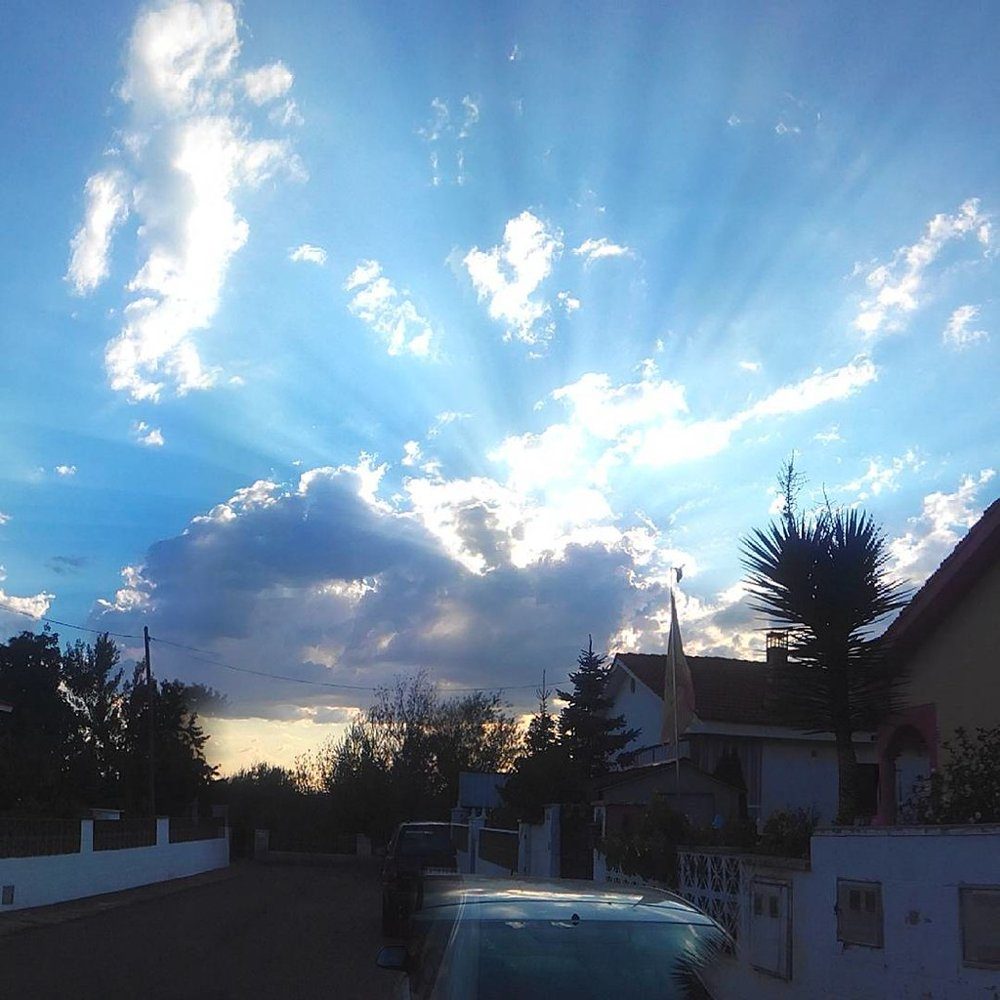
The open road awaits.
When to come: climate and seasons
Madrid has a sharply continental climate, summed up by the local saying: "nine months of winter and three of hell." Spring (April–June) and autumn (September–October) are ideal: mild, luminous days, pleasant terraces and museums less besieged. Summer is scorching — often above 35 °C in July and August — but the city empties in August and the terrace nights are glorious; drive early in the morning where you can. Winter is cold and dry, with big blue skies and, at times, snow on the heights.
If your route climbs into the Sierra de Guadarrama in winter, watch the forecast: on the snowy passes (Navacerrada, Cotos), special equipment — winter tyres or chains — can be made compulsory by roadside signs. On the plains, they are never needed.
Driving tips for Spain
Tolls: Most main routes (autovías) are free and go everywhere at no charge, but some autopistas marked "AP" are tolled — keep a contactless bank card within reach.
Speed limits: 120 km/h on motorways and autovías, 90 on main roads, 30–50 in towns depending on the number of lanes.
Fuel: "gasolina" is petrol (95/98), "gasóleo" or "diésel" is diesel — check before filling.
City driving: central Madrid is a low-emission zone (Zona de Bajas Emisiones). Your Renault is a brand-new, low-emission car, but access to the Centro district is still regulated: check your route and, if your hotel is inside it, that you may reach its car park. When in doubt, leave the car in a public garage on the edge and continue on foot or by Metro.
How far by car?
Approximate driving times from the delivery center.
📍 Your delivery center
Madrid: Your Spanish Road Trip Starts Here
Book your vehiclePhotos : arnaudmatar (CC0) · boklm (CC0) · Coralma* (CC0) · Mussi Katz (Public Domain Mark) · pga_99 (Public Domain Mark) — Wikimedia Commons.