

make >
-
 EURODRIVE

Marseille: Sun, Sea and the Gateway to Provence
The Eurodrive guide
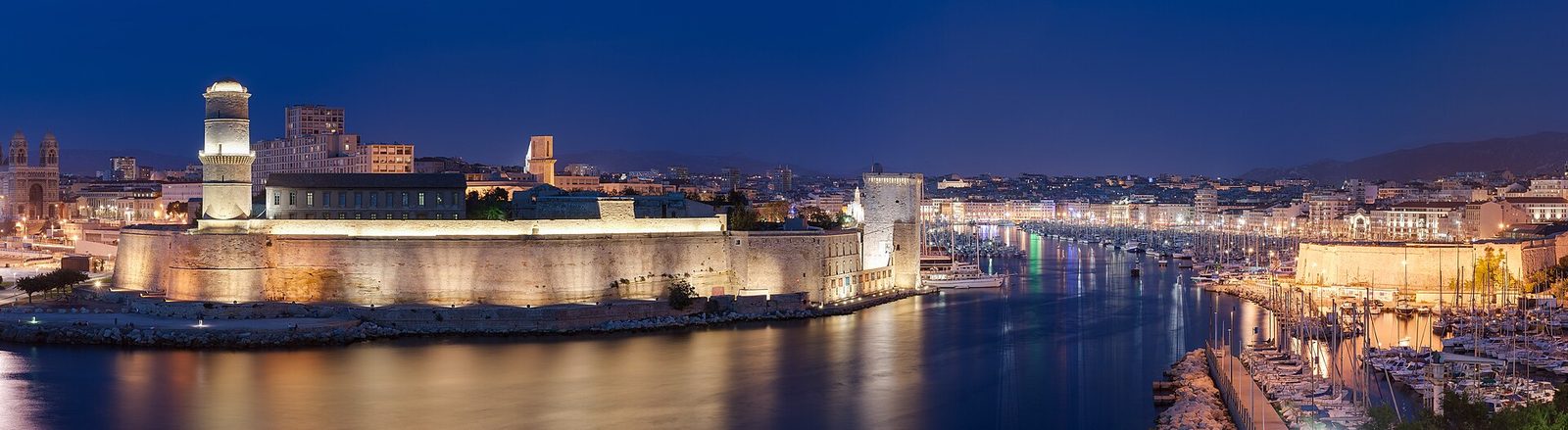
Marseille's Vieux-Port aglow at nightfall.
Marseille greets you with sunshine, the scent of the sea and a raw, vivid energy unlike anywhere else in France. Land here and the Mediterranean coast, the calanques and the lavender hills of Provence are all within easy reach. With your new car ready, here's how to dive in.
⛽ Fuel up near the delivery center
First things first: the practical essentials
Refuelling near the airport. If you didn't take the optional full-tank service at pick-up, you can refuel near the airport — there's no obligation to return the car full. The handiest stop is the TotalEnergies station right at Marseille-Provence airport in Marignane, open from 6 a.m. (7 a.m. on Sundays) to 11:30 p.m., a stone's throw from the delivery point. If it's busy, Marignane town has several alternatives a few minutes away.
Getting into the city. A shuttle bus and the train link the airport to Marseille Saint-Charles in around 30 minutes. By car, the coastal A55 or the A7 reach the Vieux-Port in 25–30 minutes.
Where to spend your first night. Le Panier, the city's oldest quarter, and the streets around the Vieux-Port are atmospheric and central — leave the car in a parking garage, as the lanes are narrow and often one-way.
Your vehicle. Delivered factory-fresh at the airport on your flight details (or by appointment), your Renault is yours for the whole trip under the short-term lease programme — the tax-free formula built for non-EU travellers.
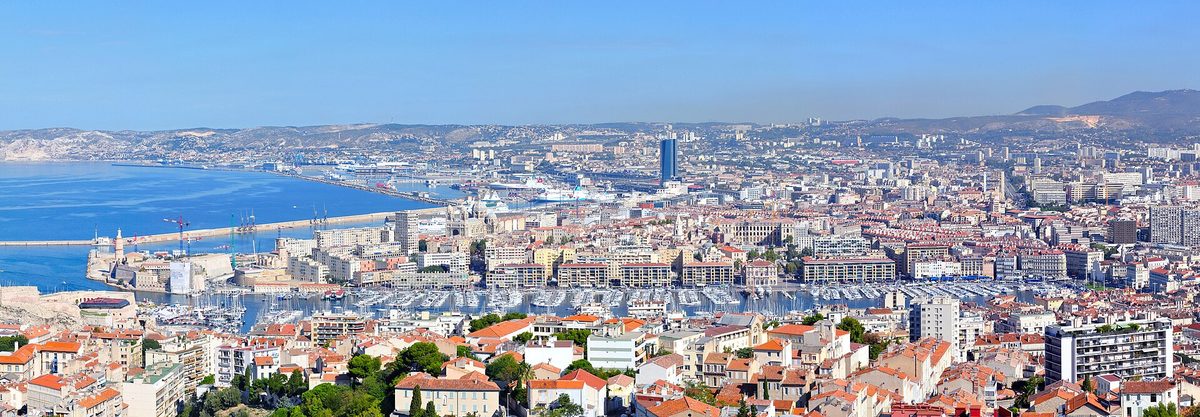
Notre-Dame de la Garde watches over the city.
Marseille's essential sights
The Vieux-Port. Marseille's beating heart for 2,600 years: fishermen still sell the morning catch on the Quai des Belges, gulls wheel over the masts, and Norman Foster's mirror-ceilinged Ombrière throws the whole scene back at you. Hop the little ferry boat across the water for a couple of euros.
Notre-Dame de la Garde. Perched on the city's highest hill, 'la Bonne Mère' and her golden Virgin watch over Marseille. The climb (or the tourist train) rewards you with a 360° panorama over the sea, the islands and the tiled rooftops below.
Le Panier and the MuCEM. Lose yourself in the steep, mural-splashed lanes of Le Panier and the Vieille Charité, then walk down to the striking MuCEM — its lace-like concrete shell linked by a footbridge to the old Fort Saint-Jean, a museum of Mediterranean civilisations with a rooftop sea view.
The Calanques and the Château d'If. From the Vieux-Port, boats sail out to the Calanques — hidden turquoise inlets between white limestone cliffs stretching towards Cassis — and to the Château d'If, the island fortress of *The Count of Monte Cristo*.
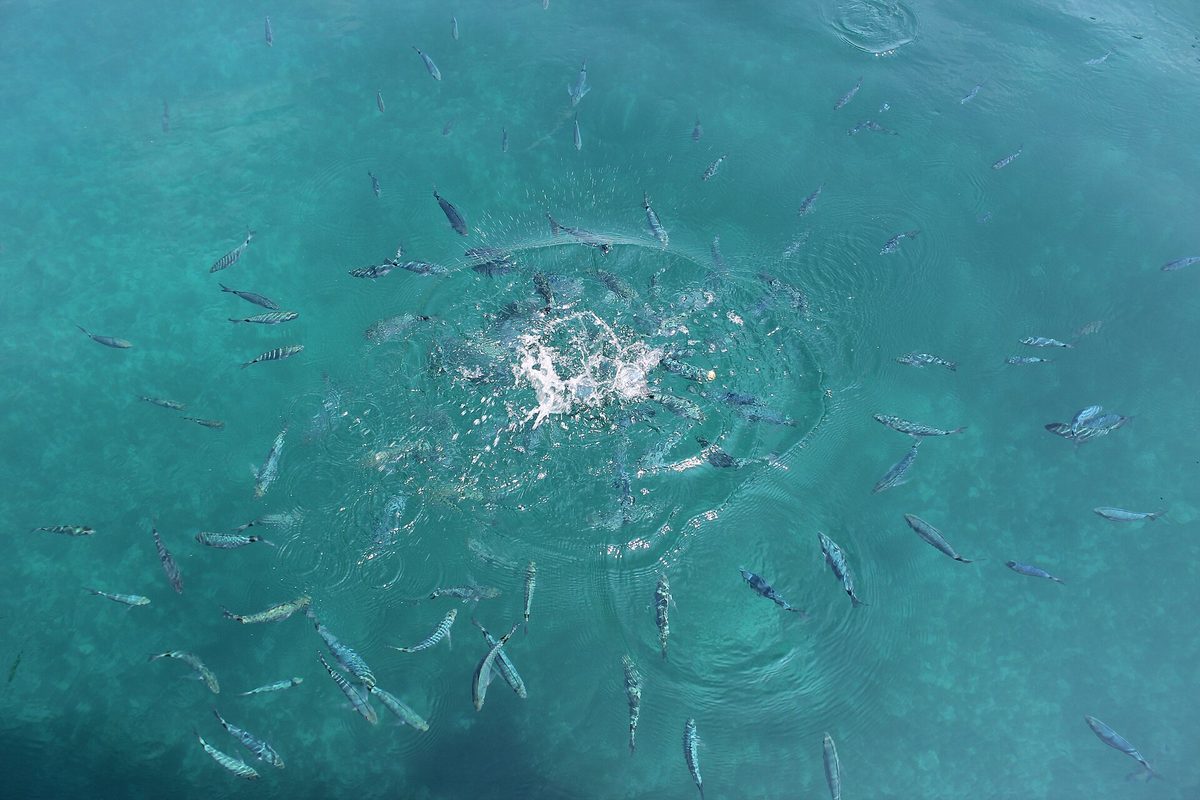
The Calanques, turquoise and wild.
Foodie Marseille: markets, bouillabaisse and navettes
The markets. Every morning, fishermen's wives sing out the day's catch on the Quai des Belges. Inland, the Noailles district hides the Marché des Capucins — the 'belly of Marseille', a riot of spices, olives and Mediterranean stalls — while the Cours Julien and La Plaine draw a younger, bohemian crowd.
Bouillabaisse — the real thing. Marseille's legendary fish stew is served in two acts (the broth first, then the fish) at harbourside institutions like Chez Fonfon or Le Miramar. It's a feast, not a snack — book ahead and come hungry.
Street food and sweets. Grab crisp chickpea *panisses* and sugar-dusted *chichis frégis* down at L'Estaque, spread *tapenade* on fresh bread, and pick up a bag of *navettes* — the little boat-shaped, orange-blossom biscuits baked since 1781 at the Four des Navettes near the Abbaye Saint-Victor. Wash it all down with a *pastis*, of course.
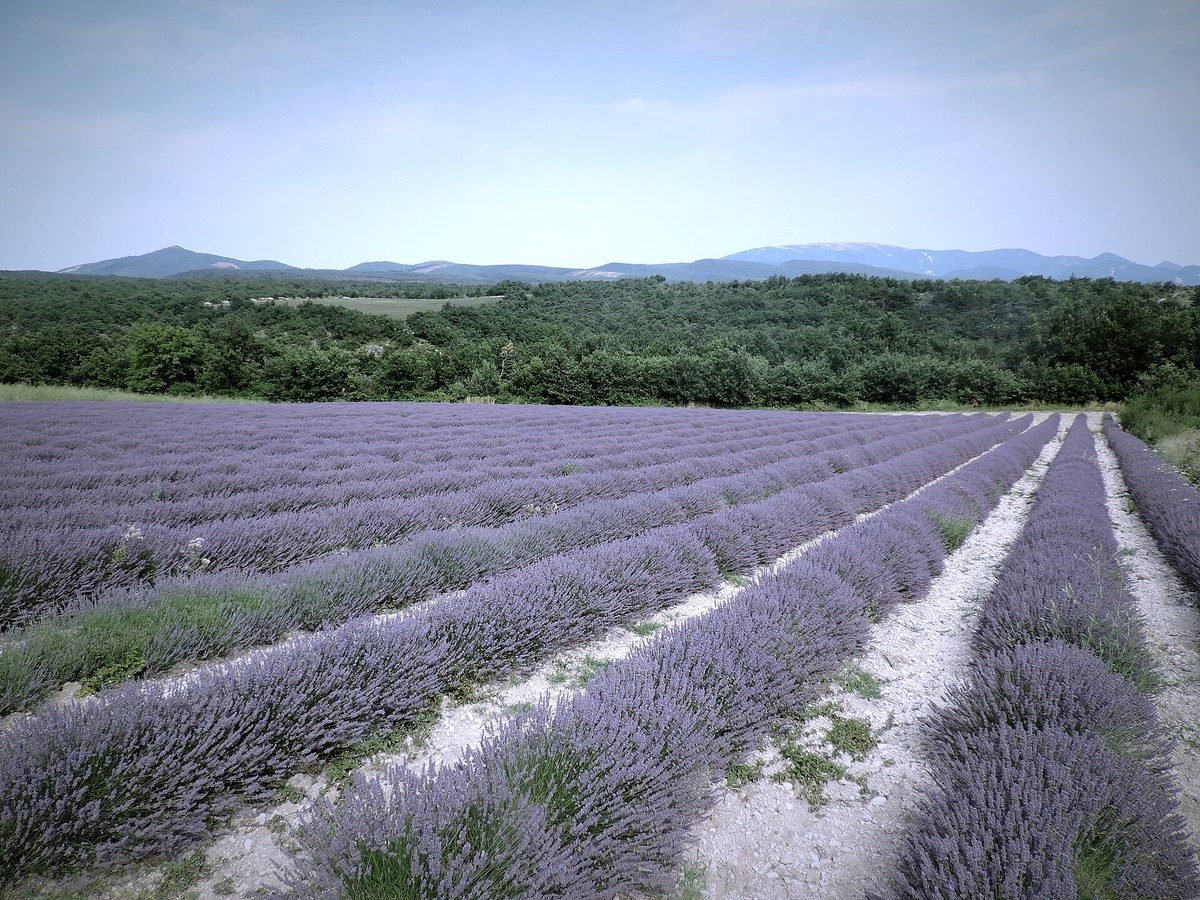
Provence in bloom, just inland.
Your first road trip out of Marseille
Provence unfolds in every direction. East lie Cassis and the Calanques, then the glamour of the Côte d'Azur. North, Aix-en-Provence and its fountains are barely 25 minutes away, with the Luberon villages and lavender fields beyond. West, the wild marshes of the Camargue and the Roman city of Arles are about an hour, and the motorway opens the door to Avignon and the Pont du Gard.
The perfect first-day loop. Head east out of Marseille to Cassis, then climb the Route des Crêtes over Cap Canaille — at 394 m, the highest sea cliff in France, with vertiginous views over the water. Drop down into pretty Cassis for lunch and a boat into its calanques, carry on to seaside La Ciotat, and loop home on the A50: roughly 90 km that pack the whole coast's drama into a single day.
When to come: climate and seasons
With around 300 days of sunshine a year, Marseille is a year-round city. May–June and September–October are ideal: warm sea, glorious light, thinner crowds. Summer is hot and lively — but note that in July and August the Calanques national park is often closed to walkers on high fire-risk days, so check the daily access map before setting off. Winter is mild and bright, perfect for the sea urchins of the *oursinades*. One local character to plan around: the Mistral, the dry north-westerly wind that can blow hard for days — it scours the sky a brilliant blue but bites cold, so pack a windproof layer whatever the season.
Driving tips for France
Tolls: Many French motorways are tolled (the A7, A8 and A54 around Provence among them). Most gates take contactless bank cards — keep one within reach.
Speed limits: 130 km/h on motorways (110 in rain), 80 on main roads, 50 in towns.
Fuel: "essence" (SP95/SP98) for petrol engines, "gazole/diesel" for diesel.
Low-emission zone: Marseille has run a ZFE across its central A7–A50–A55 loop since 2022. Good news: your brand-new Eurodrive vehicle meets the standard and needs no sticker to drive in.
How far by car?
Approximate driving times from the delivery center.
📍 Your delivery center
Marseille: Sun, Sea and the Gateway to Provence
Book your vehiclePhotos : Benh LIEU SONG (CC BY-SA 3.0) · Tobi 87 (CC BY-SA 3.0) · René Hourdry (CC BY-SA 4.0) · Dmytro Ivashchenko (CC BY-SA 4.0) — Wikimedia Commons.