

make >
-
 EURODRIVE

Montpellier: Sun-Drenched South and Mediterranean Shores
The Eurodrive guide
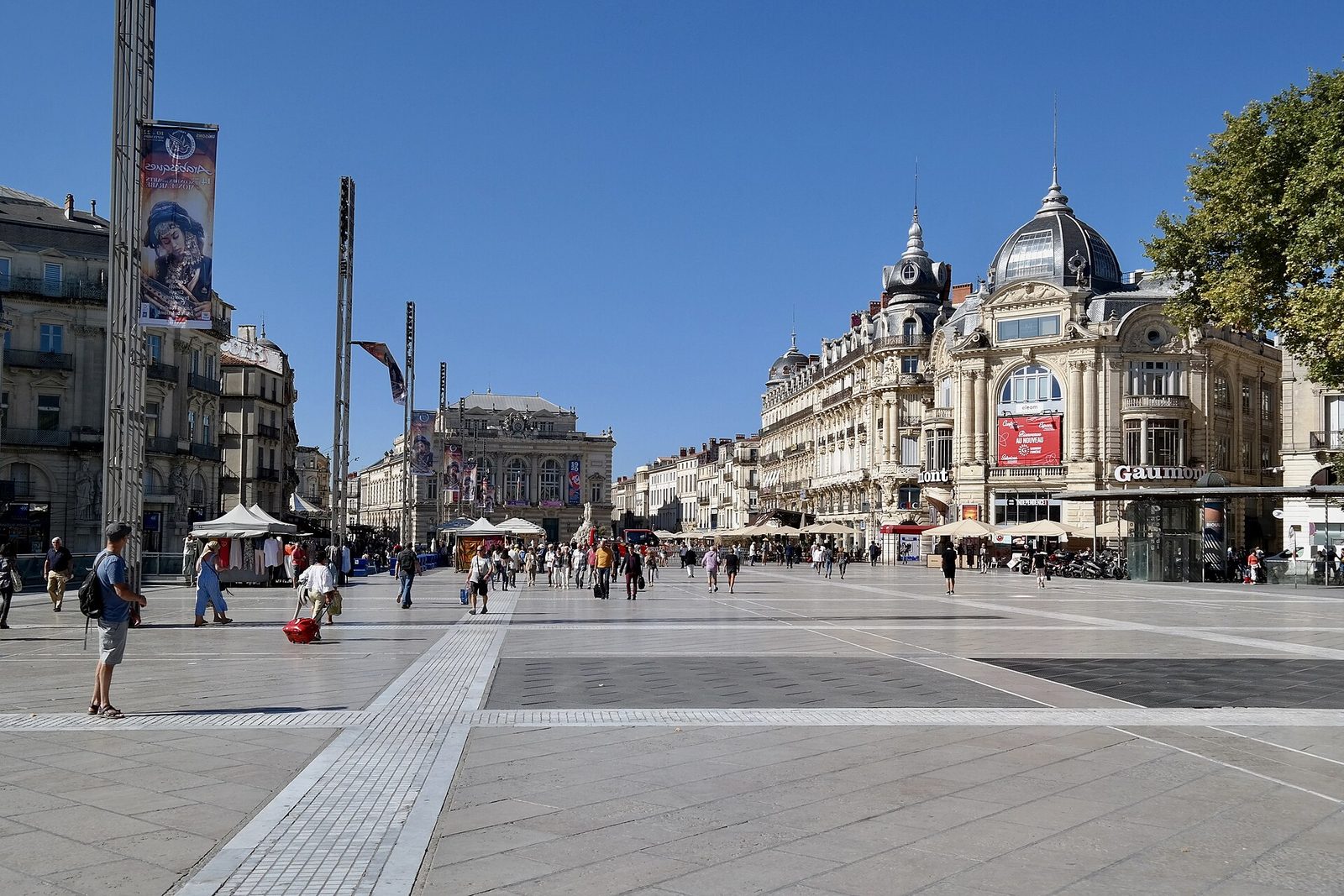
Montpellier, stylish and sun-soaked: the Place de la Comédie.
Young, sun-soaked and effortlessly stylish, Montpellier is a southern city where medieval lanes open onto grand squares and the Mediterranean is minutes away. Land at Montpellier Méditerranée and the beaches, the Camargue, the Languedoc vineyards and the wild Cévennes are all within easy reach. Here's how to begin.
⛽ Fuel up near the delivery center
First things first: the practical essentials
Refuelling near the airport. If you didn't take the optional full-tank service at pick-up, you can fill up right nearby — there's no obligation to return the car full. The closest stop is the Dyneff station at the airport, on Avenue Jacqueline-Auriol in Mauguio, open daily 7 a.m. to 9 p.m. and less than a kilometre from the delivery centre. Several more stations dot Mauguio and Pérols on the road into the city.
Getting into the city. The airport sits barely ten kilometres from Montpellier: a shuttle bus reaches the tram terminus and the Place de la Comédie in 20 to 30 minutes, and by car it's a quick run along the coast road.
Where to spend your first night. The historic Écusson quarter around the Place de la Comédie is central, entirely pedestrian and full of life — the perfect place to drop your bags on the first evening.
Your vehicle. Your brand-new Renault is waiting in the airport delivery-centre car park: a few minutes of paperwork and you're behind the wheel on the short-term lease programme, ready to head for the Mediterranean.
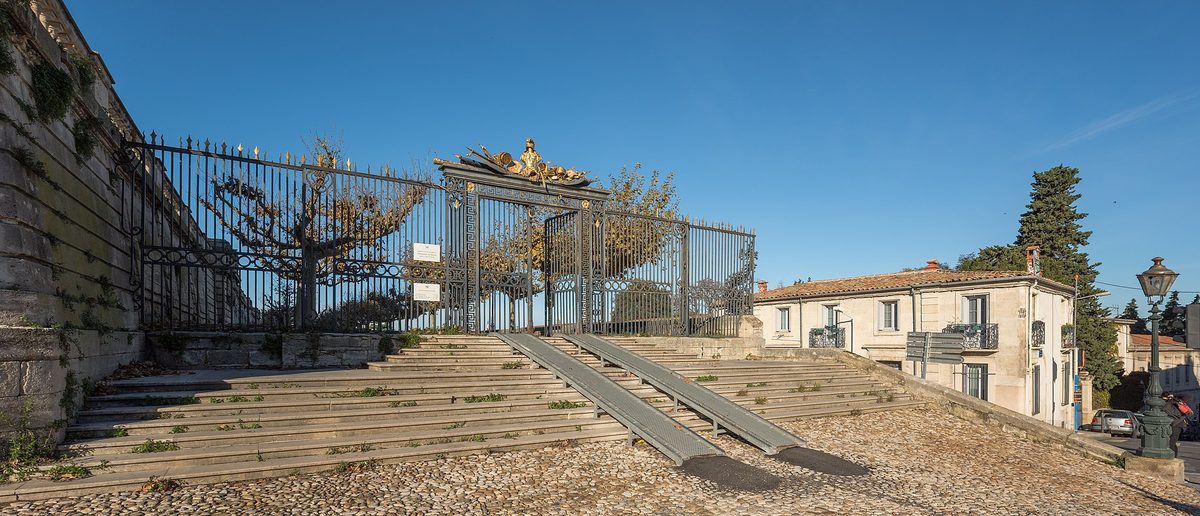
The Promenade du Peyrou and its triumphal arch.
Montpellier's essential sights
Place de la Comédie. Nicknamed 'the Egg' for its oval shape, this vast paved esplanade is the city's living room: the Three Graces fountain, the façade of the Opéra Comédie, café terraces and the endless glide of the tram. All of Montpellier passes through.
The Écusson. Behind the Comédie opens the medieval heart, a maze of pedestrian lanes hiding Renaissance mansions, secret courtyards, boutiques and shaded little squares. Getting lost on the way to the cathedral is half the fun.
The Promenade du Peyrou. This royal terrace, lined up with its triumphal arch, ends at the water tower and the great arches of the Saint-Clément aqueduct: at sunset the view stretches to the Pic Saint-Loup and, on a clear day, the Cévennes.
Saint-Pierre, the Musée Fabre and Antigone. Saint-Pierre Cathedral and its medical school — the oldest still in operation in the Western world — sit beside the Musée Fabre, one of France's richest art museums; to the east, the Antigone district unfurls the neoclassical perspectives designed by Ricardo Bofill. And for a swim, the beaches of Palavas and Carnon are twenty minutes south.
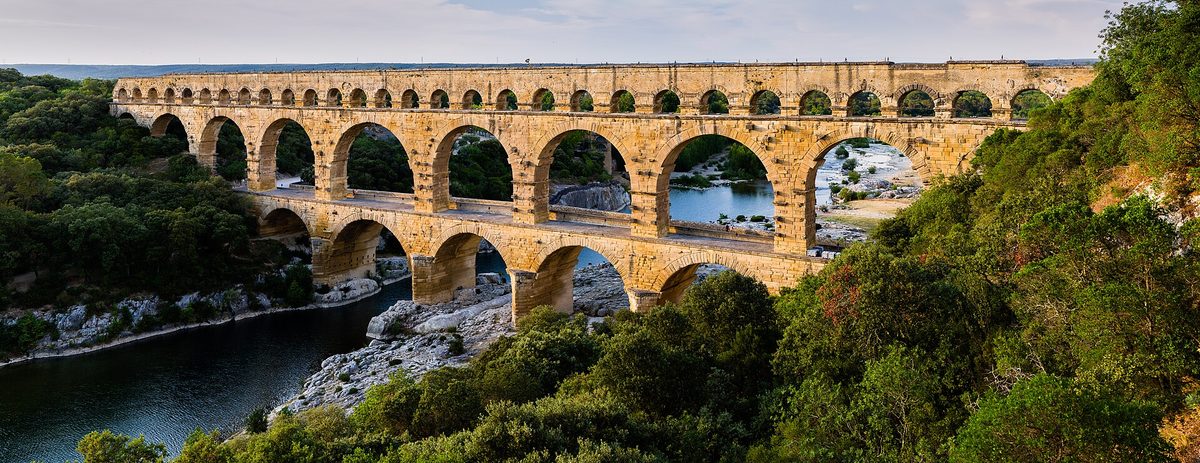
The Pont du Gard, 45 minutes away.
Foodie Montpellier: markets, shellfish and Languedoc wines
The markets. The organic Arceaux market gathers under the aqueduct arches on Tuesday and Saturday mornings, while the covered Halles Castellane and Halles Laissac brim all week with local produce, Cévennes cheeses and freshly landed fish.
Shellfish from the Étang de Thau. Half an hour away, Bouzigues and Mèze farm prized oysters and mussels eaten right beside the lagoon; along the coast, the brasucade — mussels grilled over a wood fire — and the tielle sétoise, a spiced squid-and-octopus pie born in Sète, are must-tries.
Sweets and wines. Bite into a grisette de Montpellier, a little honey-and-liquorice pearl born in the city, or a petit pâté de Pézenas; wash it all down with Languedoc wines — Pic Saint-Loup, Grès de Montpellier or the briny white Picpoul de Pinet that partners the oysters so well.
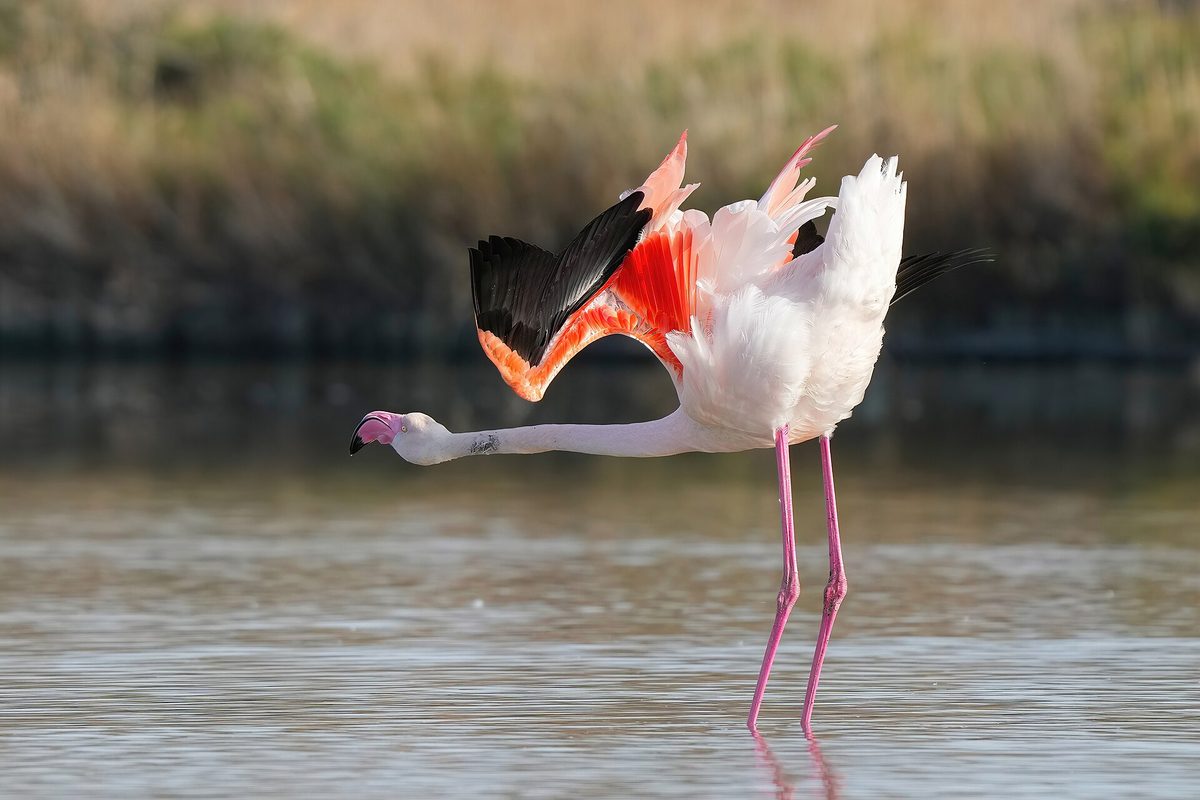
Flamingos of the Camargue.
Your first road trip out of Montpellier
The region radiates in every direction. West, the Roman wonders of Nîmes (the arena, the Maison Carrée) and the Pont du Gard are under an hour away, with the medieval city of Carcassonne a little beyond. East, the marshes and pink flamingos of the Camargue lead to Arles and Provence. North lie the gorges of the Hérault and the wild Cévennes; south, a string of beaches and the extraordinary La Grande-Motte.
The perfect first-day loop. Head west along the sea to La Grande-Motte and its seaside pyramids, carry on to the ramparts of Aigues-Mortes, a walled town set among the salt pans, then push into the Camargue among white horses and flamingos before looping home through Le Grau-du-Roi and the coast: around a hundred kilometres that distil the South into a single day.
When to come: climate and seasons
Bathed in nearly 300 days of sunshine, Montpellier is a year-round destination. Spring and autumn are ideal: mild air, golden light, a sea still warm in September and the grape harvest in the vineyards. Summer is hot and busy — make the most of mornings and evenings, and watch for the brief but violent late-summer 'cévenol' storms. Winter stays mild but windy: the Tramontane and Mistral sometimes sweep the region and sharpen the air. If you head up into the Cévennes, Mont Aigoual or the Lozère, France's Mountain Law requires winter tyres or chains in certain highland communes from 1 November to 31 March — equip yourself before gaining altitude.
Driving tips for France
Tolls: many French motorways are tolled, including the A9 'La Languedocienne' that skirts Montpellier. Most toll gates accept contactless bank cards — keep one within reach.
Speed limits: 130 km/h on motorways (110 in rain), 80 on main roads, 50 in towns.
Fuel: 'essence' (SP95/SP98) for petrol engines, 'gazole/diesel' for diesel.
City driving: several French cities, Montpellier among them, have a low-emission zone (ZFE). Good news: your recent Renault Eurodrive vehicle is exempt — no sticker is needed.
How far by car?
Approximate driving times from the delivery center.
📍 Your delivery center
Montpellier: Sun-Drenched South and Mediterranean Shores
Book your vehiclePhotos : Choinowski (CC BY-SA 4.0) · Christian Ferrer (CC BY-SA 4.0) · Benh LIEU SONG (CC BY-SA 3.0) · Giles Laurent (CC BY-SA 4.0) — Wikimedia Commons.