

make >
-
 EURODRIVE

Santiago de Compostela: Where the Camino Ends and Galicia Begins
The Eurodrive guide
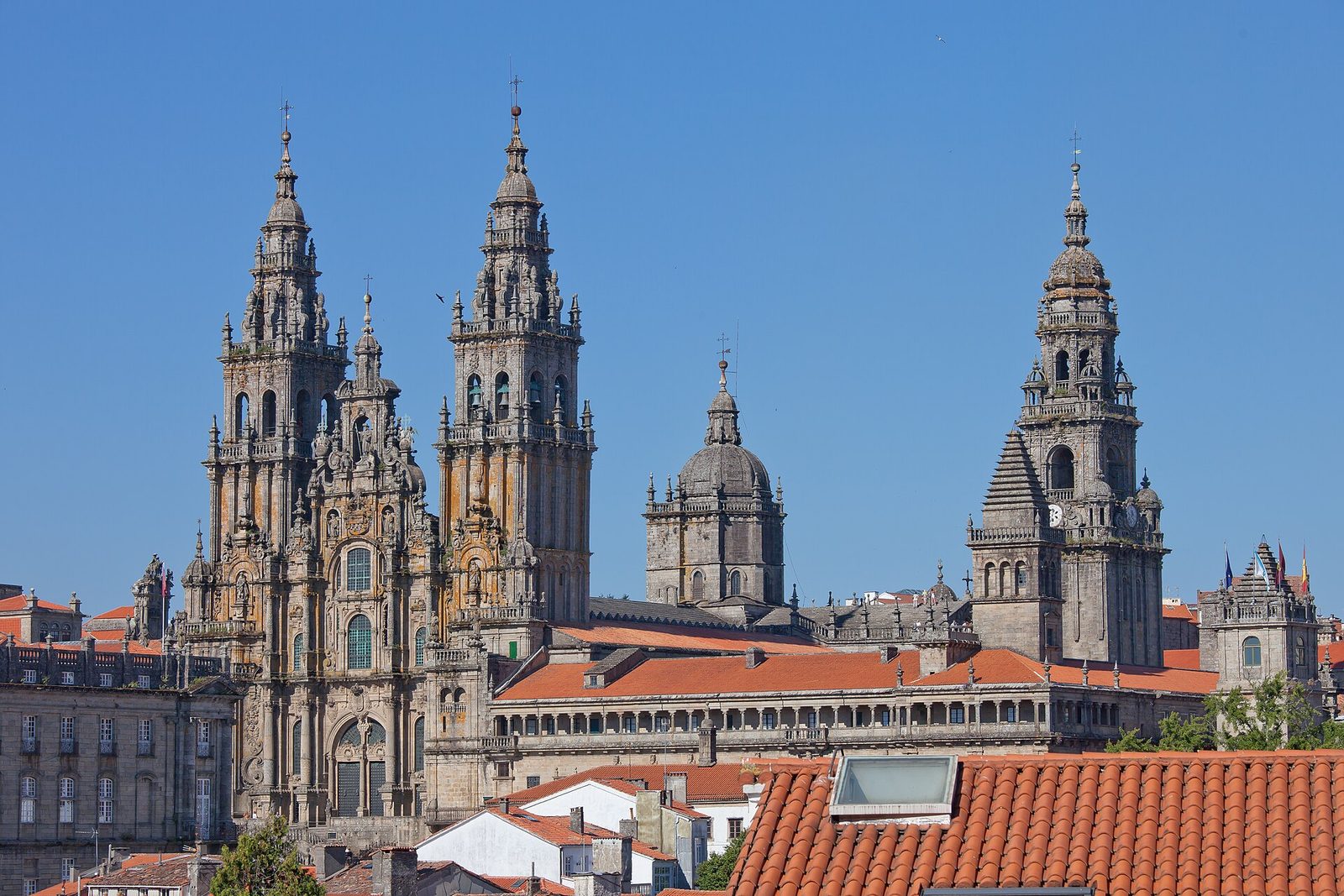
Journey's end for millions of pilgrims.
Santiago de Compostela is a city of arrivals. For a thousand years pilgrims have walked here to stand before its great cathedral, and there's a palpable sense of journey's end in its rain-polished granite streets. But for a road-tripper it's the opposite — a beginning. Green, wild Galicia, with its rías, seafood and dramatic Atlantic coast, unfolds in every direction. Here's how to make the most of it.
⛽ Fuel up near the delivery center
First things first: the practical essentials
Refuelling near the delivery centre. If you didn't take the optional full-tank service at pick-up, you can refuel right next door — there's no obligation to return the car full. The handiest station is Galuresa Tambre on Rúa Vía Edison, in the heart of the Tambre industrial park where your centre is located, open daily from 7 a.m. to 11 p.m. A short hop away, Staroil Santiago in the same estate is another reliable option, with a café for a coffee and a slice of tortilla before you set off.
Getting into the city. Santiago is compact: the historic centre is a 10–15 minute drive from Tambre, and well signed. The old town itself is almost entirely pedestrian, so leave the car in one of the garages on its edge — the Xoán XXIII car park, right below the cathedral, is the most convenient.
Where to spend your first night. Stay near the Praza do Obradoiro to wake up beside the cathedral, or in the lanes of the old town, where the granite arcades (the soportais) shelter you from Galicia's famous drizzle, the orballo.
Your vehicle. Your brand-new Renault is waiting at the Tambre delivery centre, ready for Galicia — everything is already taken care of through the short-term lease programme, so you can simply get behind the wheel.
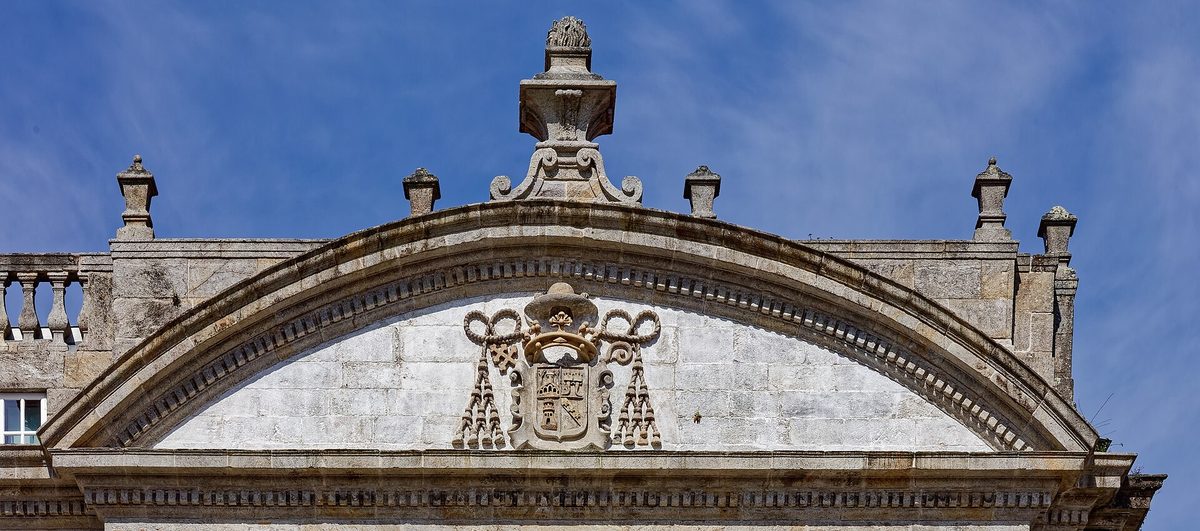
The great square before the cathedral.
Santiago's essential sights
The cathedral and Praza do Obradoiro. The beating heart of the city and journey's end for the Camino, the cathedral raises its baroque Obradoiro façade above the vast square of the same name. Inside are the Pórtico da Gloria, a restored Romanesque masterpiece, and — on the busiest days — the botafumeiro, the giant censer that eight men send swinging across the nave at the Pilgrim's Mass. Walk right around the building past its four squares: Obradoiro, Praterías, Quintana and Inmaculada.
The old town. A UNESCO World Heritage site, it's a maze of glistening granite streets, churches and little squares. Follow Rúa do Franco and Rúa da Raíña, drift up to the Praza da Quintana and its broad steps, and wander under the arcades without a map — it's the best way to feel the city.
The Alameda and the viewpoints. The Alameda park, with its Santa Susana oak grove and the statue of the Duas Marías, offers THE postcard view of the cathedral towers — especially late in the day, when the granite turns golden.
The City of Culture. On Monte Gaiás above town, the Cidade da Cultura de Galicia, designed by Peter Eisenman, astonishes with its rippling architecture and sweeping views; downtown, the Museum of the Pilgrimages tells a thousand years of the Camino.
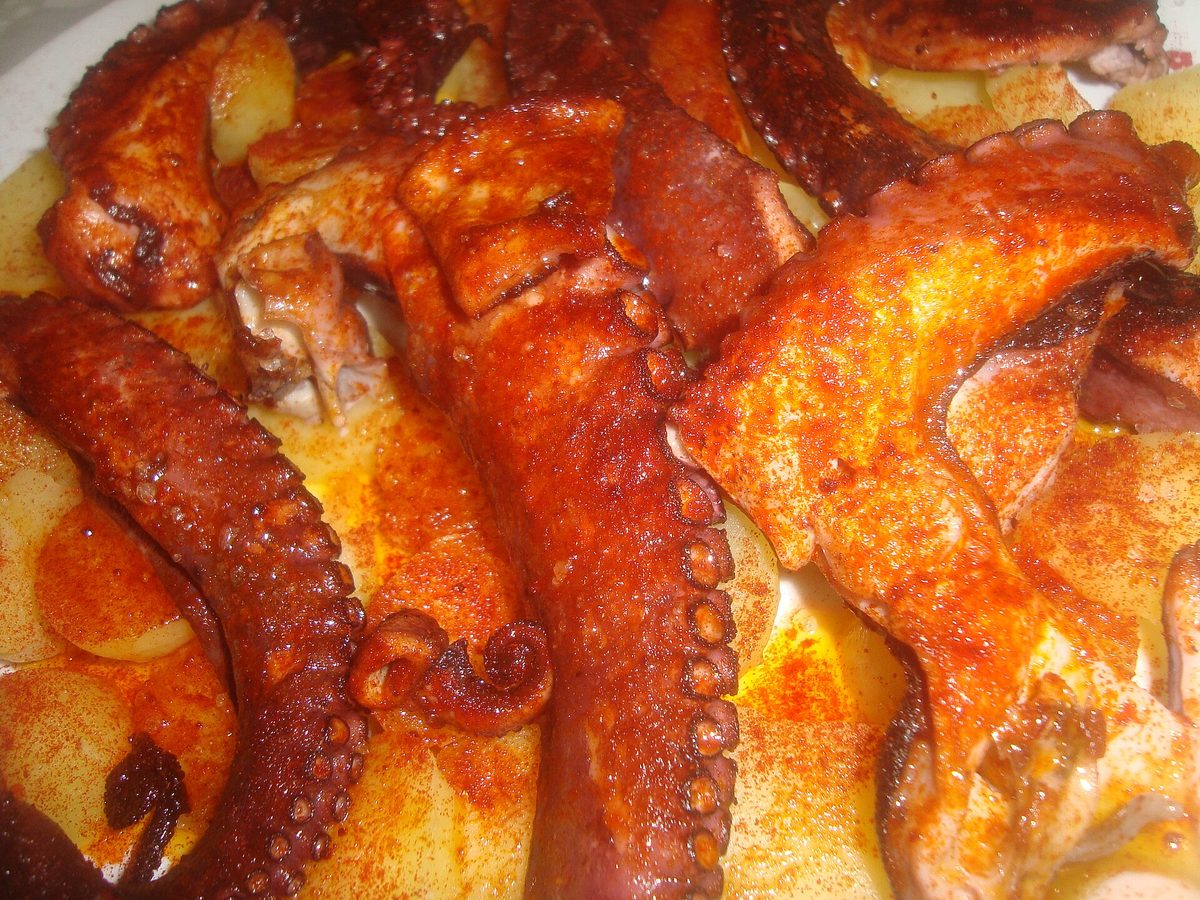
Galicia on a plate.
Foodie Santiago: market, pulpo and Albariño
The Mercado de Abastos. After the cathedral, this is the most visited spot in town — and with good reason. Under its stone halls you'll find the day's fish, shellfish and vegetables; at some stalls they'll even cook on the spot whatever you've just bought. Go in the morning: the atmosphere alone is worth it.
Galician specialities. Pulpo á feira (octopus dusted with paprika and served on a wooden board), pementos de Padrón ("some are hot, some are not"), Galician empanada, percebes (goose barnacles) and zamburiñas (little scallops) all go with a chilled glass of Albariño or Ribeiro. For dessert, the essential Tarta de Santiago, an almond cake stamped with the cross of St James.
Where to eat. Rúa do Franco and Rúa da Raíña, in the historic core, are lined with tapas bars and casas de comidas. Finish with a licor café or a homemade orujo — the classic Galician send-off.
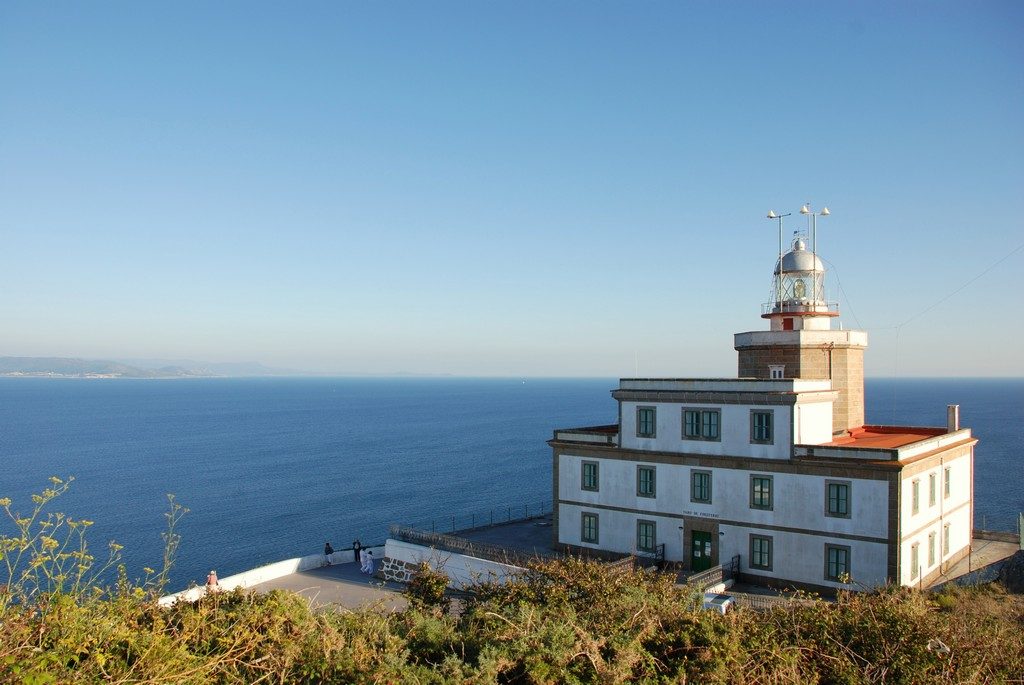
Once the end of the known world.
Your first road trip out of Santiago
Galicia rewards the curious driver, and it all begins in Santiago. West, the Rías Baixas wind down to the Atlantic: Cambados, the Albariño capital, elegant old Pontevedra, the beaches of O Grove and the island of A Toxa. Further northwest stretches the wild, jagged Costa da Morte, running out to Fisterra (Finisterre), long thought to be the end of the world. North, A Coruña watches over the Atlantic with its Tower of Hercules, a Roman lighthouse and UNESCO site; inland lies the Ribeira Sacra, with its Sil River canyons cloaked in terraced vineyards and dotted with monasteries.
The perfect first-day loop. Leave Santiago on the AG-56 towards Fisterra, kilometre zero of the Camino; climb to the lighthouse and face the ocean at "land's end". Then work your way up the Costa da Morte to Muxía and its sanctuary of the Virxe da Barca, set on wave-battered rocks, and return via Camariñas, famous for its bobbin lace: around 200 km that distil the whole of Atlantic Galicia into a single day.
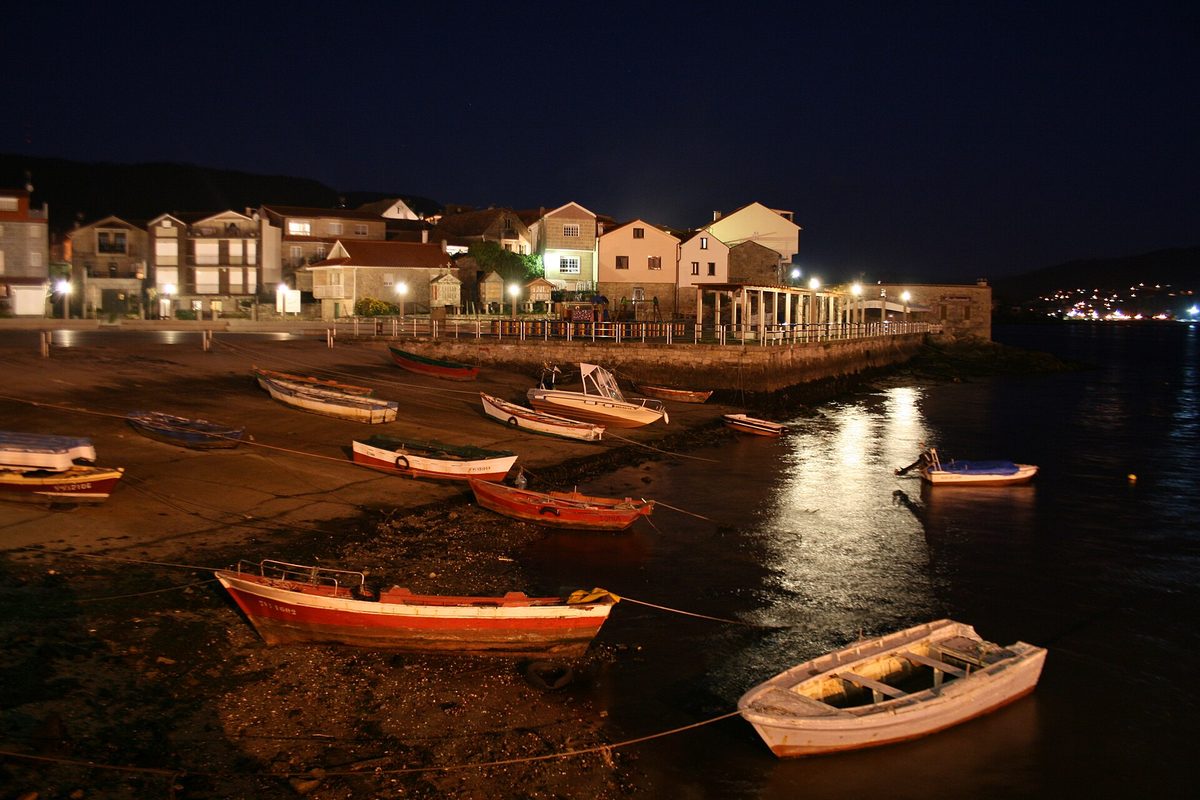
Galicia's gentle drowned valleys.
When to come: climate and seasons
If Galicia is so green, it's because it rains: the climate is oceanic — mild and damp — and Santiago is one of the wettest cities in Spain. Pack a waterproof jacket whatever the season.
Summer (July–August) is the mildest, driest time, around 25 °C — and the liveliest: on 24 July the Fogos do Apóstolo set the cathedral façade ablaze in a great light-and-fireworks show on the eve of St James's Day. Spring and early autumn bring a Galicia at its greenest, fewer crowds and changeable skies — ideal for driving. Winter is mild on the coast but wet; the inland highlands (O Courel, Os Ancares) may see snow, but the coastal routes described here need no special equipment. Holy Years (Anos Santos), when St James's Day falls on a Sunday, draw an extra wave of pilgrims.
Driving tips for Spain
Tolls: the AP-9, linking A Coruña, Santiago, Pontevedra and Vigo, is tolled, as is the AP-53 towards Ourense; most of the free-flowing autovías (A-52, A-54…), by contrast, are free. Keep a bank card within reach for the toll gates.
Speed limits: 120 km/h on motorways and dual carriageways, 90 on conventional roads, 30–50 in towns.
Fuel: "gasolina" (95/98) is petrol, "gasóleo" or "diésel" is diesel.
Low-emission zones: several Galician cities (Santiago, A Coruña, Vigo, Pontevedra) are rolling out low-emission zones (ZBE). These restrictions target the oldest, most polluting vehicles; your brand-new Renault meets the latest environmental standards. Since the old town is explored on foot and you'll park on its edge, the ZBE will barely affect you — but check the signs if you plan to drive into a restricted central area.
Local note: Galician roads are often wet and winding — allow extra time and drive gently on the coastal routes.
How far by car?
Approximate driving times from the delivery center.
📍 Your delivery center
Santiago de Compostela: Where the Camino Ends and Galicia Begins
Book your vehiclePhotos : Luis Miguel Bugallo Sánchez (CC BY-SA 3.0) · Luis Miguel Bugallo Sánchez (CC BY-SA 4.0) · Juan Emilio Prades Bel (CC BY-SA 4.0) · Gabriele from Roma, Italy (CC BY 2.0) · Tevfik Teker (CC BY 3.0) — Wikimedia Commons.